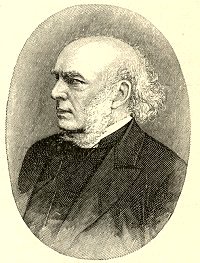
John Stott on a Motive for Missions

“If God desires every knee to bow to Jesus and every tongue to confess Him, so should we. We should be ‘jealous’ for the honor of His name—troubled when it remains unknown, hurt when it is ignored, indignant when it is blasphemed, and all the time anxious and determined that it shall be given the honor and glory which are due to it.

The highest of all missionary motives is neither obedience to the Great Commission (important as that is), nor love for sinners who are alienated and perishing (strong as that incentive is, especially when we contemplate the wrath of God), but rather zeal—burning and passionate zeal—for the glory of Jesus Christ.

Only one imperialism is Christian, and that is concern for His Imperial Majesty Jesus Christ, and for the glory of his empire or kingdom. Before this supreme goal of the Christian mission, all unworthy motives wither and die.”

—John Stott, The Message of Romans (Downers Grove, Ill: InterVarsity Press, 1994), 53

Spurgeon on Stealing Sheep

“…they maintain their churches by converts from other systems. I have even heard them say, ‘Oh, yes, the Methodists and Revivalists are beating the hedges, but we shall catch many of the birds.’ If I harboured such a mean thought I would be ashamed to express it. A system which cannot touch the outside world, but must leave arousing and converting work to others, whom it judges to be unsound, writes its own condemnation.” –Charles Spurgeon, Lectures to My Students: Complete & Unabridged, by Charles Haddon Spurgeon, page 243, Zondervan, 1979.

I cannot help think of this quote and evaluate myself and the whole Reformed Baptist movement in America.

Why Every Believer is a Missionary

What Does God Require of Us?
I have heard that there is a discussion afoot where some people are advocating the idea that it is not the responsibility of each individual Christian to live as an evangelist or missionary in their neighborhood. This is a strange idea to me, and as I have been reading my Bible, the notion has appeared even more bizarre. I would acknowledge that there are believers who have special gifts for evangelism, and should be set-aside for this purpose. Furthermore, I don’t believe that every Christian must be involved in some kind of “formal” evangelistic process. But even as I attempt to articulate just what I think the scripture does and does not teach I realize how silly this is. “What is required is… What I don’t mean is…” Trying to get technical about just how much evangelism is specifically required seems to miss the point and pander to the kind of complaint we might expect from cheeky teenagers, “Aw mom! Do I have to!?” Today, in reading from the Gospel of Mark I was struck with the fact that telling the good news is the spontaneous result of the experience of God’s grace and power in our lives.

Face to Face with Incarnate Glory
In a number of places we find people in the ministry of Jesus who are so amazed by his glory that they erupt in “evangelistic” activity. The Samaritan woman (John 4:1-42) comes to the close of her first conversation with the Son of God, and she is amazed that even thought he knows all about her sin, this Jewish man still speaks to her and offers her living water. Immediately she goes into town to tell her friends about the messiah. The disciples (who at this point are still pretty dense about this matter) come back from town with a bunch of sandwiches, while she returns with a bunch of sinners. The juxtaposition is amazing! Jesus adds his blessing to her efforts by providing commentary about the approaching group of Samaritans: “Lift up your eyes and look at the fields, for they are already white for harvest!” (John 4:35) The spontaneous proclamation of the good news of Jesus by the woman becomes the first successful evangelistic effort in Samaria. And she didn’t have any special training, unique example, or even a command from the Lord Jesus. The word of the woman is a key step in the salvation of her friends: “And many of the Samaritans of that city believed in Him because of the word of the woman who testified, ‘He told me all that I ever did.’” (4:39)

In Mark 5:1-20 we read the account of the demoniac of the Gadarenes. He is radically changed from being a screaming, naked, self-mutilating, hanging-out-with dead bodies, and uncontrollable, superhuman public enemy number one into a man who is “clothed” and “in his right mind” (5:15). How does this man respond to being the recipient of such amazing grace and power? He begs to be with Jesus! But Christ tells him that he cannot come, and instead says, “Go home to your friends, and tell them what great things the Lord has done for you, and how He has had compassion on you” (v. 19). The great commission for this infant believer was to spread far and wide the story of the messiah in his life. And as an extraordinary sinner, his testimony would have impressive potential to display the power of God. What is the result? First, the man obeys, “And he departed and began to proclaim in Decapolis all that Jesus had done for him; and all marveled” (v.20). If you trace out the events in the book of Mark you find that in chapter 7:31-37 we find that Jesus returns to the Decapolis after the region has been softened up by the message of this new believer. Jesus heals a deaf mute in the presence of a gathered multitude (v.33), and they respond with astonishment and exclaim, “he has done all things well. He makes both the deaf to hear and the mute to speak” (v. 37). It would appear that not only is the spontaneous “evangelizing” of the glory of Christ the result of his miraculous work in the life of this man; it is also quite effective means in the hands of the Holy Spirit in helping sinners to become worshipers.

Not a New Testament Phenomenon
But this idea, that I am calling “spontaneous evangelism” from an experience of God’s grace, is not only a New Testament phenomenon. It is not something reserved for people who were demoniacs, or for people who experienced miracles, or for people who had face-to-face encounters with Christ. In Psalms 32 and 51, important psalms of penitence and forgiveness, we find that receiving the mercy of forgiveness turns a sinner into an evangelist. After coming through a time of deep agony and conviction, David receives forgiveness. “Blessed is he whose transgression is forgiven, whose sin is covered. Blessed is the man to whom the LORD does not impute iniquity…” (Psalm 32:1-2) After coming through the experience of sin, conviction, repentance and forgiveness David says, “I will instruct you and teach you in the way you should go; I will guide you with My eye” (v.8). David warns against being stubborn in resisting God and the conviction of sin. He explains the mercies he has received. In Psalm 51 he recounts the events surrounding his sin with Bathsheba, the repentance that follows, and his hope for God’s mercy. He writes for these words for our example, “Restore to me the joy of Your salvation, and uphold me by Your generous Spirit. Then I will teach transgressors Your ways, and sinners shall be converted to You” (vv.12-13). It would seem that it is impossible to encounter deep sorrow and conviction of sin, come to God in hope of mercy, receive the remission of your sins, and not open your mouth to teach others about how they can be forgiven. Perhaps if we do not tell others the good news, we do not have a full appreciation of what our sins deserve, or what it cost to pardon them.

The Impossible Command
The passage that got me to thinking about all this is Mark 1:40-45. This passage records how Jesus miraculously healed a man suffering from a disease that was both terminal, and socially disgraceful. Jesus heals the leper and then says, “See that you say nothing to anyone; but go your way, show yourself to the priest, and offer for your cleansing those things which Moses commanded, as a testimony to them” (1:44). Try to imagine this: you have been miraculously healed of leprosy by the long awaited messiah, and you are not supposed to tell anyone. When your friends and family who have been shunning you ask you how you were cured what are you supposed to say? He should have obeyed the command, but I think that we can have a little sympathy for him. Jesus was commanding him to do what was against nature!

There are at least 8 times in the New Testament when Jesus gives instructions not to speak about his identity or actions. (Matt 8:3-5; 16:20; 7:35-37, Mark 8:29-30; Luke 5:13-15; 8: 55-56; 9:20-22) Most often this seems connected with Jesus preventing a premature growth in popularity in connection with the father’s divine timetable.

When Jesus tells people not to say anything about his miracles or identity, they often fail at this simple command. They cannot keep their mouths shut because they are so overwhelmed with wonder and gratitude. They have to tell someone!

Under the present circumstances, none of us have a command to restrain what comes naturally. In fact, we have every encouragement in the world to share the good news of the work of God in our lives and to bring others to share the same grace that we have come to understand. In some ways, asking whether Christians have to be evangelists might miss the point the same way that asking whether Christians have to worship. In both cases, everyone who has really encountered the grace of God will do it quite naturally.

Our Hope of Gospel Success

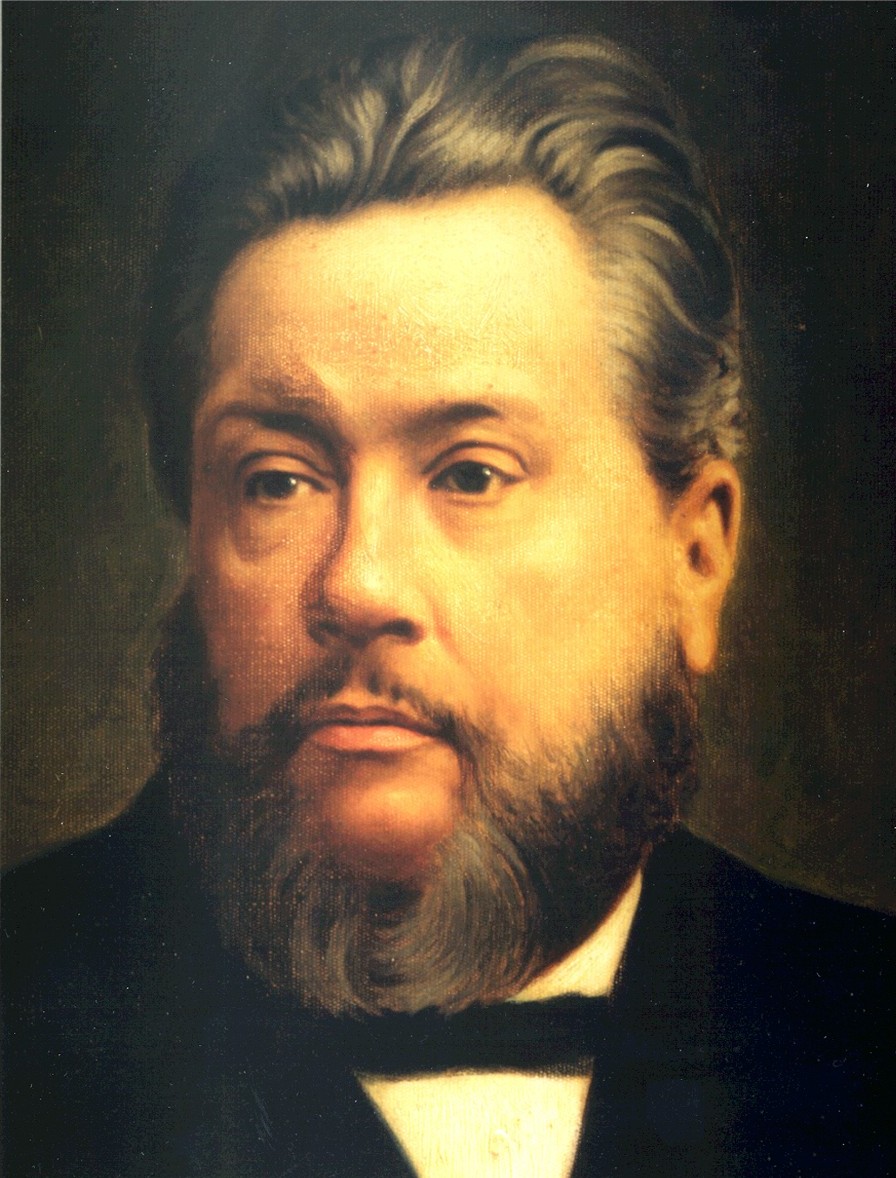
“Let no one say . . . that the doctrine of election by the sovereign will and mercy of God, mysterious as it is, makes either evangelism or faith unnecessary. The opposite is the case. It is only because of God’s gracious will to save that evangelism has any hope of success and faith becomes possible. The preaching of the gospel is the very means that God has appointed by which he delivers from blindness and bondage those whom he chose in Christ before the foundation of the world, sets them free to believe in Jesus, and so causes his will to be done.”

– John R. W. Stott, The Message of Ephesians (Downers Grove, Ill: Inter-Varsity Press, 1979), 48

A Short Video on Samuel Zwemer Missionary to Muslims

http://www.ciu.edu/gallery2/modules/flashvideo/lib/FlowPlayerDark.swf?config=%7BvideoFile%3A%27http%3A%2F%2Fwww%2Eciu%2Eedu%2Fgallery2%2Fmain%2Ephp%3Fg2%5Fview%3Dcore%2EDownloadItem%5Cu0026g2%5FitemId%3D5769%5Cu0026g2%5FserialNumber%3D3%5Cu0026g2%5FGALLERYSID%3De8447b737f6b08acfaae215ebcb643e3%27%2ChideControls%3Afalse%2CautoPlay%3Afalse%2CshowMenu%3Atrue%2CshowFullScreenButton%3Atrue%2CshowVolumeSlider%3Atrue%2CinitialScale%3A%27fit%27%2CbaseURL%3A%27http%3A%2F%2Fwww%2Eciu%2Eedu%2Fgallery2%2Fmodules%2Fflashvideo%2Flib%27%2Cembedded%3Atrue%7D

I found this while looking around for info on this man. I heard D. A. Carson make reference to him as a man who labored for 40 years with only a few people won to Christ, and some of those were martyred.

What are The Most Dangerous Countries in the World for Christians?

I found this site (Opendoorsusa.org) which ranks countries throughout the world based on their treatment of Christians. You can download and read their report, which is quite in depth. What are the top ten? After seeing Maldives on the list I did some reading about the country and found out that it is one of the least evangelized nations on earth.

January 2008:

Ranking 2007:

1. North Korea 1.
2. Saudi Arabia 2.
3. Iran 3.
4. Maldives 5.
5. Bhutan 7.
6. Yemen 6.
7. Afghanistan 10.
8. Laos 9.
9. Uzbekistan 11.
10. China 12.

2 Tim. 1:8 “Therefore do not be ashamed of the testimony of our Lord, nor of me His prisoner, but share with me in the sufferings for the gospel according to the power of God.”


Hebrews 13:3
Remember the prisoners as if chained with them—those who are mistreated—since you yourselves are in the body also.”

Matt 5:10-12
Blessed are those who are persecuted for righteousness’ sake, for theirs is the kingdom of heaven. “Blessed are you when they revile and persecute you, and say all kinds of evil against you falsely for My sake. Rejoice and be exceedingly glad, for great is your reward in heaven, for so they persecuted the prophets who were before you.”

Spurgeon and Church Planting

Church Planting is trendy, but is it new? Every heard of C.H. Spurgeon’s involvement in Church Planting? What was the purpose of the Pastor’s College?

“Twenty-Seven churches were founded by students form the Pastor’s College between 1853 and 1867. In the second half of the nineteenth century, the number of Baptist churches in London doubled and nearly all of these were founded, in one way or another, under Spurgeon’s influence. Students were sent out to new areas or existing churches, normally at the command of “the guv’nor,” as students called Spurgeon…Spurgeon joined with two other London Ministers, Landels of Regent park and Brock of Bloomsbury, to found the London Baptist Association, with the goal of building one new chapel each year. Both Brock and Landels had planted their churches and started local missions, but Spurgeon’s vision was London-wide.”

From: Michael Nicholls, “Missions, Yesterday and Today: Charles Haddon Spurgeon (1834-92) Church Planter, ” in Five ‘Til Midnight: Church Planting for A.D. 2000 and Beyond, ed. Tony Cupit. Quoted in Stetzer, Planting Missional Churches (2006) p. 67

After forwarding this quote to a few friends, I received this email from Robert Briggs- a Scottish pastor in Sacramento California. AMAZING!!!

“Matt

I thought you might be interested to know.

My home church as I call it, the one I was nurtured in, near Edinburgh Scotland, was planted by David Tait who was 77 years old when he planted it, in 1933.

He was a student at the Pastors College under Spurgeon in his 20’s back in the 1880’s. Your article was spot on and I like to think of myself in a nostalgic sort of way as being part of the fruit of that wonderful ministry over a century later.

The Pastors College model has been the one I have been looking into for us here in Sacramento. Two years of training proven, gifted men and sending them out.

Enjoyed the fellowship yesterday.

Warmest regards

RB”

How Many Have Not Heard the Gospel?

Here is a humbling, inspiring “clock” with figures about the number of people in the world who have not heard, and cannot hear of the gospel of Christ.

It is from the International Missions Board.

Another helpful resource is the Joshua Project

A Great Interview With a Man From Arica

I found this interview with Oscar Muriu who is a church planting guy in Kenya. We obviously come from different perspectives, still I was amazed by the great vision the man has for reaching the lost, training leaders and planting churches. I was also amazed by his simple but pentrating insights into the Western mindset. The article is lengthy by worth the read. I am planning on reading it to my kids tonight and discussing it for family devotions.

A Book to Set the Heart on Fire

I have been re-reading this precious book, “Words to Winners of Souls” little by little, using it to fire my soul, especially on days of prayer and fasting. Horatius Bonar was a Scottish minister from the past who had a zeal to see pastors awake and alive to the issues of eternity and the need to win souls. This book is aimed at pastors, but beneficial to others. My copy was given to me over 1o years ago by Pastor Michael Crawford, and I can remember reading it together and praying in his study. You can get it at amazon.com or a discount version at Chapel Library.

I read some of it yesterday and it lead me to pray and seek God with earnestness. He is one of the “old boys” that lays it down straight. Bonar (1808-1889) was not a puritan, but quoted them extensively. It is interesting to me that of all the interest in puritanism and the theology of the past that has been reborn in the last 50 years, there are precious few that have sought to emulate their lives when it comes to soul-winning. Bonar says some remarkable things:

  1. Having good theology and a cold heart can be worse than having bad theology or an open life of sin. ” Even when sound in the faith, through unbelief, lukewarmness and slothful formality, they [ministers] may do irreparable injury to the cause of christ, freezing and withering up all spiritual life around them. The lukewarm ministry of one who is theoretically orthodox is often more extensively and fatally ruinous to souls than that of one grossly inconsistent or flagrantly heretical.” (p. 1-2)
  2. “The object of the Christian ministry is to convert sinners and to edify the body of Christ.” That sounds like part 1 and 2 of the great commission to me. Sadly many people who are “concerned” about too much evangelism in the church, and strong evangelistic preaching to the lost attempt to justify this stance from a posture of “respect” for the preachers of the past. They seem to think that the pastor should only be concerned with part 2 of the Great Commission– tending the sheep. Nothing could be further from the truth. Bonar quotes the famous Puritan John Owen: “Ministers are seldom honored with success unless they are continually aiming at the conversion of sinners.” (p. 5)
  3. The most important aspect of being a soul-winner is a close and lively walk with God. By this Bonar means a life of complete consecration to prayer and the word. We fire our souls during time alone with God. He quotes John Berridge, “It is much to be feared that we are weak in the pulpit because we are weak in the closet.” (p.11) He says with great skill that we should study the lives of great men of the past more than their sermons, because the power of their closeness to Christ is was brought blessing.


I was struck while looking through a hymnal that Bonar thought about this a lot. He also wrote this hymn which is a poetic expression of these ideas. I just printed a copy of this and taped it above my desk to stir me to this kind of zeal.

Go, labor on: spend, and be spent,
Thy joy to do the Father’s will:
It is the way the Master went;
Should not the servant tread it still?

Go, labor on! ’tis not for naught
Thine earthly loss is heavenly gain;
Men heed thee, love thee, praise thee not;
The Master praises: what are men?

Go, labor on! enough, while here,
If He shall praise thee, if He deign
The willing heart to mark and cheer:
No toil for Him shall be in vain.

Go, labor on! Your hands are weak,
Your knees are faint, your soul cast down;
Yet falter not; the prize you seek
Is near—a kingdom and a crown.

Go, labor on while it is day:
The world’s dark night is hastening on;
Speed, speed thy work, cast sloth away;
It is not thus that souls are won.

Men die in darkness at thy side,
Without a hope to cheer the tomb;
Take up the torch and wave it wide,
The torch that lights time’s thickest gloom.

Toil on, faint not, keep watch and pray,
Be wise the erring soul to win;
Go forth into the world’s highway,
Compel the wanderer to come in.

Toil on, and in thy toil rejoice!
For toil comes rest, for exile home;
Soon shalt thou hear the Bridegroom’s voice,
The midnight peal, “Behold, I come!”