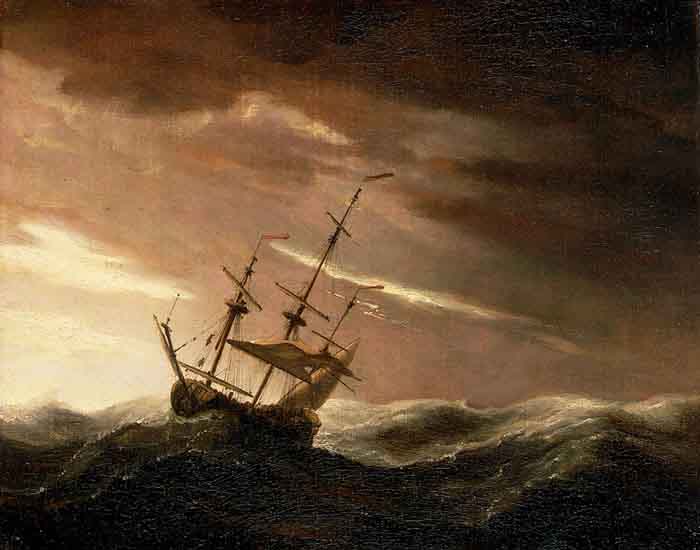
“A ship in port is safe, but that’s not what ships are built for.”
Admiral Grace Murray Hopper (1906 – 1992)

“A ship in port is safe, but that’s not what ships are built for.”
Admiral Grace Murray Hopper (1906 – 1992)
There is a lotta stuff out there that is not worth your time. It is only mildly funny. However, these guys “Rhett and Link” are truly funny. They are gifted, can sing, and are clean to boot! This is one of the best things they have. It is a song about rednecks and fireworks. You will probably want to go to their site and browse around…..really funny!
Learning from Life
I was thinking about the issue of “learning” from our experiences. It can be tempting to think that this is an activity that “smart” people engage in, while the rest of us just keep banging our heads against the cupboard door without learning from our mistakes. But I think that there is a dimension in all of this that the Bible would call WISDOM. Wisdom is not just a full brain, nor is foolishness (or folly) merely a slapstick ignorance. There is a moral dimension to both. Wisdom begins with the fear of the Lord, “The fear of the LORD is the beginning of wisdom” (Prov. 9:10). Foolishness has similar roots, “the fool has said in his heart,’There is no God.’” (Psalm 14:1).
So how can we use our experiences as an opportunity to get wisdom, and learn? I thought of a few ways that we can gain wisdom.
First, a wise man or woman learns from correction. Proverbs 17:10 “Rebuke is more effective for a wise man than a hundred blows on a fool.” Wisdom heeds a gentle rebuke or word of correction. But a fool can be repeated punished without learning the lesson. People seeking wisdom are sensitive to correction. This posture implies that those who are wise have a humble view of their own knowledge. Not a “know-it-all” the wise man understands he has much to learn and welcomes correction.
Second, wise people learn from their own failures. Proverbs 26:11 “As a dog returns to his own vomit, so a fool repeats his folly.” The poetry of proverbs continually contrasts wisdom and folly. Here the fool keeps going back to his sins and failures; he refuses to learn from them. This is one reason why not all experience gives wisdom. Sometimes experience makes fools. I heard someone say this, “insanity is continuing to repeat the same actions and expecting a different outcome.” Both successes and failures are the classroom of the wise.
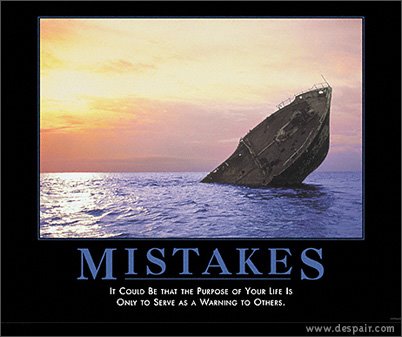
Third, wise people learn from the mistakes and punishments of others. It is great to learn from your own mistakes, but the cost is high. You actually have to fail, and that hurts. But it is much more affordable to learn from the mistakes of others. Proverbs 19:25 “Strike a scoffer, and the simple will become wary; rebuke one who has understanding, and he will discern knowledge.” The meaning of this may not be plain at first, but in the first stanza the author says that one person can learn when another is corrected. ‘God smites some,” says one commentator, “that he may warn all.” The wise man is alert to learn from the mistakes of others. Interestingly, the father in Proverbs 24:30-34 sees a run down farm and takes time to teach his son. It is broken down and in a state of dissaray. He says, “When I saw it, I considered it well; I looked on it and received instruction: A little sleep, a little slumber, A little folding of the hands to rest; So shall your poverty come like a prowler, and your need like an armed man.” He thought about the weeds, and the broken down fence, and concluded that the results of indolence are deceptively slow. He gained wisdom from the failure of another man. On the humorous side, the picture above is from despair.com (a very funny website, you should look through all the demotivators when you get a chance.). It says “It could be that the purpose of your life is to serve as a warning to others.”
Finally, a wise man learns from the wisdom of other people. “Lifelong learners,” if I can mention that phrase without overusing it, make good use of smart people. In fact, from the tone of scripture, they seek out the company of the wise. Proverbs 13:20,” He who walks with wise men will be wise, but the companion of fools will be destroyed.” Anyone can teach a wise man. You can walk with wise men down the road, or you can walk through their thoughts by reading. But one thing characterizes learners they are on the watch for people who can teach them. Their souls are like the ground, hungry to soak up the rain.
 Robert Service was a Scottish man with grit. He also had a flair for verse. He is known as the Canadian Kipling. This is the first paragraph of his famous poem the Law of the Yukon. He lived in the icy region, and the danger and adventure provided grist for his poems. This one is about sending your best men. I can’t help but see a call to view the good fight of missions as an appropriate parallel.
The Law of the Yukon
This is the law of the Yukon, and ever she makes it plain:
“Send not your foolish and feeble;
send me your strong and your sane —
Strong for the red rage of battle; sane for I harry them sore;
Send me men girt for the combat, men who are grit to the core;
Swift as the panther in triumph, fierce as the bear in defeat,
Sired of a bulldog parent, steeled in the furnace heat.
Send me the best of your breeding, lend me your chosen ones;
Them will I take to my bosom, them will I call my sons;
Them will I gild with my treasure, them will I glut with my meat;
But the others — the misfits, the failures — I trample under my feet.
Dissolute, damned and despairful, crippled and palsied and slain,
Ye would send me the spawn of your gutters — Go! take back your spawn again.
In case you didn’t know…..I am not just a mild mannered college student. I am also a pastor. Relax, I am not a televangelist. I am a real pastor. I love Jesus and it is one of the greatest privileges in my life to talk about the gospel (good news). This story changed my life. This is an important sermon that I preached recently on Roman’s chapter 8:32. It is important because it deals with the implications of the life and death of Jesus.
Have you ever felt the need to express yourself in a dead language? Ever felt empty because you didn’t know any dead languages with which to express your deep, personal, innermost thoughts? Well now in these moments of despair you can have hope, without having to spend lots of time studying (glacies, amicitia et rex!). You can use the Latin Motto Generator website.
Here are a few very important samples. Who knows? There might be deep hidden meanings within these ancient words:
Ex scientia focus (from knowledge, hearth)
pertinacia et aqua (determination and water)
In vento ultio (in wind, vengeance)
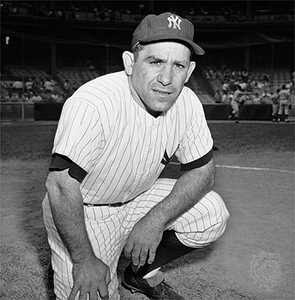
I enjoyed the recent perusal of Vince Lombardi quotes, so I thought I would look into Yogi Berra. I laughed uncontrollably!
I’d give my right arm to be ambidextrous.
Half the lies they tell me aren’t true.
In theory there is no difference between theory and practice. In practice there is.
It’s like déjà vu all over again.
It’s tough to make predictions, especially about the future.
Never answer an anonymous letter.
Ninety percent of this game is mental, and the other half is physical.
Steve McQueen looks good in this movie. He must have made it before he died.
The other team could make trouble for us if they win.
We’re lost but we’re making good time.
When you get to a fork in the road, take it.
You can observe a lot by watching.
Always go to other peoples’ funerals otherwise they won’t go to yours.
I recently preached on Romans 8:32 which says, “if God is for us, who can be against us. He who did not spare his own son, but delivered him up for us all, how shall He not also with Him freely give us all things?” The language “He who did not spare His own son” is a quote from the story of Genesis 22 where Abraham goes to Mount Moriah to offer his son Issac as an offering. Of Course, God stops Abraham, and says, “now I know that you fear me, because you have not spared your son, your only son Isaac whom you love.” Abraham did not spare his son Isaac, but God did. God sent a ram to be the sacrifice in the place of Isaac. In contrast that is not what God did for Jesus. There was no angel to call out and say “stop!” when Jesus was on the cross. God did not spare Jesus, so that he might spare us.
Anyway, that got me to thinking about this scenario and the way that artists have depicted the scene. You can find the Biblical account in Genesis 22.
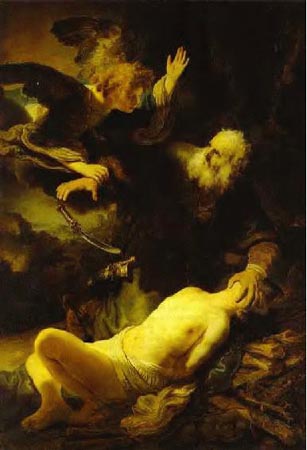
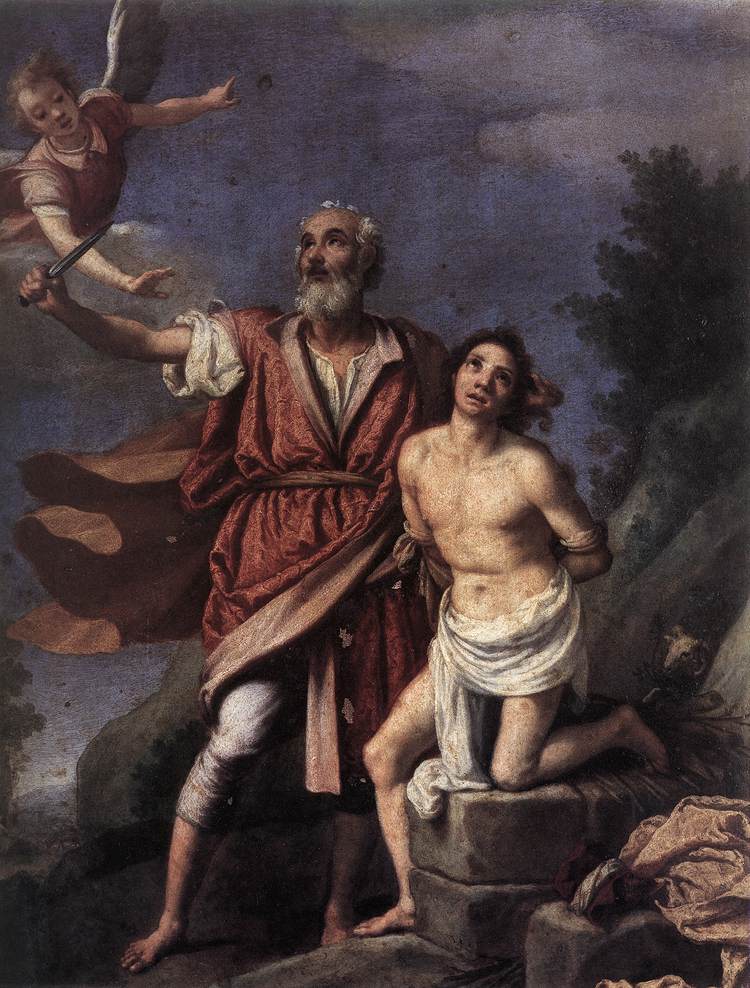
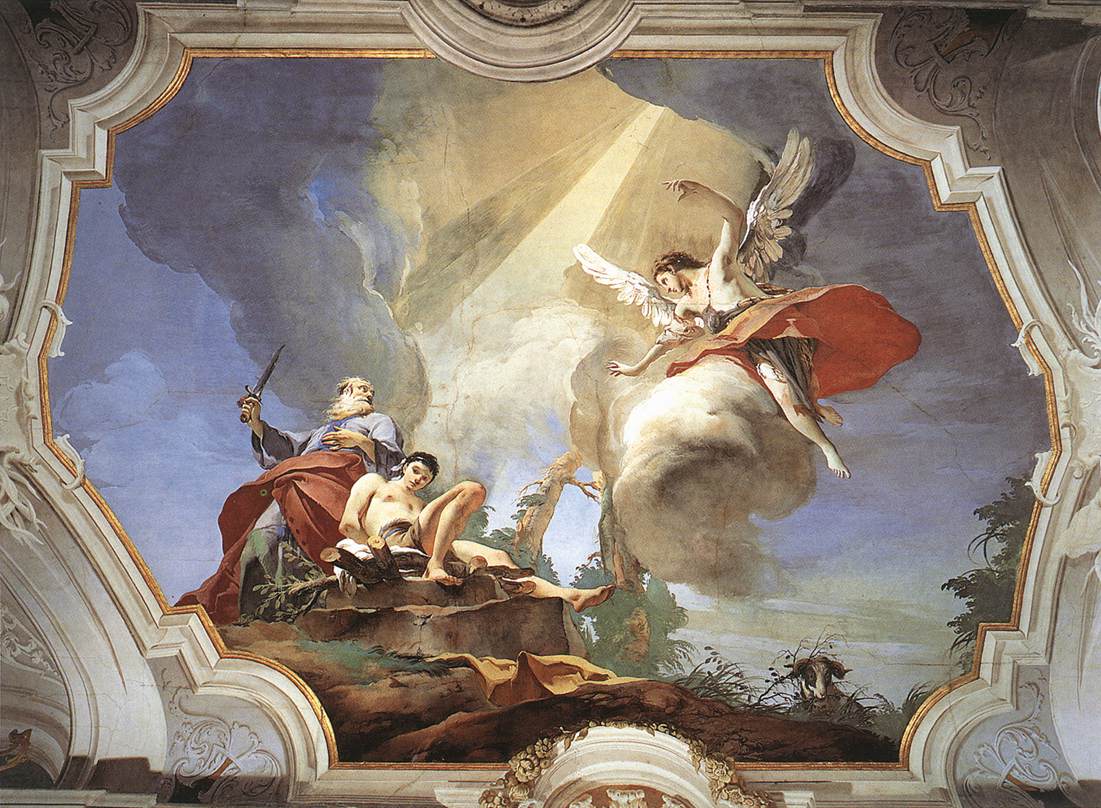
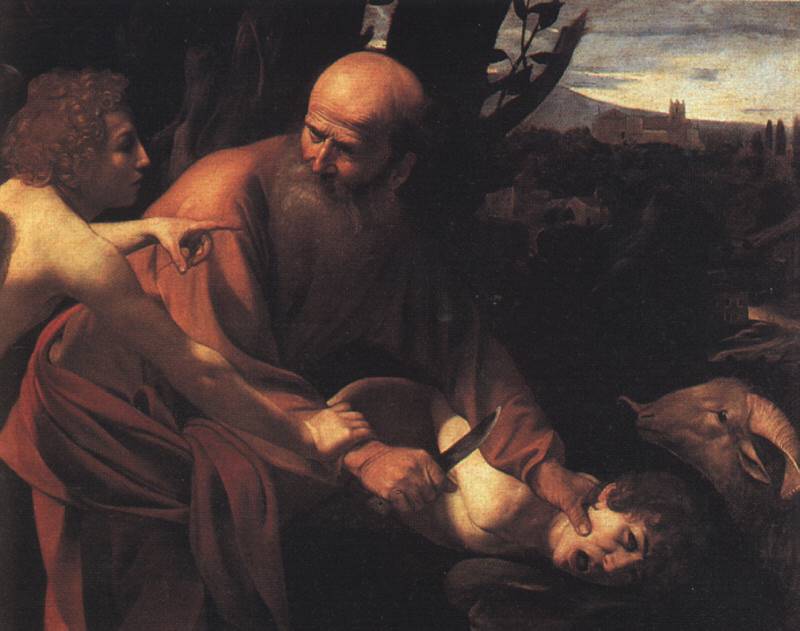
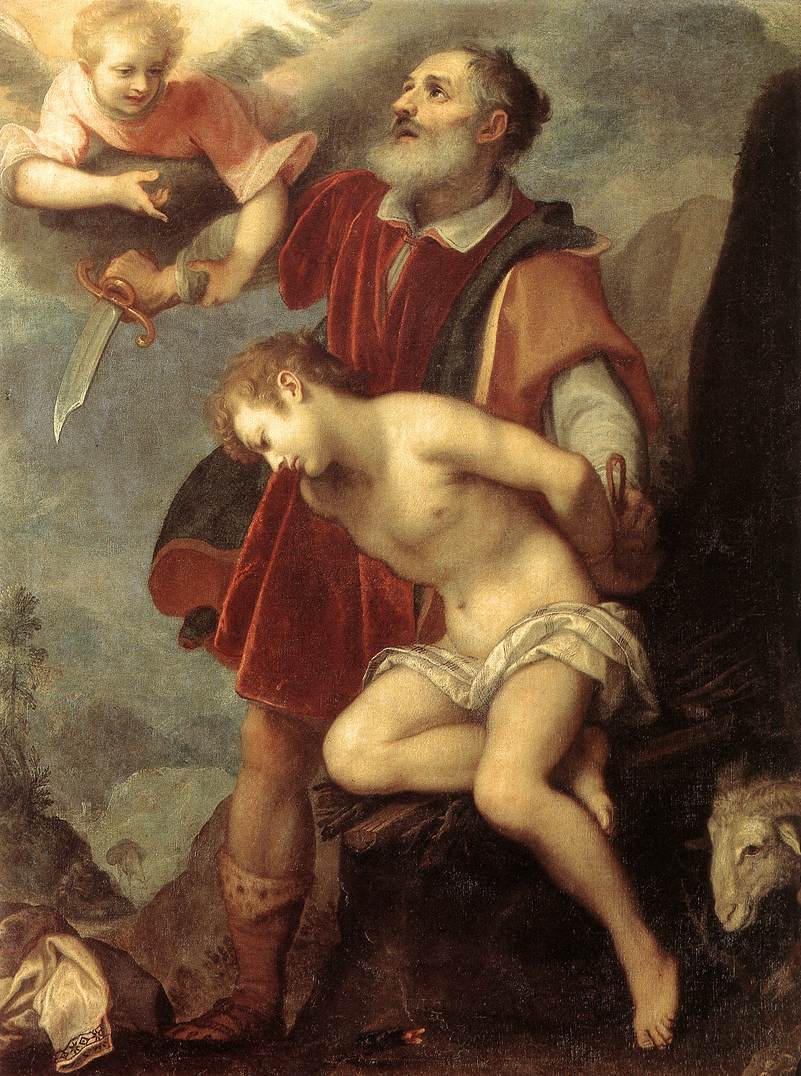
Wikipedia has a pretty good set of links for the art history of Abraham and Issac.
Lessons from Jesus’ Choices
What is obvious about the 12 apostles of Jesus, is that the reason why they were chosen is not obvious. At least it is not obvious at first glance. If you were writing a book to advise people on how to start a religious movement that would turn the world upside down, you would certainly not make recommendations that your top leaders be of these kinds of men. The group lacks education, experience, wealth and influence. They are working class men, from different backgrounds, who possessed huge differences in their political and social affiliations. Why then did Jesus choose these men? We don’t know all everything behind the selecting of the 12, but I would suggest 4 reasons:
First, so that the glory would belong to God. When a self-sufficient person works hard and succeeds, the next step is usually taking responsibility for the accomplishments. If success was going to come from this group, no one would say, “Naturally, what did you expect from such a well qualified group.” This is exactly what happened in Acts 4:13 “Now when they saw the boldness of Peter and John, and perceived that they were uneducated and untrained men, they marveled. And they realized that they had been with Jesus.” Many times God goes out of his way to work through apparently fragile means, and weak people so that no one will steal the glory. In the Old Testament, God whittled down the army of Gideon to an astounding 300 soldiers in order to defeat the enemies of Israel. Why? “ And the LORD said to Gideon, ‘The people who are with you are too many for Me to give the Midianites into their hands, lest Israel claim glory for itself against Me, saying, My own hand has saved me. (Judges 7:2)’”
Second, I would suggest another reason these men were chosen: To show that grace unifies different people. Politically there could not have been two more polar opposites than a tax collector (a.k.a. Collaborator!) and a Jewish zealot. It is amazing that the tolerance and diversity that the world so desperately wants, is nowhere so typified as in the Church of Christ. Sure there is racism and division in the church. But find people that have really been transformed by the gospel and you will find a group who love people different than them. Grace shines bright when it overcomes the natural prejudices that we have towards others. The full realization of this will be in heaven, which will be more diverse than the United Nations, with people from every language and family on earth! When we unite around a common worthy focus, we show that the cause is more important than our differences.
Third, I believe that these men were chosen to show that usefulness is within reach of anyone. The Bible is an amazing book, it is painfully honest. Almost all of the accounts of the “heroes” of scripture are generously sprinkled with candid accounts of their failures. This is true of the apostles. Thomas who doubted; Peter who boasted, fought and then denied; James and John who sought glory for themselves. But the message of Jesus changed them. With these men and countless sinners since, God has shown that he can draw a straight line with a crooked stick. Jesus was able to see past failures and sins and see what His grace would accomplish in them.
Lastly, scripture teaches that God is opposed to the proud but gives grace to the humble. I would suggest that Jesus choose these men to shame the proud. I Corinthians 1:26-27 makes it very clear, “Brothers, think of what you were when you were called. Not many of you were wise by human standards; not many were influential; not many were of noble birth. But God chose the foolish things of the world to shame the wise; God chose the weak things of the world to shame the strong.” Christianity has not been the religion of the rich and the elite. It has been the faith of the weak and hopeless. By arranging things this way, God has brought down the gavel on those who trust in themselves that they are wise, or strong, or noble. By choosing servants like the apostles, and like us, he shows that his power is made perfect in weakness. We must rely on Him. I believe that this is one of the most important leadership lessons from the choosing of the 12 apostles.
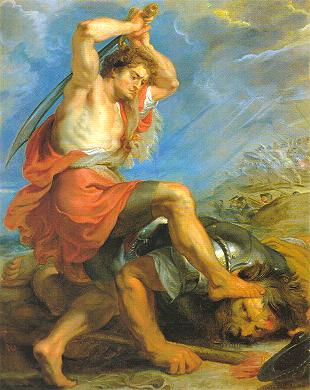
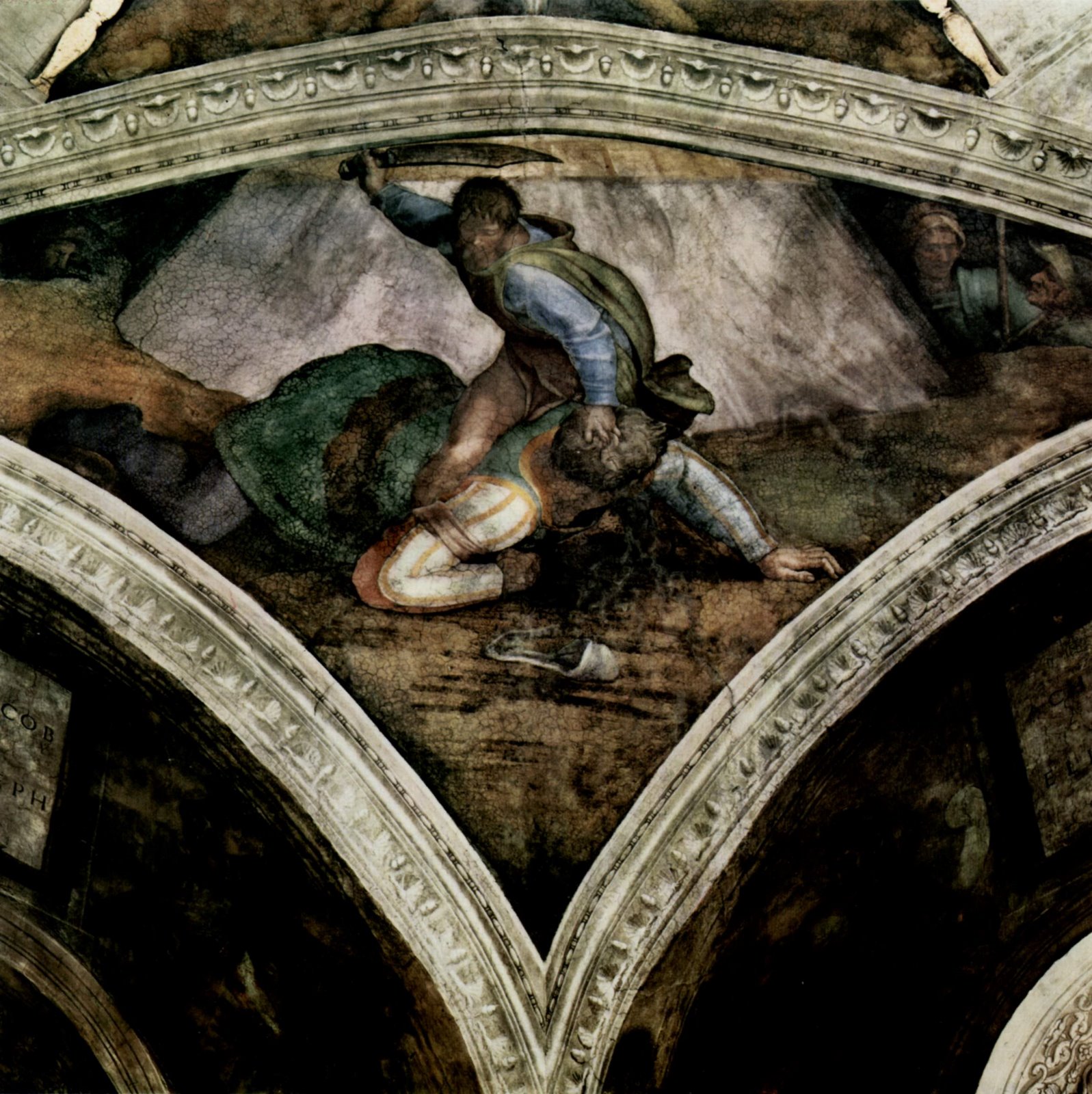
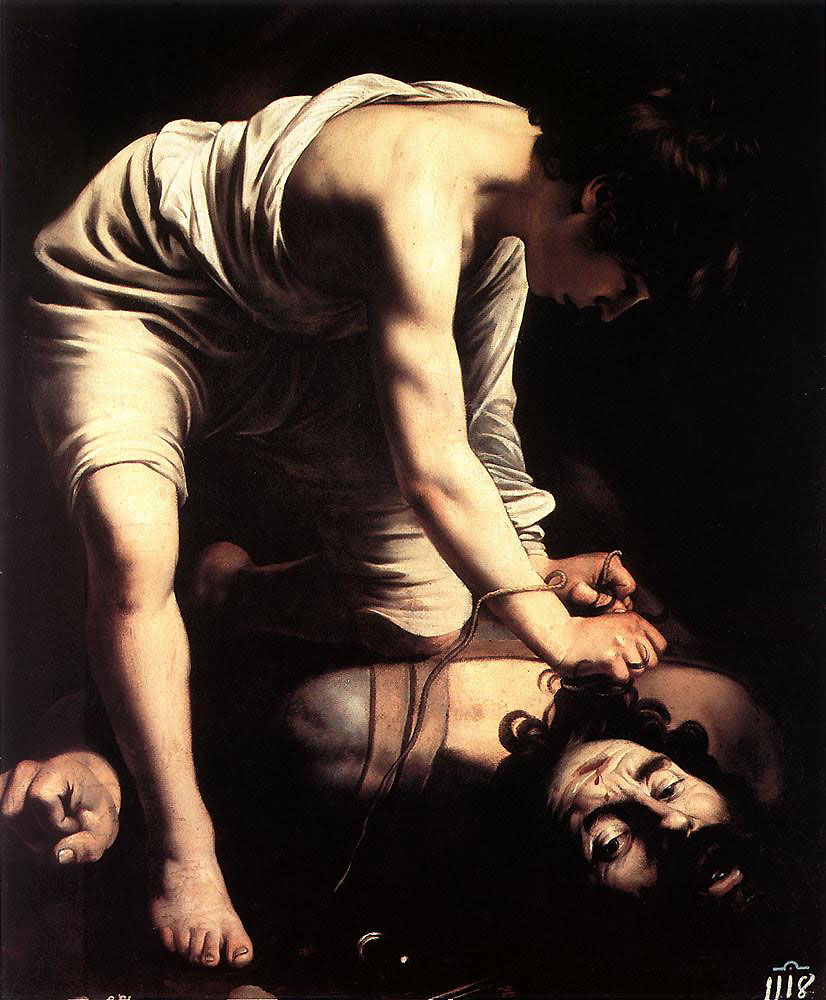
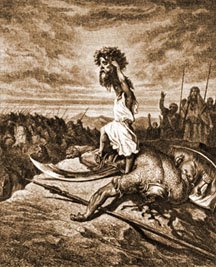
I am fascinated by the depictions of the account of David and Goliath in art. Here is a smattering of paintings from Reubens, Carvaggio, Michelangelo, and others. The story can be found in I Samuel 17.
I like the ones that accurately depict a young unsuspecting shepherd boy defeating a huge warrior. No Geneva Convention here!


 MattTroupe.net