No Condemnation. No None!

“Because of the gospel’s power, you can be completely free of all condemnation.

Not mostly free; completely free.

Don’t buy the lie that cultivating condemnation and wallowing in your shame is somehow pleasing to God, or that a constant, low-grade guilt will somehow promote holiness and spiritual maturity.

It’s just the opposite! God is glorified when we believe with all our hearts that those who trust in Christ can never be condemned. It’s only when we receive his free gift of grace and live in the good of total forgiveness that we’re able to turn from old, sinful ways of living and walk in grace-motivated obedience.”

– C.J. Mahaney, The Cross Centered Life, 39, 40

Charles Wesley wrote:

No condemnation now I dread;
Jesus, and all in Him, is mine;
Alive in Him, my living Head,
And clothed in righteousness divine,
Bold I approach th’eternal throne,
And claim the crown, through Christ my own.

Why You Should Pray for Your Pastor


Here is a link to a post from Mark Driscoll. It deals with Pastoral burn out and how and why so many pastors leave the ministry.

This is a good reason for you to pray for your pastor!

I Thessalonians 5:25, “Brethren, Pray for us.”

Getting Ready for the BIG TEST


Few of us enjoy tests. I am supposed to be on spring break right now. I am supposed to be enjoying a little time of mental relaxation, unbending my tired mind so that future studies will be more effective. But instead, I am thinking about the upcoming microbiology test. It kind of hangs over my head, and is there in the back of my mind. Even when I try to think of other things, it won’t go away. I feel stress because I don’t want to fail….because I know I need to study more….because I want to pass the test, and I don’t want to retake the course. This stress can have the positive effective of helping me decide what is important and what is a waste of time. Simply put, it can help me prepare. The other day one of my professors reminded the class what was going to be on the exam. He told us what would be covered and what kind of questions would be on the test.

As I sat here and reflected on this I thought of several things that Jesus said. Right now I am thinking about a little test with small consequences, but he spoke of a test of much greater import: the judgment day. If people don’t enjoy thinking about midterms, they certainly don’t want to think about a day when they will stand before their maker. But I can’t help but see an interesting connection. I could ignore all those nagging thoughts about an upcoming test on malaria and fungi, and then fail the test when it came because I failed to prepare. Ignoring the upcoming test would be academic suicide. Ignoring the judgment day is spiritual suicide. Like my microbiology professor, Jesus has given us some advance warning about what is going to be on the big test. So I thought I would share a few of the things that Jesus has given us about the coming judgment:

John 5: 26-28 “For as the Father has life in Himself, so He has granted the Son to have life in Himself, and has given Him authority to execute judgment also, because He is the Son of Man. Do not marvel at this; for the hour is coming in which all who are in the graves will hear His voice.”

Matthew 12:35-37 “A good man out of the good treasure of his heart brings forth good things, and an evil man out of the evil treasure brings forth evil things. But I say to you that for every idle word men may speak, they will give account of it in the day of judgment. For by your words you will be justified, and by your words you will be condemned.”

John 3:16-17, 36 “For God so loved the world that He gave His only begotten Son, that whoever believes in Him should not perish but have everlasting life. For God did not send His Son into the world to condemn the world, but that the world through Him might be saved. He who believes in the Son has everlasting life; and he who does not believe the Son shall not see life, but the wrath of God abides on him.”

Revelation 20:11-15 “Then I saw a great white throne and Him who sat on it, from whose face the earth and the heaven fled away. And there was found no place for them. And I saw the dead, small and great, standing before God, and books were opened. And another book was opened, which is the Book of Life. And the dead were judged according to their works, by the things which were written in the books. The sea gave up the dead who were in it, and Death and Hades delivered up the dead who were in them. And they were judged, each one according to his works. Then Death and Hades were cast into the lake of fire. This is the second death. And anyone not found written in the Book of Life was cast into the lake of fire.”

Jesus the Tender Physician

A quote from the puritan John Flavel:

“None so tender-hearted and sympathising with sick souls as Jesus Christ; he is one that can have compassion, because he has had experience.

If I must come unto the surgeon’s hands with broken bones, give me one whose own bones have been broken, who has felt the anguish in himself.

Christ knows what it is by experience, having felt the anguish of inward troubles, the weight of God’s wrath, and the terrors of a forsaking God, more than any or all the sons of men: this makes him tender over distressed souls.”

– John Flavel, The Method of Grace

Gospel Humility and Confidence

“The Christian gospel is that I am so flawed that Jesus had to died for me, yet I am so loved and valued that Jesus was glad to die for me. This leads to deep humility and deep confidence at the same time. It undermines both swaggering and sniveling. I cannot feel superior to anyone, and yet I have nothing to prove to anyone. I do not think more of myself nor less of myself. Instead, I think of myself less.”

– Timothy Keller, The Reason For God (New York, NY: Dutton, 2008), 181.

You can get great quotes ( or sign up to have them delivered to you via email) on the importance and meaning of the gospel from “First Importance.

Expelled: Go See The Movie

I spent $40 to take my family to see the movie “Expelled.” I am glad I did. My 9 year old fell asleep ( no big surprise) but the rest of us enjoyed it. The movie is a refreshing view of the current culture war between those who have the reigns of power and those who believe. The movie is about academic freedom, and how Darwinists oppose it. It is also about the intellectual dishonesty, logical fallacies (in their own words, as they were interviewed), and hatred expressed by those in the scientific establishment. We had a great time, and engaging discussion as a family. This movie is not going to save the world. In my opinion ID (Intelligent Design) is too weak and generic to be of lasting spiritual benefit. However, it acknowledges what scripture teaches, that the created order reveals the wisdom and power of God. This movie blindsides the opposition and may leave an open door for Christians to speak the truth.

My wife would like to say: GO SEE IT!!!!

Sharing the Good News: Can You Talk to People?

This is a video clip from a sermon john piper preached on evangelism. He gives 10 recommendations on sharing the gospel. You can get it at Desiring God

John Newton on Public Prayer

Here is a word from John Newton on how to pray in public. Newton, the author of the hymn “Amazing Grace” Dealt with many practical issues. The article, which was apparently a sermon, is about 4 pages long, but a worthwhile read. For a more humorous take read a modern version How NOT to pray

Newton on Public Prayer.pdf

Here is a great quote from the sermon:

“The chief fault of some good prayers is, that they are too long; not that I think we should pray by the clock, and limit ourselves precisely to a certain number of minutes; but it is better of the two, that the hearers should wish the prayer had been longer, than spend half the time in wishing it was over.”

Gaining Wisdom from Our Experience


Learning from Life

I was thinking about the issue of “learning” from our experiences. It can be tempting to think that this is an activity that “smart” people engage in, while the rest of us just keep banging our heads against the cupboard door without learning from our mistakes. But I think that there is a dimension in all of this that the Bible would call WISDOM. Wisdom is not just a full brain, nor is foolishness (or folly) merely a slapstick ignorance. There is a moral dimension to both. Wisdom begins with the fear of the Lord, “The fear of the LORD is the beginning of wisdom” (Prov. 9:10). Foolishness has similar roots, “the fool has said in his heart,’There is no God.’” (Psalm 14:1).

So how can we use our experiences as an opportunity to get wisdom, and learn? I thought of a few ways that we can gain wisdom.

First, a wise man or woman learns from correction. Proverbs 17:10 “Rebuke is more effective for a wise man than a hundred blows on a fool.” Wisdom heeds a gentle rebuke or word of correction. But a fool can be repeated punished without learning the lesson. People seeking wisdom are sensitive to correction. This posture implies that those who are wise have a humble view of their own knowledge. Not a “know-it-all” the wise man understands he has much to learn and welcomes correction.

Second, wise people learn from their own failures. Proverbs 26:11 “As a dog returns to his own vomit, so a fool repeats his folly.” The poetry of proverbs continually contrasts wisdom and folly. Here the fool keeps going back to his sins and failures; he refuses to learn from them. This is one reason why not all experience gives wisdom. Sometimes experience makes fools. I heard someone say this, “insanity is continuing to repeat the same actions and expecting a different outcome.” Both successes and failures are the classroom of the wise.

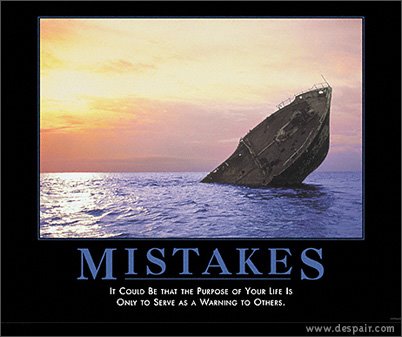
Third, wise people learn from the mistakes and punishments of others. It is great to learn from your own mistakes, but the cost is high. You actually have to fail, and that hurts. But it is much more affordable to learn from the mistakes of others. Proverbs 19:25 “Strike a scoffer, and the simple will become wary; rebuke one who has understanding, and he will discern knowledge.” The meaning of this may not be plain at first, but in the first stanza the author says that one person can learn when another is corrected. ‘God smites some,” says one commentator, “that he may warn all.” The wise man is alert to learn from the mistakes of others. Interestingly, the father in Proverbs 24:30-34 sees a run down farm and takes time to teach his son. It is broken down and in a state of dissaray. He says, “When I saw it, I considered it well; I looked on it and received instruction: A little sleep, a little slumber, A little folding of the hands to rest; So shall your poverty come like a prowler, and your need like an armed man.” He thought about the weeds, and the broken down fence, and concluded that the results of indolence are deceptively slow. He gained wisdom from the failure of another man. On the humorous side, the picture above is from despair.com (a very funny website, you should look through all the demotivators when you get a chance.). It says “It could be that the purpose of your life is to serve as a warning to others.”

Finally, a wise man learns from the wisdom of other people. “Lifelong learners,” if I can mention that phrase without overusing it, make good use of smart people. In fact, from the tone of scripture, they seek out the company of the wise. Proverbs 13:20,” He who walks with wise men will be wise, but the companion of fools will be destroyed.” Anyone can teach a wise man. You can walk with wise men down the road, or you can walk through their thoughts by reading. But one thing characterizes learners they are on the watch for people who can teach them. Their souls are like the ground, hungry to soak up the rain.


If God is For Us, Who Can Be Against Us?

In case you didn’t know…..I am not just a mild mannered college student. I am also a pastor. Relax, I am not a televangelist. I am a real pastor. I love Jesus and it is one of the greatest privileges in my life to talk about the gospel (good news). This story changed my life. This is an important sermon that I preached recently on Roman’s chapter 8:32. It is important because it deals with the implications of the life and death of Jesus.