The Racial Reality of Policing- Beware of Simple Solutions

It is dangerously attractive look for simple solutions to complex problems. And it is tempting to cling to them even against the evidence when they are offered.  Our country seems to be divided on the issue of homocide in the black community. And this division falls in line with a love of simple ideological answers.

Liberals are quick to blame the police and describe the situation as “open season” on black men.  To be sure, they have a growing body of evidence, much of it now on Youtube, that many police departments have been abusing their authority under the purview of the indifferent eyes of the white community. The facts tell a tale that blacks are disproportionately sent to prison for even minor crimes. And sadly, the list goes on from there. And this generates a distrust that undermines even sincere attempts for justice in black neighborhoods. Read the article for some troubling accounts from detective Conlon about times when his attempts to gain convictions for crimes committed by blacks against other blacks were unsuccessful.

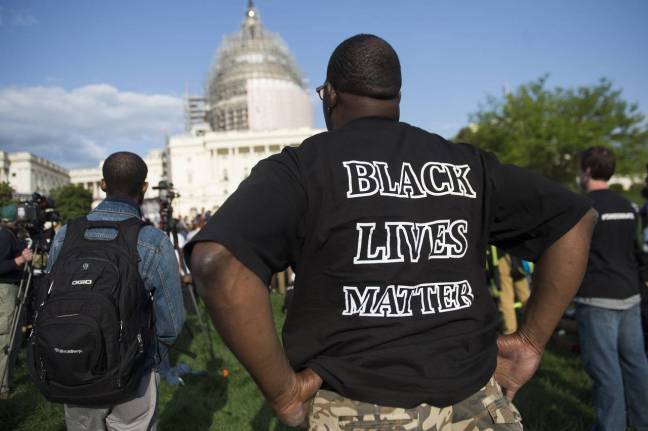
Conservatives are quick to blame the black community and point out the disparity of numbers. If black lives matter, why are protestors focusing on the 129 black men killed by legal intervention (the number is likely much higher), and not focusing on the 6,739 black men murdered by mostly other young black men? They ask, why is there so little discussion absence of black fathers and the erosion of families?  Many conservatives are quick to discuss personal responsibility,  and act as if the only place to find racism is in the media.

This article by retired NYPD detective Edward Conlon is interesting to me because he acknowledges problems on many sides of this issue. Further, he suggests that those problems play against each other in some tragic ways.  They not only contribute to the problem, but work to hinder any practical solutions.  I have often felt like I was in the middle on this issue.  I have found myself occasionally listening to both sides on these issues and alternately agreeing or shaking my head in frustration.  It is frustrating when when we only see what we want to see, or repeat what our chosen news outlets tell us.

Last year Ta-Nehesi Coates wrote a lengthy and moving piece in the Atlantic on “A Case For Reparations.”  His essay was powerful and worth reading, but in the end I suspect he falls into the trap of oversimplification.  In a follow up article he wrote, “There is massive, overwhelming evidence for the proposition that white supremacy is the only thing wrong with black people.” That is to say, the black community is not responsible for any of its problems.  Coates is not alone in that kind of simplistic approach. There are plenty of white conservatives that would suggest the opposite, that whites aren’t responsible for anything wrong in the black community either. The cops are the problem. Blacks are the problem. A or B. Choose.  What is worse,  both groups are at risk of viewing even factual statements made by the other side with suspicion.  If you accuse the police of racism you must hate law and justice. If you suggest that the black community has an internal epidemic of violence, you must not care about police brutality. Either you are a black racist or a white racist.

I believe that the reality is far more complex, and it will only be when both sides acknowledge their contribution to the current mess that we have any hope of finding a solution. When someone points the finger instead of accepting responsibility, they loose credibility in the discussion and undermine any motivation to deal with their own problems.

Edward Conlon makes a good point, there were 2 reports released after Ferguson, and we need to read them both to get a clear picture.

“In March, Attorney General Eric Holder released two reports on Ferguson. One covered in great detail the shooting death of Michael Brown by Officer Darren Wilson; the other described the broader patterns of policing in the city. Partisans have tended to choose one report or the other to support their reading of events.

“No, Brown wasn’t shot in the back while attempting to surrender to a white cop, nor was he shot for jaywalking. He had just robbed a store, and he had punched Officer Wilson in the face and tried to steal his gun. In the wake of Brown’s death, Ferguson burned because people believed a lie; because many still believe it, cops have been shot there, and the threat of riot remains.

“The other report showed that Ferguson was a speed trap for people going nowhere, six square miles of mostly black people, mostly poor, with 50 cops, almost all white, who were ordered to milk them for every possible nickel by white city managers. Black people were further bled dry in a punitive cycle of fines and fees; missed court dates led to arrest warrants, which left them increasingly incapable of having a chance at a productive life.” (emphasis mine)

Ben Carson recently wrote an editorial on the “Black Lives Matter” movement.  He points to the complexity of these issues. He refuses to see this as a problem with a single cause. He points the finger at our schools, Hollywood, Washington, crack dealers, Democrats, and Republicans. I think he is on to something.

Source: The Racial Reality of Policing – WSJ

American Capitalists and Socialists Have The Same Message

Capitalists socialists green

Recently I have noticed that in America the hard core consumer capitalists and socialists are really saying the same thing.  Both groups have morphed away from their traditional roots into distorted versions of themselves.  Marketing culture has now invaded every square inch of our lives.  I was at the DMV the other day, and this government office now has TV’s running advertisements to entertain people as they wait for their appointments.  The ad war has been so successful that we no longer believe it is possible to have a good life without more and more stuff.

In order to be successful, both groups have to move us to a place of discontentment, and even fear. They have to convince us that what we already have is not enough.  Then we are ripe to believe their propaganda: They can solve our problem.

The consumer capitalists, through the ubiquity of advertising, are telling us we need new shiny gadgets to have a good life.  Happiness is not possible without this stuff. So spend your money to buy happiness. Use a high interest credit card.  After all, what is happiness worth?  We are marinating in this narrative. We can’t escape it. It’s on TV, the internet, sporting events, nonprofits, schools, etc.  Not all of this is bad, but it does fuel the worst in human nature. We end up believing that happiness comes from stuff.  And that it comes from having stuff in a  particular way: the newest, the fastest, etc. And happiness is found in its highest concentration in having more stuff than our neighbors. So when you see your neighbor with the “next big thing” you need to go out and buy it. No interest, no payments for 6 months.

The socialists are saying that in spite of unprecedented prosperity (the majority of people considered poor have a vastly higher standard of living than the middle class 40 years ago),  happiness is not possible when others have more than you do.  You cannot be allowed to forget that the rich have more than you do.  And where this problem exists (and it is universal) there must be some cosmic inequity. You are a victim.  So the government will take other people’s money AND STILL GO INTO DEBT on your behalf so you can have the good life– which basically means more stuff.

Now poverty is real, and there are far too many poor in America where we have plenty of resources. So I don’t intended to diminish that.  More needs to be done to help those truly in need.  But I have observed that the socialist agenda wants to encourage more Americans to feel like they are poor.  To believe that they need government aid to survive. I just received a letter in the mail from our school district asking us to consider if we can qualify for free school lunches in a “need based” program.  What is the threshold to qualify?  For a family of 4 it is $52K/year.  But I wonder, If you are making this much money and you’re NOT spending it on food, where is it going? I think it is noteworthy that this is not assistance for “extras” like college applications, AP tests, field trips. That much might be understandable.  But this is for food.

My sense is that in the current context, many American socialists and capitalists are saying the same thing about where you can find the good life. They just have different plans on how to fund it. And in the end the good life won’t be found in stuff, no matter who is paying for it.

So don’t believe the lie, no matter which side is telling it.

An Overlooked Area Of Criminal Justice Reform.

Colin Miller has an interesting and brief article about wrongful convictions. He writes:

“Two key statistics: 95% of disposed American criminal cases are resolved by guilty pleas, often as a result of plea bargains. And 80% of people arrested in this country are represented by public defenders. These statistics are not unrelated. Public defenders are underfunded and overworked, and often refuse to take new cases.”

This brings up an important issue in reforming our very broken justice system. Why do we allow the lawyers that defend most of the accused in America to be low paid and inexperienced public defenders? Why isn’t there a national credential required for public defenders? I am told anyone that passes the Bar exam can become a defense attorney and defend the accused unless it is a capital case. I wonder if we would accept that for our surgeons? Why don’t we spend more money so that there are an adequate number of attorneys so that the accused can be adequately represented? Wouldn’t it be both more just and cheaper to do this than to incarcerate so many innocent people?

‘Serial’: How common are wrongful convictions in the U.S.?.

The Financial Collapse and Porn

The article linked below provides a slightly different piece of the puzzle as we unravel what brought us to our current financial crisis. It seems that while crooks on Wallstreet were lying and stealing, all of the folks who were supposed to be enforcing the laws we already had were looking the other way. And they were looking the other way a whole lot….

Fight the Freedom of Choice Act

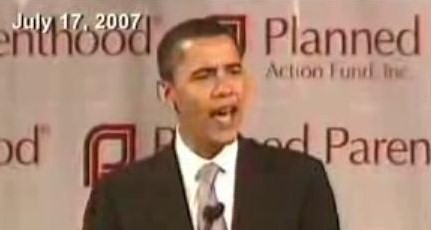
Here is a website that documents the attempts of the Obama administration and others to remove any restrictions on abortion via the Freedom of Choice Act (FOCA). It attempts to make abortion on demand a national right by doing the following:

  • FOCA will do away with state laws on parental involvement, on partial birth abortion, and on all other protections.
  • FOCA will compel taxpayer funding of abortions.
  • FOCA will force faith-based hospitals and healthcare facilities to perform abortions.

Check out this website for videos, information and a petition: http://www.fightfoca.com/

Perceptive Thoughts on Obama’s Inaugeration Speech

Cal Thomas, a Christian journalist who is syndicated and shows up in print all over the place writes perceptively about President Obama’s Speech. Here is a quote:

“The media coverage of the inauguration gave a preview of how they might cover the Second Coming. It was total worship. No doubts were expressed; no questions about his ability to do anything — from healing the economy to bringing peace to the Middle East. “

I didn’t think of this at first, but since reading this, I have to say that I don’t think I heard anyone challenge or be critical of his speech and agenda. That is a little scary.

Photographing the President

Here is a link to a great 5 minute video that records some of the experiences of 2 photographers that followed George W. Bush for 8 years. It includes some great photos and a narration from these men with commentary on their perception of the president.

Katrina


Hurricane Katrina

I have spoken to some friends about my paramedic experience, and thought it would be helpful to add some info about this stuff.

In fall of 2005 I was working for AMR in Victorville and had the amazing privilege to be part of a huge rescue and recovery effort following Hurricane Katrina. We drove 30 ambulances from Riverside to Baton Rouge, where we helped to set up a major “temporary ambulance operation” during the weeks that followed the hurricane. We were there for about 3 weeks. It was a great privilege, and I would say it was a defining experience in my life. I had been a paramedic 10 years and like anyone in EMS that amount of time, I had seen enough to give me nightmares for a lifetime. But being there was different. It was not the normal 911 mode of doing things where there are a few people at a time in the midst of crisis. almost everyone there was experiencing some degree of chaos, or was related to someone who was. I felt like the purpose of my life to help others was just as clear as it has ever been.

The first picture is of me and Phil Titsworth. He was a supervisor for AMR in the Antelope Valley then, and I think he still is. He is a great guy and we developed a pleasant friendship while we were there. We were partnered up the day of this picture. Location: We were in the Omni hotel in the French quarter, and we were detailed to an improvised clinic there. We had a doctor, a nurse, and a bunch of paramedics. Most of the citizens were gone, and the people that remained were mostly relief workers of one kind or another. Police, Fire, Militar, and various workers. So people would come in and we would help with vaccinations, and give all kinds of care….a lot like an urgent care. We did many different things, and each day was often a different “mission.” Some helped with backing up 911 units, some transferred patients to other hospitals, some worked at refugee centers, some helped with search and rescue teams, some helped with body recovery….we did all this and everything in between.

When the water went down and they opened one of the freeways in N.O. we drove through and saw this makeshift “dock.” It was a place where many of the citizens had taken their boats into the water to rescue the stranded. When the water receded they leaned over onto the ground where they were tied up…amazing….

Some lessons I learned:

  1. Texas is a very big state, you just drive and drive and drive, and you are still in Texas.
  2. Don’t count on the government to save you, even when the resources are just a few miles a way. No kidding, things were very disorganized. At one point I was so frustrated I was fighting back tears. In my personal experience, the state of Louisiana should bear the greatest brunt of the blame, right after the personal failure of individuals who ignored warnings..
  3. Listen when you are told to evacuate, and do at least something to prepare yourself for disasters. It is really easy to throw stones at all those idiots in New Orleans isn’t it? But how many of us in Cali, right up the street from the San Andreas Fault are really prepared for the big one. They have hurricanes, we have earthquakes. We should give some thought to preparing for emergencies.
  4. There are lots of great people in America that rise to the occasion during disasters. I was overwhelmed by the kindness of the southerners. I met a doctor who volunteered to go out there and help. She said she had student loans, and a struggling practice, but that she just HAD to go to help the people there. Wow! I saw lots of that and felt humbled to be among so many sacrificial people. I was also very proud of AMR. They have their problems, but in disasters they do the right thing.
  5. I was amazed at the power of God. I saw destruction right in front of me, the news doesn’t compare to seeing miles after miles of destruction.
    Psalm 46:8 Come, behold the works of the LORD,
    Who has made desolations in the earth.

I have lots more to say, but this is all for now.