
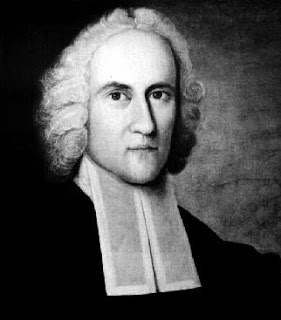
Jonathan Edwards on the Poor


Of the obligation of Christians to perform the duty of charity to the poor.

“THIS duty is absolutely commanded, and much insisted on, in the Word of God. Where have we any command in the Bible laid down in stronger terms, and in a more peremptory urgent manner, than the command of giving to the poor? We have the same law in a positive manner laid down in Lev. 25:35, etc. “And if thy brother be waxen poor, and fallen in decay with thee, then thou shalt relieve him; yea, though he be a stranger or a sojourner, that he may live with thee.” And at the conclusion of verse 38, God enforces it with saying, I am the Lord thy God.

“It is mentioned in Scripture, not only as a duty, but a great duty. Indeed it is generally acknowledged to be a duty, to be kind to the needy. But by many it seems not to be looked upon as a duty of great importance. However, it is mentioned in Scripture as one of the greater and more essential duties of religion. Mic. 6:8, “He hath showed thee, O man, what is good; and what doth the Lord thy God require of thee, but to do justly, to love mercy, and to walk humbly with thy God?” Here to love mercy is mentioned as one of the three great things that are the sum of all religion. So it is mentioned by the apostle James, as one of the two things wherein pure and undefiled religion consists. Jam. 1:27, “Pure religion, and undefiled, before God and the Father, is this, To visit the fatherless and widows in their affliction, and to keep himself unspotted from the world.”

“So Christ tells us, it is one of the weightier matters of the law. Mat. 23:23, “Ye have omitted the weightier matters of the law, judgment, mercy, and faith.” The Scriptures again and again teach us that it is a more weighty and essential thing than the attendance on the outward ordinances of worship. Hos. 6:6, “I desired mercy, and not sacrifice;” Mat. 9:13 and 12:7. I know of scarce any duty which is so much insisted on, so pressed and urged upon us, both in the Old Testament and New, as this duty of charity to the poor.”

Jonathan Edwards From The Duty of Charity to the Poor, Explained and Enforced

How does divorce affect children?

In doing some research to preach on marriage and divorce recently I have been simply overwhelmed by the mountain of evidence that shows that divorce is one of the worst things that can happen to a child. In many ways we are destroying our own future through the selfishness of divorce.

The Ministry of Listening


The Ministry of Listening


“The first service that one owes to others in the fellowship consists in listening to them. Just as love to God begins with listening to His Word, so the beginning of love for the brethren is learning to listen to them. It is God’s love for us that He not only gives us His Word but also lends us His ear. So it is His work that we do for our brother when we learn to listen to him. Christians, especially ministers, so often think they must always contribute something when they are in the company of others, that this is the one service they have to render. They forget that listening can be a greater service than speaking. Many people are looking for an ear that will listen. They do not find it among Christians, because these Christians are talking where they should be listening. But he who can no longer listen to his brother will soon be no longer listening to God either; he will be doing nothing but prattle in the presence of God too. This is the beginning of the death of the spiritual life, and in the end there is nothing left but spiritual chatter and clerical condescension arrayed in pious words. One who cannot listen long and patiently will presently be talking beside the point and be never really speaking to others, albeit he be not conscious of it. Anyone who thinks his time is too valuable to spend keeping quiet will eventually have no time for God and his brother, but only for himself and for his own follies.”

“Life Together” – Dietrich Bonhoeffer

Fresno Poverty Compared to Appalachia

This is an older article, but reinforces the fact that Fresno ranks high on poverty compared to other places in the US. When I read articles like this I am forced to question myself: Sometimes it doesn’t seem that bad to me, is it because I am hiding away from it? What am I doing, as a resident of one of the poorest cities in America to help the poor? What are my feelings toward the poor? Do I see myself in them, or simply look down on them as suffering for their own bad decisions?

Dealing With The Accuser

“Satan accuses Christians day and night. It is not just that he will work on our conscience to make us feel as dirty, guilty, defeated, destroyed, weak, and ugly as he possibly can; it is something worse: his entire play in the past is to accuse us before God day and night, bringing charges against us that we know we can never answer before the majesty of God’s holiness.

What can we say in response? Will our defense be, ‘Oh, I’m not that bad?’ You will never beat Satan that way. Never. What you must say is, ‘Satan, I’m even worse than you think, but God loves me anyway. He has accepted me because of the blood of the Lamb.”

—D.A. Carson, Scandalous: The Cross and Resurrection of Jesus(Wheaton, IL: Crossway, 2010), 98-99

Why So Tired?

Interesting to see how tired we are in America. We have more time saving devices and prosperity than ever, and we still can’t sleep. What is perhaps most interesting are the causes of this problem, and its effects. It is not good for your marriage either. Too tired for sex? That is really tired.

10 (or more) Reasons I love My Mom

I decided to sit down and come up with at least 10 things I could say to honor my mom and show her how much I love her. This is a great exercise to show our cranky hearts how thankful we should be, and a wonderful way to honor the one who brought you into the world.

10 (or more) Reasons I love my Mom

1. Mom thanks for coming to all my games when I was a kid. I was constantly playing football, baseball, and basketball and you were always there to support me, and even embarrass me with your Kazoo. Thanks for driving me back and forth to so many activities while I was growing up.
2. Mom I love you because you taught me how to iron my own clothes when I was little. This is a small thing, but I think altogether you showed me how to care about my appearance.
3. Mom, I love you because I have a memory of being very small and you holding me close. I can remember having my head up against your chest and remembering how comforting your voice sounded to me. Thanks for being such a tender mom. I was born in 1973, the year that Roe V. Wade was passed. I know I came along “unexpected.” Thanks for keeping me.
4. Mom, thank you for always making a big deal out of the little successes in my life. You always encouraged me when I got good grades or had some kind of achievement, big or little. That has helped me to learn how to be a better dad. Thanks, also for continuing to be proud of me as an adult when I succeed and do well. I love you for that!
5. Mom, I love you because you always let us have dogs when we were growing up. Thanks for letting me have the dog in the house, and even letting her sleep on my bed when I was younger.
6. Mom, I love you because you are a generous person. I can always remember you giving things to people out of kindness. Sometimes you gave gifts, sometimes you gave extra things to customers at our family restaurant. When I was growing up you always showered me with kindness and good presents. Thanks for teaching me to be generous.
7. Mom, thank you for disciplining me when I was a child, and never abusing me. I am sure I deserved much more than I got. You were always patient with me. Thanks!
8. Mom, I Iove you because you have stayed with Dad your whole life. I am thankful that even though you disagreed sometimes, I don’t ever remember a real “fight” while I was growing up. Your commitment to one another is a blessing that I am sure I still do not fully appreciate.
9. Mom, thanks for loving my wife. I think that you were supportive and kind to her from the time we first met. She has been a wonderful wife, and you have always showed your acceptance and approval of her. You have always made her feel welcome in our family. I love you for that!
10. Mom, thanks for taking me camping so often when we were kids. Thanks for letting me be in the boy scouts and do dangerous things without freaking out all the time. Thanks for not freaking out when I crashed the car, 2 times in high school.
11. Mom, I love you for teaching me not to use drugs, and giving me so many positive memories and blessing so that I never really felt pressured to go down that path.

Walking in the Spirit

Here is a helpful outline of some steps involved in walking in the Spirit:
“I say then: Walk in the Spirit, and you shall not fulfill the lust of the flesh.” (Gal. 5:16)

A – Admit my helplessness (John 15:5)
P – Pray for help (Psalm 50:15)
T – Trust a specific promise (Isaiah 66:2)
A – Act with confidence in God (Isaiah 55:11)
T – Thank God (I Thessalonians 5:18)

This comes from John Piper, who I think got it from J.I. Packer. It is a good reminder of things to do when you face a temptation or challenge. It has helped me from time to time, and seems to be a broad distillation of the teaching of Scripture on the Christian life.

Judgment is Not Enough

When I took microbiology I learned that in order to sterilize our equipment and culture media (the agar, the gel stuff that is used to grow bacteria) every single bacteria and spore had to be destroyed. If even just one survived, then in the space of several days it could reproduce at an exponential rate producing millions more. In order to do this, we used an autoclave. From time to time we would use disinfectants to clean our work areas, and this was helpful, but it did not assure that every germ was destroyed. Additionally, in an attempt to grow bacteria on a Petri dish we would perform a special procedure (called “streaking for isolation”) in order to test a colony of bacteria that grew from a single bacterium.

I thought of this while reading Genesis 7 this morning. The Lord puts Noah and his family on the ark, and floods the world. Human evil was so bad that God wiped out the world with a flood, like a bunch of disinfectant. But Noah—a righteous man—and his sons survive to provide a fresh start. It is not long after the floodwaters recede that we find that not only has Noah’s family survived, but so has the problem of sin and corruption. In Genesis 9:20-28 we see that this lone family experiences serious “dysfunction” through alcohol abuse and sexual sin. The problem of evil had survived because it was located in the fallen hearts of people.

We read in other places how people respond to God’s discipline and judgment with anger and hatred. In Rev 16:9 we read, “and men were scorched with great heat, and they blasphemed the name of God who has power over these plagues; and they did not repent and give Him glory.” It would appear once again that judgment is not enough to remove sin. It is like a disinfectant that can sometimes restrain it. The inevitable question confronts us: is there any hope at all for the elimination of evil?

Hebrews 12:23 speaks of those who are, “registered in heaven,” where we find “the spirits of just men made perfect.” This will be the payment in full of the plan of the gospel to redeem fallen men through Jesus. Romans 8:29-31 tells us that the final destination of those who believe in Jesus is to be “glorified,” and to be made into the “image of His son.” The bad news of judgment alone is not sufficient to remove sin, it takes the good news of grace to do that. This is why Peter tells us “gird up the loins of your mind, be sober, and rest your hope fully upon the grace that is to be brought to you at the revelation of Jesus Christ.” (I Peter 1:13) The return of Jesus is a day of expectation for believers even though it is a day of judgment. It is a day of expectation because it will be a day of grace, and we are to look in hope towards that future day in order to have strength to live in the present.

Preaching the Gospel to Yourself

“Preaching the gospel to myself each day nourishes within me a holy brazenness to believe what God says, enjoy what He offers, and do what He commands. Admittedly, I don’t deserve to be a child of God and I don’t deserve to be free of sin’s guilt and power. I don’t deserve the staggering privilege of intimacy with God, nor any other blessing that Christ has purchased for me with His blood. I don’t deserve to be useful to God. But by the grace of God I am what I am and I have what I have, and I hereby resolve not to let any portion of God’s grace prove vain in me! And to the degree that I fail to live up to this resolve, I will boldly take for myself the forgiveness that God says is mine and continue walking in His grace. This is my manifesto, my daily resolve; and may God be glorified by this confidence that I place in Him.”

– Milton Vincent, A Gospel Primer for Christians (Focus Publishing, 2008), 52.