
Did Jesus Have B.O.?


Did Jesus have body odor? A comic, perhaps, irreverent question for some. If it is a hard question to ask, it may be even harder to answer. The Bible doesn’t give any real ink to the subject of Jesus’ B.O. Yet this kind of question may be useful because it forces us to question our assumptions and beliefs about Jesus. What kind of man was He? If Jesus ever had a smelly day, that means He must have been very human, very ordinary. That means He must have worked hard and worked up a sweat. But coming to a realization like this may be a little shocking, like the first time you saw a school teacher at the grocery store and realized that they were “normal too.”

If we could rewind history and do a blindfolded smell test with Jesus and five other Palestinian men, several things would be immediately obvious. First, you wouldn’t choose this as a career. As Americans, we are pretty intolerant of funk. And second, you probably would not have been able to tell Jesus apart from any of the others by smell, or even by normal appearance. In fact, when Judas was carrying out the great betrayal, he led a small army of soldiers into a garden outside the city where Jesus and His disciples used to spend the evening. If the real Jesus were anything like the Jesus of medieval art, Judas would have said: “arrest the guy with the halo and the glow.” But Jesus could not be easily recognized from others, especially in the low light of the evening. So Judas gave a signal, “I will go up to Jesus and greet Him with a kiss. That is the one, arrest Him.” (Mark 14:44)

The Bible portrays Jesus as an extraordinary man, but also as a very ordinary man. Both of these concepts are important. More on this in a moment. In what ways was Jesus a normal guy? He grew up in a big family and He had a normal, working-class job in the family business as a carpenter (Mark 6:3). If He had pants, He would have put them on one leg at a time. He was so tired after a day’s work that He fell asleep in a storm-tossed boat. He walked almost everywhere He went. This produced the normal human experience: He was tired and thirsty and hungry (Mark 11:12). He attended weddings and feasts, and sometimes was criticized for it (Luke 15:1-2). He was betrayed by friends, criticized by the elite ruling class of His day. Often misunderstood, misquoted, and slandered. People used Him, and seldom thanked Him for His kindness. He was often tempted (normal!), but never gave in (definitely abnormal! Hebrews 4:15). The night before His betrayal and death He was lonely, and His closest friends stood Him up. He cried and prayed in His loneliness. He died a very human death full of pain, tears, bleeding, and loud cries. Then He was buried. After all this His friends cried and mourned. Scripture tells us how ordinary He was: “Therefore, in all things He had to be made like His brethren…” (Hebrews 2:17)

However, this is only one side of the life of Jesus. If we only see His humanity, we will be just like the people who misunderstood Him. The facts of history record for us amazing things about Jesus. Those who heard Him said, “no one ever spoke like this man.” (John 7:46) He also performed miracles impossible in nature, because He had power above nature. He turned lots of water into lots of good wine (John 2:1ff). He loved His friends and His enemies. He said that He had the divine prerogative to forgive sins (Luke 5:17-24).

From his prison cell, John the Baptist sent someone to Jesus with a doubt-filled question: “are you the promised savior of the Old Testament?” Jesus replied, “Go and tell John the things you have seen and heard: that the blind see, the lame walk, the lepers are cleansed, the deaf hear, the dead are raised, and the poor have the gospel preached to them.”(Luke 7:22) His own disciples were dumbfounded when Jesus calmed a storm on the sea of Galilea. Their response: “So the men marveled, saying, “Who can this be, that even the winds and the sea obey Him?” (Matt 8:27) So, from this perspective Jesus was definitely not ordinary.

So What? What’s the big deal with Jesus as ordinary yet extraordinary? Read the rest of Hebrews 2:17, which was quoted above: “Therefore, in all things He had to be made like His brethren, that He might be a merciful and faithful High Priest in things pertaining to God, to make propitiation for the sins of the people.” (Hebrews 2:17) Jesus had to be a real human being in order to suffer as a substitute.

This is the unpopular truth about Jesus. He wasn’t just a great rabbi who believed in humanity. He came to be the savior of humanity. All of us humans (yep- me and you) have universally made a mess of things. By selfishness and lawlessness we have worked hard to destroy our own lives and the lives of others. Jesus came to repair this. But even the good teaching of Jesus was not enough to fix things. Good examples are not enough. Committed leaders are not enough. The whole thrust of scripture is that we have incurred a debt to God by our bad conduct. “The wages of sin is death.” (Romans 6:23) Jesus died to pay this debt. Here is a useful illustration: In terms of international finance, a debt must be paid in the same currency as the loan. Borrow dollars, pay dollars. Borrow yen, pay yen. Jesus had to be human to pay for the sins of humanity. “Christ also suffered once for sins, the just for the unjust, that He might bring us to God” (I Peter 3:18). His death could pay that debt and bring us to God because He was very ordinary and very extraordinary. Hebrews 2:14 says the same, “Inasmuch then as the children have partaken of flesh and blood, He Himself likewise shared in the same, that through death He might destroy him who had the power of death.”

Here’s the rub: Jesus took on flesh and blood that he might change flesh and blood forever. If Jesus had B.O. it was because you and I needed a Savior.
Mutations and Evolution, it Doesn’t Add Up

DNA
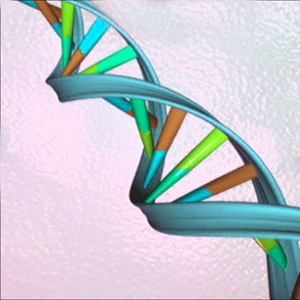
I am just a community college student, but I like to actually think when I am in class. And recently in my human physiology class, we were studying DNA replication and the whole issue of mutations. My professor, Steve Langjahr (one of the best teachers I have ever had) mentioned that sometimes mutations can be beneficial. The result: benefit to the genetics of the species in particular and the gene pool in general. He did admit that this was rare, but said that it was possible. This is of course the operating assumption of evolution. The mechanism that makes natural selection possible is beneficial mutations. This got me to thinking about mutations and the scientific basis for evolution. It sounds plausible on the surface, but when I really started thinking about it, this idea seemed very unscientific to me. Here are a few things that came into my mind:

1. When it comes to mutations and heritability (the ability to pass the mutation, good or bad to your offspring) there are 2 kinds of cells. There are sex cells, which are found in the ovaries and testes-these produce cells capable of sexual reproduction. And there are somatic cells, which are pretty much everything else. The only cells that are involved in sexual reproduction, from a genetic standpoint, are your sex cells. So any other mutations, even though they may conceivably be beneficial, will not harm or benefit your offspring genetically, because they do not pass on to your children unless they affect your gonads. Practically speaking, unless the mutation affects your sperm or ova, it will not help evolution. This takes the vast majority of all possible mutations out of the game of natural selection. Additionally not all mutations of sex cells are passed along to all offspring. Some are recessive.

2. The vast majority of mutations that are translated into protein production are either neutral (because they are in an incodon, aportion of the DNA that is “cut out”) , harmful or even lethal. Whether the mutation is a substitution, insertion, or deletion of a base in the DNA sequence, most mutations that register a noticeable effect are deleterious to the organism. In fact, it is hard to find substantive instances of beneficial mutations that do not simply involve variety within a species. On the web plenty of table pounding evolutionists can point to all kinds of bacteria and yeast that learned to do circus tricks in a petry dish. But this is a far cry from an organism morphing into another organism, and a far cry from showing examples in nature. I read one example on the web of a man who offered as evidence of beneficial mutations, a report that a frame shift DNA mutation produced a new enzyme that worked 1% as efficiently as the normal enzymes. It could just be me, but that doesn’t sound like forward progress. A few examples of the harmful mutations include cystic fibrosis, muscular dystrophy, and sickle cell anemia. This is a real serious problem for evolution, scientifically it is the exact opposite of what evolutionists postulate.

3. For a mutation to “move” evolution along, it must be so helpful that it increases a creature’s chances of survival. It is plain by examining ourselves or many other animals that we can live just fine without many of the supposed adaptations that have “evolved” to make us what we are. Examples: Eyebrows, fingernails, tastebuds, etc. We can live just fine without a spleen, or tonsils. You get the idea. The theory says that the mutations involved in natural selection are so beneficial that they give me survival advantage to the mutant above those around it. Everyone else dies off while the mutant survives.

4. To support evolution, a mutation must not only be beneficial, but it must be heritable (as above #1) and increase the likelihood of reproduction. Let’s say that I had a son who was born with a helpful mutation such enhanced night vision. This would only make a difference if it resulted in my son being more likely to reproduce than his classmates, who would eventually die off because they were unfit. Furthermore, he would have to find a female that he would be able to reproduce with. Some mutations are so radical that they would prevent sexual reproduction unless your mate had the identical mutation (think of donkeys and horses, chickens and falcons can’t reproduce either). Furthermore, as it is, not all “fully evolved” creatures are able to reproduce because of hostile conditions. (e.g. dear competing for a mate, the vast majority of crocodile eggs do not hatch and produce an adult crocodile who reproduces). From a plausibility stand point, here is what bothers me. If a mutation was so small and gradual that it allowed for reproduction it is unlikely that it would have such massive survival value that it would promote natural selection. On the other hand, if a mutation was so radical as to be of great survival benefit it is likely to prevent sexual reproduction.

5. Statistical probability. Admittedly evolutionary biologists have a hard time coming up with anything but imaginary examples of beneficial mutations to support the theory. They can show how existing variety within a species can benefit an organism, a la the black butterflies in the smog, or the drug resistant bacteria. But coming up with mutations that account for a change from one species to another, let alone one genus to another is a tougher row to hoe. This should cause some sleepless nights, especially in light of:
a. The current rate of mutations is more than ever in history because of an increased amount of mutagens in the environment. There are more mutations and more chances of mutations than previously because there are more causes of mutations.
b. Increased population. Let’s think of humans. There are about 6 billion of us on the earth now, more than ever before. Much more than ever before. The rate of reproduction is millions of times greater than it ever has been in the long history of anthropology. The amount of DNA transcription and replication that occurs in one year now, would have taken thousands or millions of years in the past. The mathematical conditions that would need to exist for random mutations to produce benefits are all around us.
c. Medical science has preserved lives and extended our life span more than we have ever seen. Additionally, medicine has enabled people that would not have been able to survive and reproduce to do just that.
The situation is a prime biological stage to demonstrate evolution through mutation. We are more likely than ever to see mutations, and for mutated people to survive and reproduce.

So what has this produced for us? It hasn’t produced any evolution, and it hasn’t lead evolutionary biologists to write a new playbook. To suggest that evolution is unscientific is a form of flat-earth techno-blasphemy. I thought that one of the tenets of science was falsifiability? I thought that we are supposed to change our views when information becomes more clear, or the evidence points in a different direction. I don’t believe in evolution because I am a Christian, and I believe that God made all things in 6 days and all very good. But I admit that what I believe is not pure science, it is a philosophy, it is faith. Though I believe it is a faith with scientific support, that is another discussion. Sadly, many biologists won’t admit the same…namely that this idea is a philosophy and not science. One of the prime evidences of this is that some won’t allow it to be disproved by the facts.


Photo used by permission AJ Cann. Some Rights Reserved

My Bass

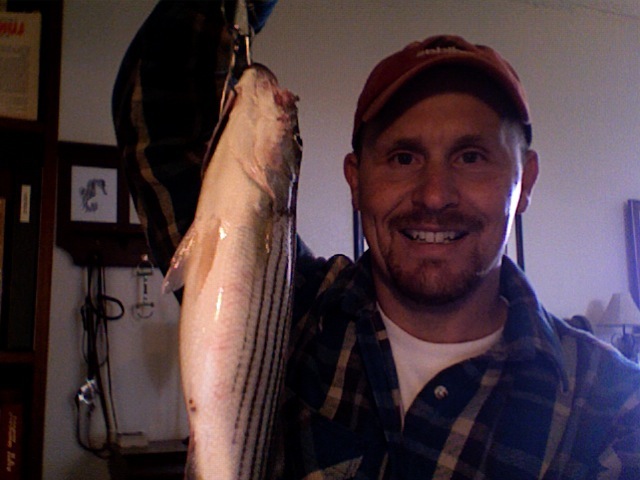
I live near the Aqua Duct, really near it. I have spent countless hours trying to catch a fish. No kidding, almost a year. All kinds of bait and lures, all times of day, lunar calendars, Field and Stream magazine, nothing helped. But in September 2007 I did it! Yahoo! it was a big striped bass!