Truth and Grace Make the Safest Place- Helping Christians with Same Sex Attraction

This is a helpful article on how churches can become safe places for people with same sex attraction to experience love and hear truth.

In my opinion, the folks at the Public Discourse consistently offer thoughtful and academically challenging resources on moral issues affecting our culture.

Some big ideas in this essay:

  • When Christians profess to believe the Bible, yet compromise on sexual ethics it is confusing for people searching for redemption. The author of this article (a lesbian) writes about the journey she took with a friend, “Both of us were confused, wondering whether we should continue to embrace our lesbian identity with abandon, give it up for our faith, or try to have it both ways by twisting the Scriptures and suppressing the voice of conscience.” Sadly, in the name of compassion some Christians in their lives were unwilling to tell them the truth. This added to their troubles.
  • When we open our mind to sin, we open it up to deception. We lack objectivity when we try to wrestle with our own hearts, and often embrace bad ideas to rationalize what we want.
  • Telling people the truth in love does NOT hurt them, it helps them. Trying to encourage people by confirming them in their sin hurts them. Sin is always bad for you. All sin is bad (MY sin is bad for me). This is especially true of sexual sin.  And this includes the many different kinds of sexual sin, even the more acceptable varieties (like the Sports Illustrated soft-porn swimsuit edition).  This includes anything outside of the bounds of a committed, monogamous marriage of husband and wife. When pastors and churches teach a Biblical ethic on sexuality combined with mercy and grace, that is good medicine.
  • People that experience same sex attraction but want to honor God with their sexuality don’t have many places to go. The gay movement wants them to embrace their desires as their identity. Many in the church are also compromising and bending their message to the whims of the culture. There aren’t many places that will talk about repentance, AND also give you a helping hand in the process.  And not enough churches that do speak the truth are also prepared to walk as fellow sinners saved by grace with their brothers and sisters in this messy journey.
  • One of the best lines in the essay, when talking about sexual sin:   “Don’t single out homosexuality, but don’t leave it out either.”

 “Don’t single out homosexuality, but don’t leave it out either.”

The loudest voices in the propaganda machine would insist that the article I am referring to, as well as my comments above, constitute hate speech.  Which is interesting that an essay by a struggling lesbian giving advise to the church would be considered hate speech.  But none of this is hateful. And anyone who has ever experienced real hate-speech will know the difference.  And one of the big parts of becoming a grown up is learning the difference between people that hate you and people that disagree with you.

Source: Rending the Rainbow Veil: How to Make Your Church a Safe Space for Christians with Same-Sex Attraction | Public Discourse

You Need To Go To Church

You need to go to church. Sometimes people say ridiculous things about Jesus and Christianity. And here is something crazy: Christians can be the worst of all at this.

Here is one of the most ridiculous things I have heard believers say, “You don’t need to be a part of a church to be a Christian.” Some nuance is needed to pick this statement apart because there are some christians that are separated from the body of Christ. But when I have heard this statement the overall meaning is that we can do this on our own… that we don’t need to give or receive fellowship.  That we can live as amputated limbs without the rest of the body.  Well, below is one of my attempts to Biblically deconstruct this idea. Here are some notes and a link to a sermon I recently preached on this.  At the core of this message is the truth is that Christian community is tied to the work of Jesus on the cross and in our lives.  The need for fellowship and worship is much bigger than “being a good Christian.”

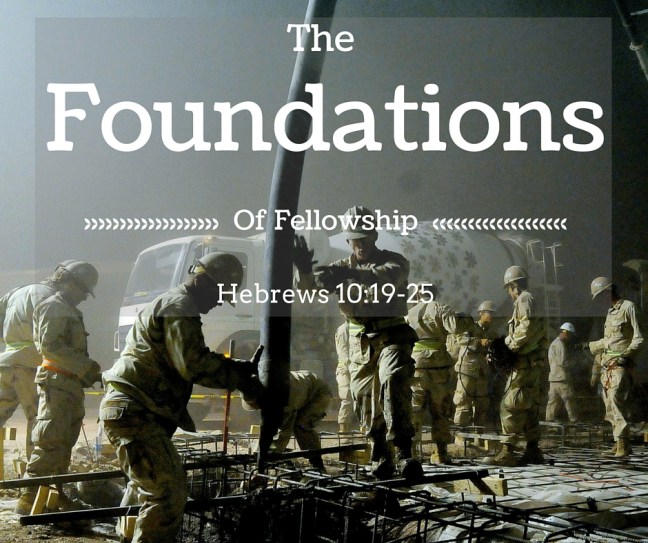
Hebrews 10:19-39 “Therefore, brothers, since we have confidence to enter the holy places by the blood of Jesus, 20 by the new and living way that he opened for us through the curtain, that is, through his flesh, 21 and since we have a great priest over the house of God, 22 let us draw near with a true heart in full assurance of faith, with our hearts sprinkled clean from an evil conscience and our bodies washed with pure water. 23 Let us hold fast the confession of our hope without wavering, for he who promised is faithful. 24 And let us consider how to stir up one another to love and good works, 25 not neglecting to meet together, as is the habit of some, but encouraging one another, and all the more as you see the Day drawing near.”

Community starts with understanding what Christ has done for us. This is true because sin has separated us from God and one another. And the most important work, the first work is to repair the breach that our sin has caused between us and our God.

Sin separates us from God, and God from us. And sin also separates us from one another. God’s righteousness has barred us from his presence. And because our consciences are defiled, being in the presence of God is no longer pleasurable. We now run from him rather than to him. The OT temple worship was a depiction of this situation. We are separated from God’s presence, but he has made a way for us to return and be cleansed.

The work of Jesus (especially v. 19-21), as described in this passage, shows us 4 things that are the foundation of Christian community.  We cannot separate the way we relate to God from the way we relate to other people.

1.     We are welcomed. We have bold access to God’s presence because of the sacrifice of Christ. His blood has cleansed us. We are no longer banished. This is not because we have become good enough or worked hard enough. This is purely because of his work on our behalf.

2.     We are clean. Our hearts have been sprinkled by his blood. We are washed and forgiven and our consciences can be at peace. What the Old Testament animal sacrifices could only depict, Jesus has accomplished. We no longer need to be controlled by guilt and shame.

3.     We are secure. A promise is only as good as the one who makes it, and we are safe and secure because he who promised is faithful.

4.     We are in process. Though we are forgiven and accepted completely, there is much work to be done in us, on us, and through us.  And this work is explained (in part) in this passage.  God is at work in us through other believers. We desperately need them to help and encourage us.

Continue reading You Need To Go To Church

Thoughts From The Other Side Of The Obergefell Decision

Thoughts From The Other Side Of The Obergefell Decision.

Some helpful thoughts in this essay by Hunter Baker from the Federalist.


Lots of people are agitated about the supreme court decision, and I understand why.  But I have also been scratching my head, because we really just traveled another mile down the road we were already traveling. This doesn’t seem like new “news” at all. It just makes official what has been happening unofficially for a long time.  Hunter Baker gives a good explanation of why this hurts for so many Christians:

“So, why the distress now? Why does Obergefell fall so heavily? It’s a little bit like being a child whose parents’ marriage is slowly disintegrating. But for years they held on. The kid knows a divorce is probably going to happen. The things that tied the family together have slowly been broken or dissolved in a long and painful process. But right up until the moment when it really happens, the child has hope. The parents criticized each other, refused to give credit, were eager to assign blame. And now it feels like it’s over. It’s not just over. Some people are throwing parties to celebrate. They’ve been hoping for this divorce for years and are thrilled to see it happen.”

He also tells a compelling story of his own journey to “real” faith in Christ (vs. the shallow cultural variety that was so common during his upbringing in the South) and how that same journey informs him now.

“Many are aglow in the wake of Obergefell. They didn’t like that old marriage between Christianity and the U.S.A. In fact, they thought America needed a new mate altogether. Call it scientific humanism or therapeutic deism, whatever. To them, this looks like the most hopeful moment yet.

“It’s hard to be the person at the party who isn’t celebrating. But I have no choice other than to be hopeful lest I discount my own conversion and spiritual quest. I believe Jesus is real and that he is the son of God. I know that men and women still seek him. Many will come as I did. He will change their lives forever as he changed mine. I know that the church and many Christians in times and places across history and around the globe have faced far greater challenges. No social change, no worldly court, no legislation will re-orient me.”


God Loves Me & So Does My Dog, But It’s Different

God Loves Me,And So Does My Dog. But 2

I have a 1-year old chocolate colored poodle. She’s a great dog and she’s always happy to see me. Wait, that’s an understatement. She goes nuts when we come home.  She is so excited that often she wets herself.  We feed her, and pet her.  We take her for walks occasionally. We play with her and hang out together. And that’s enough, she thinks we are wonderful.  She jumps on the bed in the morning and licks my face to wake me up. She always wants to play. And even when we aren’t playing she just wants to be near me. She follows us around the house and lays at my feet.  And all her enthusiasm and love is great for my self-esteem.  And she does this even when we ignore her. Sometimes we have to lock her up in a crate for most of the day to keep her from destroying the house. But when we come home and let her out, it’s a celebration.

For some Christians, this is a close description of how they understand God’s love.  He is really excited about us, makes hardly any demands, and won’t mind if we lock him away in a crate when we have better things to do. They have attempted to tame God, and as a result his love is… Well… Just okay.  But it doesn’t match the love we see at Calvary where we see Christ pouring out his life for an unfaithful spouse.   The puppy-dog  kind of love doesn’t produce the (seemingly) irrational joy, worship, and sacrifice we see described in scripture.  It doesn’t buoy up the soul in the face of great sin and suffering.

I am slowly working my way through “Yawning At Tigers” by Drew Dyck. He writes about this phenomenon, and our tendency to domesticate God.  Writing about modern preachers, he says:

“Unfortunately, in our efforts to make the Bible interesting and relevant, we try to normalize God. We become experts at taking something lofty, so unfathomable and incomprehensible, and dragging it down to the lowest shelf. We fail to account for the fact that God is neither completely knowable nor remotely manageable”

Unfortunately, in our efforts to make the Bible interesting and relevant, we try to normalize God.

He says that we are often uncomfortable with the mysterious, and transcendent descriptions of God. They are too strange or even unpleasant to our American sensibilities, so we explain them away.  Again, he writes “Here’s the beautiful irony: making God strange actually enables us to know him more. Once we have marveled at his magnitude and mystery, we are able to achieve the deep intimacy that grows out of a true appreciation for who God is. Instead of treating him as an equal, we approach him with reverent awe. Only when we’ve been awestruck by his majesty can we be overwhelmed by his love.”

I love my dog, and enjoy the way she worships me. And that would be the best word to describe it!  But God’s love is different, it’s not about his infatuation with my greatness.  One of the reasons we are “yawning at tigers” is because we are not impressed with the love of God. And we are underwhelmed with his love because we don’t understand his holiness, majesty, and greatness. If we did, we would understand our own sin as well and see just how much it cost him to love us.  And that would make his love something to live for.

Fifty Shades of Grey: Pornography and Normalizing the Bizarre

Fifty Shades of Grey: Pornography and Normalizing the Bizarre | Canon and Culture.

Bart Barber has done a good job of going beyond “rules” while discussing 50 Shades of Grey.  When asking the question whether anyone, and especially Christians, should see this movie we need beyond a simple rule-based evaluation. We need to see what is behind the best rules.  God has given us a world full of truth, beauty and goodness.  And this includes sexuality. We cannot abandon beauty without loosing goodness.  The article is worth reading.

I haven’t seen the movie or read the book, and I plan on NOT doing either. But from what I have read about the content, I am absolutely perplexed how a culture obsessed with talking about the abuse of women can make this a bestseller.

“This is the true price of pornography. Yes, pornography normalizes the bizarre, but the flipside of the coin may be the darkest aspect of it at all: It bizarrifies the normal.”

A few highlights:

“This is the true price of pornography. Yes, pornography normalizes the bizarre, but the flipside of the coin may be the darkest aspect of it at all: It bizarrifies the normal. If one were to create a pornographic website that featured average couples who had been married twenty years or more engaging in sex as the average married couple experiences it, who would watch it? And yet study after study has shown that the greatest satisfaction in romance comes to people in just that kind of a relationship. There is beauty there; our culture just doesn’t condition us to see it. What would we see if married men and women described their marriages to a sketch artist? What would we see if their friends described their marriages? When it comes to beauty, something about us has gone wrong.”

“Are you open to seeing this in another way? Each time you choose to read a book, choose to watch a film, or choose to DVR a television show, you are revealing something about what you find to be beautiful. Rather than imposing a set of shackles, God is trying to free you to crawl out of the muck and mire and to learn beauty.”

THOSE Neanderthals Have An Ideology. I’m Glad I Don’t

pointing

It seems obvious when “extremists” kill or coerce in the name of their ideology. It looks crazy to us because we believe differently. But to the extremist, their ideology is reality.  Their view of the world is not a belief system. They see the world as it is.  One of the reasons they are dangerous is that they are blind to the fact that they even have an ideology.

And this isn’t just the obvious extremists (like say radical Islam), this is the U.S.A. too, right? Don’t we have an ideology that we push? And I don’t just mean conservatives.

It is easy to dismiss the idea of “belief” and “ideology” as dangerous.

John Mayer’s song “Belief” sings this. Belief is what makes for irrational wars. Belief is what puts 100,000 children in the sand. Belief is what kills, and we can never win if “belief is what we’re fighting for.” I actually like the song a lot. But not the message. It’s hypocritical. It’s blind. “Those people have an ideology. Glad I don’t.”

It’s dangerous (and arrogant) when you don’t see your own ideology.  But everyone has a philosophy, a belief, a value system that we use to interpret the world. And it is dangerous when we accuse “them” of living for their beliefs, but are blind to our own.

The real struggle is not between those with beliefs and those without them.  The struggle in our world is a conflict of ideas.

The real struggle is not between those with beliefs and those without them.  The struggle in our world is a conflict of ideas. Of truth, of facts, of reason, of coherency, of wisdom.  And as long as we acknowledge this, there is room for discussion. But when we refuse to acknowledge our own assumptions (“ideology”) we write “them” off for their beliefs. THEY are wrong by definition because they are following an ideology. Not me. I just see the facts. At this point civil dialogue is no longer possible.   Isn’t it ironic that the one who laughs at all the blind men groping around the elephant doesn’t question his own eyesight.

One of the marks of an extremist (or bully, or fool) in the making is that they don’t see or acknowledge that their view of the world is an ideology.  If you try to reason with them, they will dismiss what YOU say. They might attack YOU with words (or worse) for being a blind zealot.

People that acknowledge their own world view,  are in a position to appreciate it and reason with others.

Photo by a2gemma, used by permission. Some rights reserved.

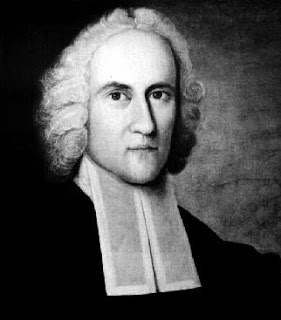
Jonathan Edwards on the Poor


Of the obligation of Christians to perform the duty of charity to the poor.

“THIS duty is absolutely commanded, and much insisted on, in the Word of God. Where have we any command in the Bible laid down in stronger terms, and in a more peremptory urgent manner, than the command of giving to the poor? We have the same law in a positive manner laid down in Lev. 25:35, etc. “And if thy brother be waxen poor, and fallen in decay with thee, then thou shalt relieve him; yea, though he be a stranger or a sojourner, that he may live with thee.” And at the conclusion of verse 38, God enforces it with saying, I am the Lord thy God.

“It is mentioned in Scripture, not only as a duty, but a great duty. Indeed it is generally acknowledged to be a duty, to be kind to the needy. But by many it seems not to be looked upon as a duty of great importance. However, it is mentioned in Scripture as one of the greater and more essential duties of religion. Mic. 6:8, “He hath showed thee, O man, what is good; and what doth the Lord thy God require of thee, but to do justly, to love mercy, and to walk humbly with thy God?” Here to love mercy is mentioned as one of the three great things that are the sum of all religion. So it is mentioned by the apostle James, as one of the two things wherein pure and undefiled religion consists. Jam. 1:27, “Pure religion, and undefiled, before God and the Father, is this, To visit the fatherless and widows in their affliction, and to keep himself unspotted from the world.”

“So Christ tells us, it is one of the weightier matters of the law. Mat. 23:23, “Ye have omitted the weightier matters of the law, judgment, mercy, and faith.” The Scriptures again and again teach us that it is a more weighty and essential thing than the attendance on the outward ordinances of worship. Hos. 6:6, “I desired mercy, and not sacrifice;” Mat. 9:13 and 12:7. I know of scarce any duty which is so much insisted on, so pressed and urged upon us, both in the Old Testament and New, as this duty of charity to the poor.”

Jonathan Edwards From The Duty of Charity to the Poor, Explained and Enforced