Your Anxiety Is Ruining Your Furniture

old chair

A fascinating anecdote from Mark Buchanan about stress and anxiety:

“Anxiety and stress are our number one killers. I heard recently a story about Meyer Friedman, the psychologist who devised the Type A/ Type B personality profiles— where Type B is placid and limber, taking life as it comes, and Type A is two-fisted and bristling, taking life by the horns. Friedman’s initial insight that led to his personality theory came after a discussion with a chair upholsterer. The upholsterer said that most of his business came from replacing the upholstery on the chairs in cardiologists’ offices, the chairs wore first, and quickly, on the front edge. Apparently, heart patients are so impatient that, even while listening to their doctor’s life-threatening diagnosis or lifesaving prescription, they sit taut and restless, poised to flee, chafing at the delay. At the edge of their seats. The very reason their hearts are sick is written in that threadbare upholstery.”

Buchanan, Mark (2007-03-11). The Rest of God: Restoring Your Soul by Restoring Sabbath (pp. 109-110). Thomas Nelson. Kindle Edition.

Why Does It Take So Long to Say We Are Sorry?

Why does it take so long to say that we are sorry? To acknowledge wrong doing and ask for pardon? Why do whole societies refused to acknowledge their past injustices and thereby turn them into present evils? Why do onlookers stand by, becoming complicit by their silence and inaction? Why are we more afraid of the loss of money, influence, and political good will than we are for the cancer of cowardice that grows inside when we stand by in silence?

Armenian Memorial

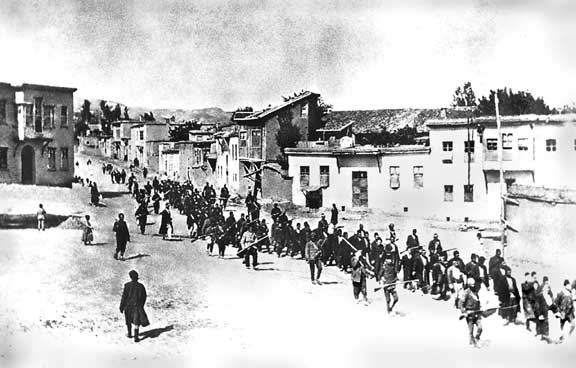
I just attended an important event at the Armenian Genocide memorial at Fresno State.  It was very moving to me. My eyes were filled with tears. I am sad to say that before moving to Fresno in 2009 I hadn’t even heard of this event. But many Armenian friends have shared the history and even personal accounts from their families.  Oddly enough, I had tears in part because of the great injustice, but they were also tears of joy because an evangelical Turkish pastor had come to continue a process of reconciliation and healing. Even though others would not acknowledge the genocide, he was there to acknowledge, apologize, and seek reconciliation among brothers in Christ. It was a beautiful event. It was a miracle a century in the making.

This year is the 100th anniversary of this great evil, and still the government of Turkey and many others refuse to acknowledge that it even happened, let alone to apologize.  My own president and government have refused to make a simple statement using that “G” word.  And it is strange because the U.S. Doesn’t even need to apologize as the perpetrators of what happened in 1915. We don’t need to acknowledge that WE did it.  We just need to acknowledge that someone else did a great crime. But so far, we won’t. But I am hopeful that this will change.

Armenians_marched_by_Turkish_soldiers,_1915
Armenians marched by Turkish soldiers in 1915


When we refuse to call evil exactly what it is, we give it power.  Others may be emboldened to repeat similar acts with a sense of impunity. It was only 24 years after the great outbreak of the genocide in 1915 that Hitler acknowledged it, but in a sinister way. He said, “who, after all speaks today of the annihilation of the Armenians.”  He was posturing for the annihilation of the Jews, and he viewed this as the trial run.  The worldwide silence on this issue, the failure of other nations to intervene or even “remember” what happened while the events were still fresh in memory had implications. It inspired Hitler. It made him feel that he could not only repeat these acts, but that he could get away with it. He interpreted the silence and concluded hat this group of people were so despised that the world would be better off for their destruction. Such are the depraved justifications of mad men.

But why would it take so long for a nation like ours, one so entangled in its own quest for social justice, to even call this event what it is?

There are many answers, but none of them will can bear the weight of our silence.  What does matter is that now we have become part of the problem, we have refused to leave the great stream of indifference that flows through history.  Even while we pat ourselves on the back for our moral progress.  Now, even though we weren’t the perpetrators we need to apologize for failing to act, and failing to offer the simple gesture of words. We must ask forgiveness for our unwillingness to pay the price for speaking the truth. And we must acknowledge that it took us far too long to do it.

When Father Is A Monster: Stalin’s Daughter

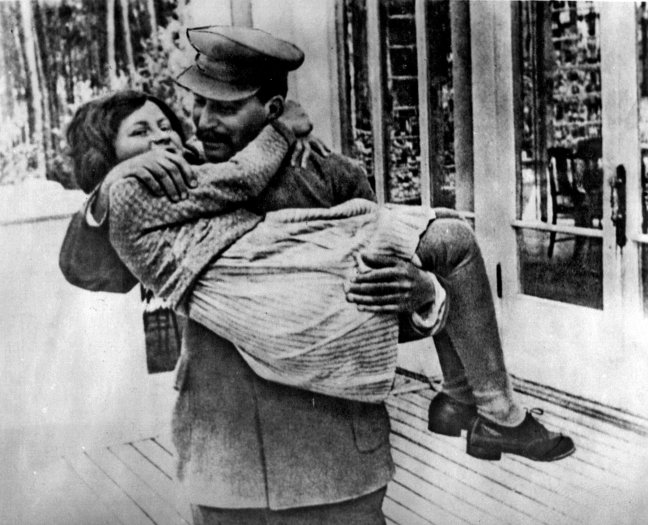
Joseph Stalin was a monster who often treated his friends worse than his enemies. What was it like to be his daughter? Horrible.

Here are some snippets from a NYT review of a new biography on Stalin’s Daughter. It looks fascinating, but at over 600 pages, only serious history lovers will read it. But it looks fascinating.


“But as she [Stalin’s daughter] gets older, she starts seeing and hearing more, and sinister shadows creep into the light, dimming it little by little. The aunts and uncles begin to vanish one by one. Her grandmother says: “Where is your soul? You will know when it aches.” Her mother draws a little square over the child’s heart with her finger and tells the girl, “That is where you must bury your secrets”; then, before the girl’s seventh birthday, she shoots herself in her own heart with a Mauser pistol. The little girl’s world is shattered, never to be the same. Troubled and lonely, she will spend decades trying to escape the horror of her past, the terrible weight of history. “You can’t regret your fate,” she will say later, “though I do regret my mother didn’t marry a carpenter.” She is Svetlana, her father is Joseph Stalin, and her extraordinary story is the subject of “Stalin’s Daughter,” Rosemary Sullivan’s thoughtful new biography.

“In 1967, 14 years after Stalin’s death, Svetlana Alliluyeva created an international scandal by defecting to the United States, only to return to the Soviet Union in 1984, then run away again in 1986, each escape taut with cloak-and-dagger suspense worthy of any spy thriller. She fell in love disastrously and often, had three children from three of her four failed marriages, published several books, made a million dollars, lost a million dollars, moved from home to home with the restlessness of a nomad, abandoning the past again and again, driven by eternal disquiet, “always leaving things all over the globe,” in the words of her younger daughter, Olga, before dying nearly destitute in Wisconsin, at the age of 85, under the anonymous name of Lana Peters. Olga scattered her ashes in the Pacific Ocean. The historical context of Alliluyeva’s unsettled life, the immense monstrosity of Stalin forever looming behind her, makes her story impossibly haunting and equally impossible to put down.”

via ‘Stalin’s Daughter,’ by Rosemary Sullivan – The New York Times.

Book Review- First Seals by Patrick O’Donnell


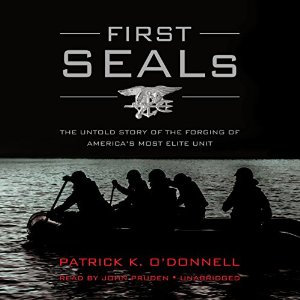
Seals book

The First Seals by Patrick K O’Donnell

I have read a number of books about special operations history, it is a kind of a hobby.  Some of these were personal memoirs and others books about unit histories.  The First Seals certainly ranks as one of my favorites.  It tells a believable story that is still amazing. And it does it without too much machismo or chest pounding.  It gives a broad history, but also focuses enough on specific individuals that you can understand the characters.  After reading this one, I want to dig into the rest of O’Donnell’s works.

If you like books about military history, read this book. 

If you like books about World War II, you will love the the back story. There are aspects of the war told in this book that I haven’t read anywhere else. Who knew that the Italians were the best in underwater demolition?

If you like books about sabotage, espionage, and partisan warfare, read this book.

If you like books about entrepreneurship, and people creating new things… If you like the books about people solving problems and taking risks, read this book.  Not all creative people work in business.

If you’re one of those people who likes fiction, but thinks that truth is often better than fiction,  you will enjoy this book.

Toward the end of the book when Lt. Taylor (one of the central figures in the story) is rescued from the Mauthausen concentration camp, I teared up. If I hand’t been driving, I would have cried. It is a great story not only of the units and tactics that would become the US Navy Seals, but a great example of American Heroism in the fight against fascism. What is amazing is that so many of the other prisoners sacrificed their lives to keep O’Donnell alive because they knew that the world would be more likely to believe an American officer.  Taylor would later serve a key role in the investigation and prosecution of Nazi war criminals.

I sound like a fan… I know.  But this was a truly great read. I consumed it on Audible.com and the reader was terrific as well. You can find it here 

You can watch original footage of Jack Taylor’s interview the the US forces liberated the Mauthausen Concentration Camp. He begins talking at 50 seconds into the video.

I first heard of the book in an article by O’Donnell in National Review that you can read here.  “Christmas with America’s First Seal in A Gestapo Prison.”