The Mixed Story of Racism: A Black Judge’s Sentencing Speech to 3 White Murderers

U.S. District Judge Carlton W. Reeves, for the Southern District of Mississippi. Courtesy of cleoinc.org


A Black Mississippi Judge’s Breathtaking Speech To 3 White Murderers : Code Switch : NPR.

Wow.

This is worth your time to read. 3 white men in Mississippi were sentenced for the brutal and racially motivated killing of 48 year old James Anderson.  These men were involved in an escalating pattern of violence that echoes the “ni&&er hunts” that have punctuated this state’s past.  Beware the article does use the “N” word a number of times in reflecting on the evils of racism and the troubled history of that state.

“In Without Sanctuary, historian Leon Litwack writes that between 1882 and 1968 an estimated 4,742 blacks met their deaths at the hands of lynch mobs”

According to the judge, these acts were committed by young men who were described by others, ‘as “a fine young man,” “a caring person,” “a well mannered man” who is truly remorseful and wants to move on with his life … a very respectful … a good man … a good person … a lovable, kindhearted teddy bear who stands in front of bullies…’  The men were incriminated by video evidence and their own guilty pleas.

The events themselves reveal that there is more need for progress.  The end of the speech shows that change has been on the march and this is encouraging.  There is a satisfying irony in this, that only enhances the justice of the proceedings.

“Today, though, the criminal justice system (state and federal) has proceeded methodically, patiently and deliberately seeking justice. Today we learned the identities of the persons unknown … they stand here publicly today. The sadness of this day also has an element of irony to it: Each defendant was escorted into court by agents of an African-American United States Marshal, having been prosecuted by a team of lawyers which includes an African-American AUSA from an office headed by an African-American U.S. attorney — all under the direction of an African-American attorney general, for sentencing before a judge who is African-American, whose final act will be to turn over the care and custody of these individuals to the BOP [Federal Bureau of Prisons] — an agency headed by an African-American.

“Today we take another step away from Mississippi’s tortured past … we move farther away from the abyss.”




Fifty Shades of Grey: Pornography and Normalizing the Bizarre

Fifty Shades of Grey: Pornography and Normalizing the Bizarre | Canon and Culture.

Bart Barber has done a good job of going beyond “rules” while discussing 50 Shades of Grey.  When asking the question whether anyone, and especially Christians, should see this movie we need beyond a simple rule-based evaluation. We need to see what is behind the best rules.  God has given us a world full of truth, beauty and goodness.  And this includes sexuality. We cannot abandon beauty without loosing goodness.  The article is worth reading.

I haven’t seen the movie or read the book, and I plan on NOT doing either. But from what I have read about the content, I am absolutely perplexed how a culture obsessed with talking about the abuse of women can make this a bestseller.

“This is the true price of pornography. Yes, pornography normalizes the bizarre, but the flipside of the coin may be the darkest aspect of it at all: It bizarrifies the normal.”

A few highlights:

“This is the true price of pornography. Yes, pornography normalizes the bizarre, but the flipside of the coin may be the darkest aspect of it at all: It bizarrifies the normal. If one were to create a pornographic website that featured average couples who had been married twenty years or more engaging in sex as the average married couple experiences it, who would watch it? And yet study after study has shown that the greatest satisfaction in romance comes to people in just that kind of a relationship. There is beauty there; our culture just doesn’t condition us to see it. What would we see if married men and women described their marriages to a sketch artist? What would we see if their friends described their marriages? When it comes to beauty, something about us has gone wrong.”

“Are you open to seeing this in another way? Each time you choose to read a book, choose to watch a film, or choose to DVR a television show, you are revealing something about what you find to be beautiful. Rather than imposing a set of shackles, God is trying to free you to crawl out of the muck and mire and to learn beauty.”

A Bright Spot At A Nursing Home

Elderly

Earlier today I went to visit my mom. She has lived in a nursing home for more than a year. She was recently admitted to the “regular” hospital for a severe infection in her legs.  The skin is red, and swollen, and hard from just below the knee. It is “cellulitis.” She has had battled this unsuccessfully for years.  The medications fight off the infection, but it always returns with fire. This time it was bad.  The doctor said if it wasn’t treated she could end up loosing her legs. At the hospital, the lab tests revealed it was a drug resistant strain- MRSA.

After several days she was able to return to the nursing home. She will be confined to an isolation room for a while. But she still has her legs, thank God.  Though they still look red and swollen.

After wiggling my large frame into the required yellow gown, and putting on the gloves, I entered her room. My dad was there visiting her, as he does every day.  He is there every day his own health allows him to come.  While I was there a couple of things occurred to me.

First, I am aware of my father’s love for her.  Today she was doing so-so. Not the best, not the worst.  But her mind wasn’t clear. Whether it was the medications or the infection, she was drifting off to sleep.  When she spoke, it made some sense, but something wasn’t right.  She reminded me of the aged Bilbo in the last Lord of the Rings movie. She would fall asleep while sitting in her wheel chair and the sudden bob of her head would startle her awake. Then she would look around embarrassed a little and laugh. We both encouraged her to lay down.  She took a long time to make this short journey. She kept getting distracted and falling back asleep. She rearranged the dishes on her tray.  She rechecked the locks on the wheel chair. She switched some of the pillows. It was frustrating because we were standing there waiting to help her and it was almost like she didn’t realize this.

And my dad was there. I made eye contact with him, both of us realizing that something wasn’t right. That her behavior was awkward. I smiled to him, trying to indicate that it was OK and there was no need for excuses or embarrassment. He smiled back. He is 78, and his own health is not great. He has battled through cancer, a heart attack, and several vascular surguries. But he is a faithful man in the real sense of that word.  And he has kept his vows to love my mother through the long years of sickness. To love her when love isn’t easy. To love her when the doctors don’t have any answers and there isn’t much hope. I was there with them today and this is what stood out to me.  His love. A bright light in a dark cave.  No doubt this is a gift of God’s grace. I am thankful for a dad like this. I want to be like him.

Second, I thought about my own future. This could be me some day. If I have the privilege of growing old, one day my body will give up. I may end up in a nursing home. What would that be like? I know my mom hates it here.  When we talk about this, I usually remind her that this is the best we can do under the circumstances. The nursing home is actually a pretty good one. But still no one wants this. But all things considered, this is where she can get the care she needs. And even with all this, she is still pretty sick. Maybe some day, this will be me. How would I feel about it?

Or maybe I will be the one visiting. Maybe my wife will be the one that is sick and stuck in a tough spot.  Today as I visited my mom, I was aware of the possible future that I would rather not consider.  But, I want to at least think about this. And I want to take it seriously. And I want to behave differently because I thought about it. I don’t want to arrive here at some point in the future and hate myself because I was too proud or too rushed to make such deliberations.

Photo Courtesy of Xavi Talleda. Some rights reserved

Why a Street Criminal Stole a Multi-Million-Dollar Violin | Vanity Fair

Why a Street Criminal Stole a Multi-Million-Dollar Violin | Vanity Fair.

If you like fascinating stories about true crime, here is a fun read.  It features the dumb criminal, the chatty get-away driver/wife, and a determined police chief that knows the historical significance of a Stradivarius violin. And… it’s not a long read.

The article brings up an important question, which the thieves didn’t consider: You stole it, now what?  Another is why would you want to steal this item when you can’t play it and you can’t sell it?  Even though it is worth $6 million, no one will buy it for that much.   It seems the robber has an ego, and one that exceeds his planning and skills.

Jesus and the Crowds

Crowds

In his commentary on Luke, while discussing the parable of the sower, Darrell Bock says, “Jesus relates the parable to ‘a large crowd.’ In Luke the mention of a large crowd often means that a warning about not getting carried away about the response follows (cf. 12:1–2)”

There is a lesson here about crowds. Too often Christians view crowds according to their temperament (introvert/extrovert) or the success (or lack of success) of their church or theological tribe. “Large crowds are the sure sign of God’s blessing.” Or, “Large crowds equal compromise.”

The parable of the sower, and the rest of Jesus ministry shows us something different. We should neither worship nor despise crowds of people. He did not. We must look at them more critically. They are both opportunities for for ministry and occasions for temptation.

Bock, Darrell L. Luke. Grand Rapids, MI: Zondervan Publishing House, 1996. Print. The NIV Application Commentary.

Photo used by Permission National Archives 

Poem on Envy

Mansion

I love this poem. It is so easy to deceive ourselves. I first read it in high school and it left a deep impression. I have come back to it so many times when looking at favorite poems. And by the way, YOU MUST REVISIT FAVORITE POEMS!

Richard Cory

Whenever Richard Cory went down town,
We people on the pavement looked at him:
He was a gentleman from sole to crown,
Clean-favoured and imperially slim.

And he was always quietly arrayed,
And he was always human when he talked;
But still he fluttered pulses when he said,
“Good Morning!” and he glittered when he walked.

And he was rich, yes, richer than a king,
And admirably schooled in every grace:
In fine — we thought that he was everything
To make us wish that we were in his place.

So on we worked and waited for the light,
And went without the meat and cursed the bread,
And Richard Cory, one calm summer night,
Went home and put a bullet in his head.

Edwin Arlington Robinson

.Photo Used by permission Bruce Fingerhood. Some rights reserved

THOSE Neanderthals Have An Ideology. I’m Glad I Don’t

pointing

It seems obvious when “extremists” kill or coerce in the name of their ideology. It looks crazy to us because we believe differently. But to the extremist, their ideology is reality.  Their view of the world is not a belief system. They see the world as it is.  One of the reasons they are dangerous is that they are blind to the fact that they even have an ideology.

And this isn’t just the obvious extremists (like say radical Islam), this is the U.S.A. too, right? Don’t we have an ideology that we push? And I don’t just mean conservatives.

It is easy to dismiss the idea of “belief” and “ideology” as dangerous.

John Mayer’s song “Belief” sings this. Belief is what makes for irrational wars. Belief is what puts 100,000 children in the sand. Belief is what kills, and we can never win if “belief is what we’re fighting for.” I actually like the song a lot. But not the message. It’s hypocritical. It’s blind. “Those people have an ideology. Glad I don’t.”

It’s dangerous (and arrogant) when you don’t see your own ideology.  But everyone has a philosophy, a belief, a value system that we use to interpret the world. And it is dangerous when we accuse “them” of living for their beliefs, but are blind to our own.

The real struggle is not between those with beliefs and those without them.  The struggle in our world is a conflict of ideas.

The real struggle is not between those with beliefs and those without them.  The struggle in our world is a conflict of ideas. Of truth, of facts, of reason, of coherency, of wisdom.  And as long as we acknowledge this, there is room for discussion. But when we refuse to acknowledge our own assumptions (“ideology”) we write “them” off for their beliefs. THEY are wrong by definition because they are following an ideology. Not me. I just see the facts. At this point civil dialogue is no longer possible.   Isn’t it ironic that the one who laughs at all the blind men groping around the elephant doesn’t question his own eyesight.

One of the marks of an extremist (or bully, or fool) in the making is that they don’t see or acknowledge that their view of the world is an ideology.  If you try to reason with them, they will dismiss what YOU say. They might attack YOU with words (or worse) for being a blind zealot.

People that acknowledge their own world view,  are in a position to appreciate it and reason with others.

Photo by a2gemma, used by permission. Some rights reserved.

Death-Row Dining – A Discussion of Last Suppers


Death-Row Dining – The New Yorker.

This is an interesting peak into the idea of the final meal.  What do condemned prisoners request on the night before they are executed? And what does that say about them? About food? And what does our interest in such curiosities say about us as humans?

The article was worth reading for me, if only for the bizarre subject. Not the standard faire of internet journalists pumping out click-bait.

I am always on the lookout to see cultural principles (and contradictions) at work. Many of us profess to be relativists.  We do not believe in the existence of good and evil in any absolute sense.  There are only personal opinions about good and evil.  But here is a stubborn fact: No one can actually live out relativism consistently.  I frequently have conversations with people that want to tell me that my concern over moral issues is ungrounded because there is no such thing as absolute morality.  And that means I am guilty of trying to impose my morality on others. These folks then go on to pound the table on various moral issues. This suggests to me that they don’t take their relativism very seriously.

Anyways…  It is fascinating to me to see what provokes outrage among a generation of relativists.  What drives the morally apathetic to impassioned protest?  In my experience, anything that smells like retributive justice is sure to do it.   Someone tried to open up a restaurant in London called the Death Row Diner- “Eat like it’s your last meal on earth.”  The menu featured a number of famous (or infamous) last meals.  But the restaurant never got off the ground because folks were offended.

“The public response was swift and marked by moral outrage. Some wondered if the project was a joke, or some kind of performance piece….

“The offense caused is easy enough to understand: there’s something undeniably stomach-turning about the gimmick of presumably well-off city dwellers forking over eighty dollars to eat fancified versions of the prison- issued food that the mostly poor and otherwise marginalized—criminal or not —denizens of death row pathetically requested before being executed. It commodifies the loss of human life—justifiable or not—and makes light of a grave and controversial issue, marrying the parlor game and its real-life counterpart without acknowledging that one is for fun and the other is an ugly truth. From another angle, the project glamorizes and memorializes people who have committed horrific crimes.”

An Important Observation on the Search for Meaning

The box is empty: On iPhones, religion and disconnection - Macleans.ca

“Now, nine months later, I am not a different person. I am not more zen. I am not any nicer. I am not happier. I’ve saved a lot of money, and that is about it. The truth is I have not found new meaning in my slightly more ascetic life. But neither did I find it in that iPhone box. I don’t think anyone lined up on those sidewalks has either.”

Scott Gilmore was getting fed up with the hamster wheel of always buying new things, especially technology. This is the natural consumer response to planned obsolescence and the social pressure to have the newest device.  We don’t intend to do it, but after a while find ourselves carried out by the tide.  And before we know it we are a long way from shore. He decided to take a consumer “fast” and not buy anything he didn’t really need.  It sounds like the experience was helpful and he saved some money. But what he found was interesting.  He didn’t find meaning and fulfillment in all the stuff and technology. He also didn’t find it in the absence of all the technology and stuff.  If we want to satisfy the deepest hungers of the soul, neither trinkets nor self discipline will do the trick. We need the Bread of life.

via The box is empty: On iPhones, religion and disconnection – Macleans.ca.

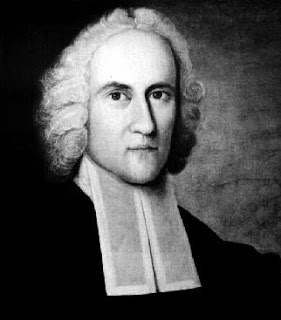
Jonathan Edwards on the Poor


Of the obligation of Christians to perform the duty of charity to the poor.

“THIS duty is absolutely commanded, and much insisted on, in the Word of God. Where have we any command in the Bible laid down in stronger terms, and in a more peremptory urgent manner, than the command of giving to the poor? We have the same law in a positive manner laid down in Lev. 25:35, etc. “And if thy brother be waxen poor, and fallen in decay with thee, then thou shalt relieve him; yea, though he be a stranger or a sojourner, that he may live with thee.” And at the conclusion of verse 38, God enforces it with saying, I am the Lord thy God.

“It is mentioned in Scripture, not only as a duty, but a great duty. Indeed it is generally acknowledged to be a duty, to be kind to the needy. But by many it seems not to be looked upon as a duty of great importance. However, it is mentioned in Scripture as one of the greater and more essential duties of religion. Mic. 6:8, “He hath showed thee, O man, what is good; and what doth the Lord thy God require of thee, but to do justly, to love mercy, and to walk humbly with thy God?” Here to love mercy is mentioned as one of the three great things that are the sum of all religion. So it is mentioned by the apostle James, as one of the two things wherein pure and undefiled religion consists. Jam. 1:27, “Pure religion, and undefiled, before God and the Father, is this, To visit the fatherless and widows in their affliction, and to keep himself unspotted from the world.”

“So Christ tells us, it is one of the weightier matters of the law. Mat. 23:23, “Ye have omitted the weightier matters of the law, judgment, mercy, and faith.” The Scriptures again and again teach us that it is a more weighty and essential thing than the attendance on the outward ordinances of worship. Hos. 6:6, “I desired mercy, and not sacrifice;” Mat. 9:13 and 12:7. I know of scarce any duty which is so much insisted on, so pressed and urged upon us, both in the Old Testament and New, as this duty of charity to the poor.”

Jonathan Edwards From The Duty of Charity to the Poor, Explained and Enforced