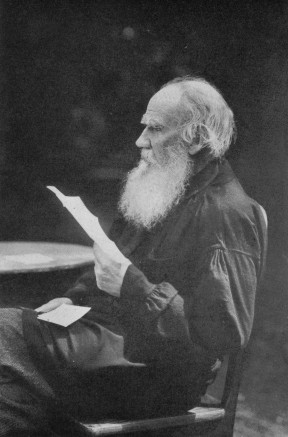
“Is there any meaning in my life that the inevitable death awaiting me does not destroy?”
from Leo Tolstoy, “A Confession”

“Is there any meaning in my life that the inevitable death awaiting me does not destroy?”
from Leo Tolstoy, “A Confession”
G.K. Chesterton on Absentee Fathers
“What is called matriarchy is simply moral anarchy, in which the mother alone remains fixed because all the fathers are fugitive and irresponsible.”
– The Everlasting Man, CW II, p.186
“Preaching the gospel to myself each day nourishes within me a holy brazenness to believe what God says, enjoy what He offers, and do what He commands. Admittedly, I don’t deserve to be a child of God and I don’t deserve to be free of sin’s guilt and power. I don’t deserve the staggering privilege of intimacy with God, nor any other blessing that Christ has purchased for me with His blood. I don’t deserve to be useful to God. But by the grace of God I am what I am and I have what I have, and I hereby resolve not to let any portion of God’s grace prove vain in me! And to the degree that I fail to live up to this resolve, I will boldly take for myself the forgiveness that God says is mine and continue walking in His grace. This is my manifesto, my daily resolve; and may God be glorified by this confidence that I place in Him.”
– Milton Vincent, A Gospel Primer for Christians (Focus Publishing, 2008), 52.

“The cost for the recipient of God’s grace is nothing – and no price could be higher for arrogant people to pay.”
– Dan Allender, as quoted in Gospel Transformation

Here is an insightful quote from Eugene Peterson. It is from his book “Run with Horses.” He is addressing the 2 visions in Jeremiah of the budding almond rod (God will accomplish his word) and the boiling pot from the north (God is in control of evil):
“We cannot afford to be naive about evil– it must be faced. But we cannot be intimidated by it either. It will be used by God to bring good. For it is one of the most extraordinary aspects of the good news that God uses bad men to accomplish his good purposes. The Great paradox of judgment is that evil becomes fuel in the furnace of salvation.
“Uninstructed by this vision, or something like it, we loose our sense of proportion and are incapacitated for living in open and adventurous response to whatever comes to us through the day. If we forget that the newspapers are footnotes to scripture and not the other way around, we will finally be afraid to get out of bed in the morning. Too many of us spend far too much time with the editorial page and not nearly enough with the prophetic vision. We get our interpretation of politics and economics and morals from journalists when we should be getting only information; the meaning for the world is most accurately given to us by God’s word.”
Run with Horses, Eugene Peterson(1983) Intervarsity Press p. 54.
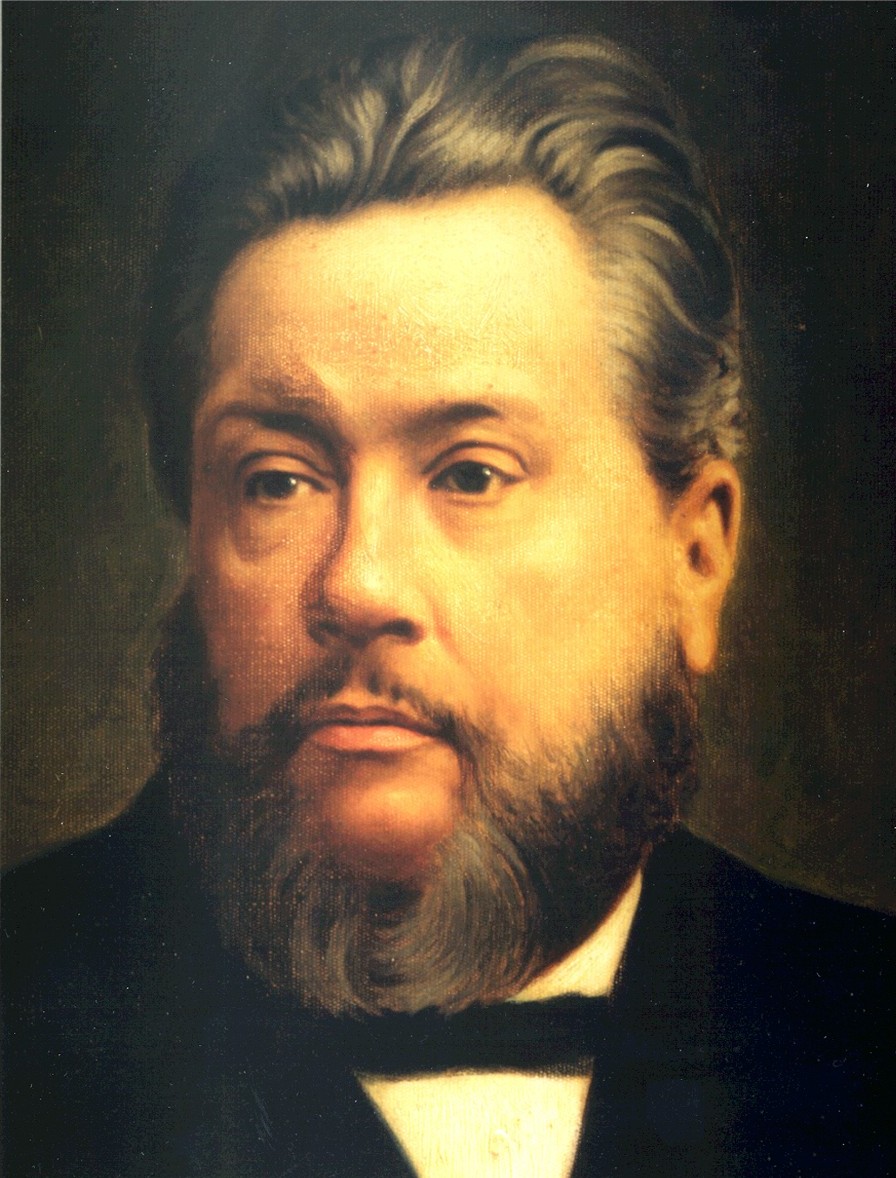
Church Planting is trendy, but is it new? Every heard of C.H. Spurgeon’s involvement in Church Planting? What was the purpose of the Pastor’s College?
“Twenty-Seven churches were founded by students form the Pastor’s College between 1853 and 1867. In the second half of the nineteenth century, the number of Baptist churches in London doubled and nearly all of these were founded, in one way or another, under Spurgeon’s influence. Students were sent out to new areas or existing churches, normally at the command of “the guv’nor,” as students called Spurgeon…Spurgeon joined with two other London Ministers, Landels of Regent park and Brock of Bloomsbury, to found the London Baptist Association, with the goal of building one new chapel each year. Both Brock and Landels had planted their churches and started local missions, but Spurgeon’s vision was London-wide.”
From: Michael Nicholls, “Missions, Yesterday and Today: Charles Haddon Spurgeon (1834-92) Church Planter, ” in Five ‘Til Midnight: Church Planting for A.D. 2000 and Beyond, ed. Tony Cupit. Quoted in Stetzer, Planting Missional Churches (2006) p. 67
After forwarding this quote to a few friends, I received this email from Robert Briggs- a Scottish pastor in Sacramento California. AMAZING!!!
“Matt
I thought you might be interested to know.
My home church as I call it, the one I was nurtured in, near Edinburgh Scotland, was planted by David Tait who was 77 years old when he planted it, in 1933.
He was a student at the Pastors College under Spurgeon in his 20’s back in the 1880’s. Your article was spot on and I like to think of myself in a nostalgic sort of way as being part of the fruit of that wonderful ministry over a century later.
The Pastors College model has been the one I have been looking into for us here in Sacramento. Two years of training proven, gifted men and sending them out.
Enjoyed the fellowship yesterday.
Warmest regards
RB”
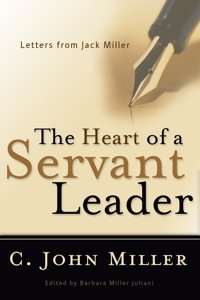 I have been reading this book recently and it has really fed my soul. Sooo….in order to convince my pastor friends and aspiring preachers and church planters to buy this book, I decided to read a few excerpts to give you a flavor. There are about 7 minutes of highlights here, I hope you enjoy!
“I have often wondered, perhaps in part simply because the term is so rarely used today, what it might mean to ‘glorify’ God forever. It will undoubtedbly mean a great many things, but one of them surely must be that we will continually thank him.
We will thank him for his graciousness and goodness to us, and for inviting us into conversation. Along this line, I would think that we anticipate our ‘chief and highest end’ every time we behold something beautiful and find that after we have exclaimed, ‘Ah, how wonderful!’ we are almost compelled to say ‘Thank you!’
Our destiny is to say these small words forever and so experience the gratitude that is the perfection of happiness.”
—Craig M. Gay, Dialogue, Catalogue & Monologue (Vancouver, BC: Regent College Publishing, 2008), 48-49
“But a ruthless honesty will always leave us shattered by our inadequacy. The world is a frightening place. If we are not a little bit scared, we simply don’t know what is going on. If we are pleased with ourselves, we either don’t have very high standards or have amnesia in regard to the central reality, for ‘it is a fearful thing to fall into the hands of the living God’ (Hebrews 10:31). Pascal said, ‘fear not, provided you fear; but if you fear not, then fear'”
-Eugene Peterson,
Run With Horses, p. 49
“Jesus shocked the established authorities by being a friend to all—not only to the destitute and hungry, but also to those rich extortioners, the tax-collectors, whom all decent people ostracized … The shocking thing was not that he sided with the poor against the rich but that he met everyone equally with the same unlimited mercy and the same unconditioned demand for total loyalty.
If we look at the end of his earthly ministry, at the cross, it is clear that Jesus was rejected by all—rich and poor, rulers and people—alike. Before the cross of Jesus there are no innocent parties. The cross is not for some and against others. It is the place where all are guilty and all are forgiven.”
—Lesslie Newbigin, The Gospel in a Pluralist Society (Grand Rapids: Eerdmans, 1989), 151
 MattTroupe.net