Duty to Die: Author Says Too Few People in Oregon are Requesting Assisted Suicide

being mortal

How about this for piling on.

Here are my brief thoughts about someone else’s article. That article is kind of a review of a book review.  More like a response. And I just happened to finish that book, and I really enjoyed it. The book is called, “On Being Mortal” by Atul Gawande the Harvard trained surgeon who has produced a number of good books in the last decade. I have read them all 🙂

Anyway, Gawande’s book is about aging and dying and how the healthcare system has not done a very good job in actually helping people live better lives during the last phase of their journey. He spends a few pages talking about assisted suicide, and I would disagree with what he says (he thinks it is OK under some circumstances). But regardless of your position, he makes what I think is a compelling point. In America, and other countries, we are making huge strides in palliative care and hospice services.  And contrary to popular conception, those treatment modalities are not about helping people die as much as to live as well as they can during those difficult days.  People with painful and  incurable diseases are choosing to live out their days with family and finding more dignity than they knew was possible. And it is worth mentioning that how we live when we are dying is an important part of the human journey. How the story ends is truly important.

But it seems that in the Netherlands, the availability of assisted suicide has become the quick fix that has railroaded more promising alternatives. Rather than developing health care systems that can help people live full lives to the end, they have opted instead for something more sinister in the name of “dignity.”  Here is a quote from Gawande’s book, ”

 “I fear what happens when we expand the terrain of medical practice to include actively assisting people with speeding their death. I am less worried about abuse of these powers than I am about dependence on them.”

“The implication is that we might begin to substitute assisted dying for palliative care and hospice. He points to the experience in the Netherlands, where he says the fact that “one in thirty-five Dutch people sought assisted suicide at their death is not a measure of success. It is a measure of failure.”

The author of the article at LifeNews.com, Wesley Smith J.D. makes a point that is even more disturbing. Marcia Angell, an author who is an advocate for assisted suicide, has been quoted as saying, “I am concerned that too few people are requesting it. It seems to me that more would do it. The purpose of a law is to be used not to sit there on the books.”

Is this debate about presenting options that people want, or imposing your choice on others?

Source: Duty to Die: Author Says Too Few People in Oregon are Requesting Assisted Suicide | LifeNews.com

A Worthwhile Documentary on Netflix: The Green Prince (2014) – IMDb

I have an interest in international affairs and understanding how intelligence agencies do their work. So I was taken in by the description of the film on this list of 50 best documentaries on Netflix. I also watched Happy Valley about the Penn State Child Abuse scandal. That is worth watching as well if you like the cultural side of football.

Last night we watched the documentary “The Green Prince” which is currently available to stream on Netflix. The show is mostly the dialogue of 2 individuals: The son of the leader of Hamas who became an informant for Israeli intelligence, and his Shin Bet (Israel’s internal security agency, something like our FBI) handler. The dialogue is peppered with photos, video footage, and news stories concerning the events. It won a ton of awards, and for good reason. It is a fascinating first hand look into the world of the Palestinian struggle and the intelligence world behind it.

Source: The Green Prince (2014) – IMDb

Why Does It Take So Long to Say We Are Sorry?

Why does it take so long to say that we are sorry? To acknowledge wrong doing and ask for pardon? Why do whole societies refused to acknowledge their past injustices and thereby turn them into present evils? Why do onlookers stand by, becoming complicit by their silence and inaction? Why are we more afraid of the loss of money, influence, and political good will than we are for the cancer of cowardice that grows inside when we stand by in silence?

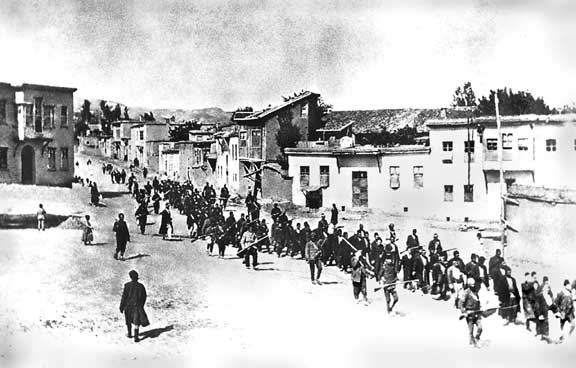
Armenian Memorial

I just attended an important event at the Armenian Genocide memorial at Fresno State.  It was very moving to me. My eyes were filled with tears. I am sad to say that before moving to Fresno in 2009 I hadn’t even heard of this event. But many Armenian friends have shared the history and even personal accounts from their families.  Oddly enough, I had tears in part because of the great injustice, but they were also tears of joy because an evangelical Turkish pastor had come to continue a process of reconciliation and healing. Even though others would not acknowledge the genocide, he was there to acknowledge, apologize, and seek reconciliation among brothers in Christ. It was a beautiful event. It was a miracle a century in the making.

This year is the 100th anniversary of this great evil, and still the government of Turkey and many others refuse to acknowledge that it even happened, let alone to apologize.  My own president and government have refused to make a simple statement using that “G” word.  And it is strange because the U.S. Doesn’t even need to apologize as the perpetrators of what happened in 1915. We don’t need to acknowledge that WE did it.  We just need to acknowledge that someone else did a great crime. But so far, we won’t. But I am hopeful that this will change.

Armenians_marched_by_Turkish_soldiers,_1915
Armenians marched by Turkish soldiers in 1915


When we refuse to call evil exactly what it is, we give it power.  Others may be emboldened to repeat similar acts with a sense of impunity. It was only 24 years after the great outbreak of the genocide in 1915 that Hitler acknowledged it, but in a sinister way. He said, “who, after all speaks today of the annihilation of the Armenians.”  He was posturing for the annihilation of the Jews, and he viewed this as the trial run.  The worldwide silence on this issue, the failure of other nations to intervene or even “remember” what happened while the events were still fresh in memory had implications. It inspired Hitler. It made him feel that he could not only repeat these acts, but that he could get away with it. He interpreted the silence and concluded hat this group of people were so despised that the world would be better off for their destruction. Such are the depraved justifications of mad men.

But why would it take so long for a nation like ours, one so entangled in its own quest for social justice, to even call this event what it is?

There are many answers, but none of them will can bear the weight of our silence.  What does matter is that now we have become part of the problem, we have refused to leave the great stream of indifference that flows through history.  Even while we pat ourselves on the back for our moral progress.  Now, even though we weren’t the perpetrators we need to apologize for failing to act, and failing to offer the simple gesture of words. We must ask forgiveness for our unwillingness to pay the price for speaking the truth. And we must acknowledge that it took us far too long to do it.

“Do As I Say.” Shouldn’t Ethics Professors Behave Ethically? They don’t

How_often_do_ethics_professors_call_their_mothers__–_Eric_Schwitzgebel_–_Aeon

This article is interesting, disturbing, disappointing and a little humorous at the same time.

It is a fascinating look at how professional academics devoted to studying morality actually behave.  Wouldn’t you expect them to at least try to be good people? Beyond that, there is the question of whether we ought to expect them to behave better than people who are uninformed about the subject.

The author asked his 7 year old son, and he replied: ‘The kids who always talk about being fair and sharing,’ I recall him saying, ‘mostly just want you to be fair to them and share with them.’ Interesting.

The author says he is the only one that he knows that has looked into this question in this narrow sense. That in itself is pretty tragic. By the way, Paul Johnson’s book “Intellectuals” does something similar from the perspective of history.  A worthwhile book for sure.

It seems many professors are aiming at mediocrity, being just about as “good” as everyone else.  I guess that helps to fight off self-righteousness.  But they don’t mind telling the rest of us how we ought to live. This shouldn’t surprise us, because with few ideological exceptions, most modern ethical theories suggest that good and evil is merely a human social construction.

It seems that many pastors aren’t much better.

We should all remember that there is a very specific word in the English language for this whole phenomenon. It is called hypocrisy. And that label won’t fall off just because everyone’s doing it.

via How often do ethics professors call their mothers? – Eric Schwitzgebel – Aeon.

God Loves Me & So Does My Dog, But It’s Different

God Loves Me,And So Does My Dog. But 2

I have a 1-year old chocolate colored poodle. She’s a great dog and she’s always happy to see me. Wait, that’s an understatement. She goes nuts when we come home.  She is so excited that often she wets herself.  We feed her, and pet her.  We take her for walks occasionally. We play with her and hang out together. And that’s enough, she thinks we are wonderful.  She jumps on the bed in the morning and licks my face to wake me up. She always wants to play. And even when we aren’t playing she just wants to be near me. She follows us around the house and lays at my feet.  And all her enthusiasm and love is great for my self-esteem.  And she does this even when we ignore her. Sometimes we have to lock her up in a crate for most of the day to keep her from destroying the house. But when we come home and let her out, it’s a celebration.

For some Christians, this is a close description of how they understand God’s love.  He is really excited about us, makes hardly any demands, and won’t mind if we lock him away in a crate when we have better things to do. They have attempted to tame God, and as a result his love is… Well… Just okay.  But it doesn’t match the love we see at Calvary where we see Christ pouring out his life for an unfaithful spouse.   The puppy-dog  kind of love doesn’t produce the (seemingly) irrational joy, worship, and sacrifice we see described in scripture.  It doesn’t buoy up the soul in the face of great sin and suffering.

I am slowly working my way through “Yawning At Tigers” by Drew Dyck. He writes about this phenomenon, and our tendency to domesticate God.  Writing about modern preachers, he says:

“Unfortunately, in our efforts to make the Bible interesting and relevant, we try to normalize God. We become experts at taking something lofty, so unfathomable and incomprehensible, and dragging it down to the lowest shelf. We fail to account for the fact that God is neither completely knowable nor remotely manageable”

Unfortunately, in our efforts to make the Bible interesting and relevant, we try to normalize God.

He says that we are often uncomfortable with the mysterious, and transcendent descriptions of God. They are too strange or even unpleasant to our American sensibilities, so we explain them away.  Again, he writes “Here’s the beautiful irony: making God strange actually enables us to know him more. Once we have marveled at his magnitude and mystery, we are able to achieve the deep intimacy that grows out of a true appreciation for who God is. Instead of treating him as an equal, we approach him with reverent awe. Only when we’ve been awestruck by his majesty can we be overwhelmed by his love.”

I love my dog, and enjoy the way she worships me. And that would be the best word to describe it!  But God’s love is different, it’s not about his infatuation with my greatness.  One of the reasons we are “yawning at tigers” is because we are not impressed with the love of God. And we are underwhelmed with his love because we don’t understand his holiness, majesty, and greatness. If we did, we would understand our own sin as well and see just how much it cost him to love us.  And that would make his love something to live for.

THOSE Neanderthals Have An Ideology. I’m Glad I Don’t

pointing

It seems obvious when “extremists” kill or coerce in the name of their ideology. It looks crazy to us because we believe differently. But to the extremist, their ideology is reality.  Their view of the world is not a belief system. They see the world as it is.  One of the reasons they are dangerous is that they are blind to the fact that they even have an ideology.

And this isn’t just the obvious extremists (like say radical Islam), this is the U.S.A. too, right? Don’t we have an ideology that we push? And I don’t just mean conservatives.

It is easy to dismiss the idea of “belief” and “ideology” as dangerous.

John Mayer’s song “Belief” sings this. Belief is what makes for irrational wars. Belief is what puts 100,000 children in the sand. Belief is what kills, and we can never win if “belief is what we’re fighting for.” I actually like the song a lot. But not the message. It’s hypocritical. It’s blind. “Those people have an ideology. Glad I don’t.”

It’s dangerous (and arrogant) when you don’t see your own ideology.  But everyone has a philosophy, a belief, a value system that we use to interpret the world. And it is dangerous when we accuse “them” of living for their beliefs, but are blind to our own.

The real struggle is not between those with beliefs and those without them.  The struggle in our world is a conflict of ideas.

The real struggle is not between those with beliefs and those without them.  The struggle in our world is a conflict of ideas. Of truth, of facts, of reason, of coherency, of wisdom.  And as long as we acknowledge this, there is room for discussion. But when we refuse to acknowledge our own assumptions (“ideology”) we write “them” off for their beliefs. THEY are wrong by definition because they are following an ideology. Not me. I just see the facts. At this point civil dialogue is no longer possible.   Isn’t it ironic that the one who laughs at all the blind men groping around the elephant doesn’t question his own eyesight.

One of the marks of an extremist (or bully, or fool) in the making is that they don’t see or acknowledge that their view of the world is an ideology.  If you try to reason with them, they will dismiss what YOU say. They might attack YOU with words (or worse) for being a blind zealot.

People that acknowledge their own world view,  are in a position to appreciate it and reason with others.

Photo by a2gemma, used by permission. Some rights reserved.

Sawing Off The Limb That Holds You

Sawing

The problem of evil and suffering is a real problem. We struggle with it from a rational/philosophical standpoint and also from an emotional perspective. Christians often struggle more with the emotional dimension than just wrestling with the logic behind the question because we believe that God has a morally sufficient reason for the evil and suffering that is in the world.

But atheists can bring this up in debate as a trump card. And it often “works” because of it’s strong emotional appeal.  Ravi Zacharias does a good job treating this in this in his book “Jesus Among Other Gods.”  He says that often this issue is raised with a list of the worst atrocities in history. This is fine,  and is actually part of my point here. The way those atrocities are discussed suggests that the person really believes they are wrong.  The world should be different than it is. The argument is a kind of protest.  And sometimes it is a protest against a god they believe should have prevented this. This outrage is used to show that an all loving and all powerful God couldn’t exist.  The conclusion: There is no god.

What they don’t realize is that the problem of evil is not just a problem for Christians. It is a problem for every philosophy and worldview.

What they don’t realize is that the problem of evil is not just a problem for Christians. It is a problem for every philosophy and worldview.  And unwittingly by removing idea of God, the atheist has removed any absolute standard of right and wrong. Now the very list of atrocities no longer wear the label “wrong” or “evil.”  The atheist may dislike them, but it is no more than personal or societal preference. These things are not examples of either justice or injustice because those things do not exist except in our minds.  The world just IS.  That is just the way things are.  And yet the very protest is making a plea that the world should be different than it is.  At the very lease, the atheist believes it is wrong for christians to believe what they do. It could be phrased in some other way,  but there is an “ought” in the protest that could only be true if there were some greater moral imperative.  In the end, the protest defeats itself.

Zacharias quotes GK Chesterton, who has made the point with a flourish:

“All denunciation implies a moral doctrine of some kind and the modern skeptic doubts not only the institution he denounces, but the doctrine by which he denounces it. Thus he writes one book complaining that imperial oppression insults the purity of women, and then writes another book, a novel in which he insults it himself. As a politician he will cry out that war is a waste of life, and then as a philosopher that all of life is waste of time. A Russian pessimist will denounce a policeman for killing a peasant, and then prove by the highest philosophical principles that the peasant ought to have killed himself. A man denounces marriage as a lie and then denounces aristocratic profligates for treating it as a lie.

“The man of this school goes first to a political meeting where he complains that savages are treated as if they were beasts. Then he takes his hat and umbrella and goes on to a scientific meeting where he proves that they practically are beasts. In short, the modern revolutionist, being an infinite skeptic, is forever engaged in undermining his own mines. in his book on politics he attacks men for trampling on morality; in his book on ethics he attacks morality for trampling on men. Therefore the modern man in revolt becomes practically useless for all purposes of revolt. By rebelling against everything he has lost his right to rebel against anything.”

The atheist wants to use the problem of evil to disprove the existence of god. But in the process he ends up disproving the existence of evil.  And this is not just a rational problem, it is an existential problem without compare.

G. K. Chesterton, Orthodoxy (Garden City, N.Y.: Doubleday, 1959), 41

Photo cropped and used by Permission Jo Jakeman. Some rights reserved 

Religion Is Not to Blame for All the Bloodiest Wars | The New Republic

3205545010_28e80765c7_z

Religion Is Not to Blame for All the Bloodiest Wars | The New Republic.

At the New Republic John Gray reviews “Fields of Blood: Religion and the History of Violence” by Karen Armstrong

In this write up there is not so much a defense of religion per se but an attempt to challenge a common notion. It has been spoken as incontrovertible fact that “religion is responsible for more wars than anything else.”  To question this “truth” you must be a moron. And the current violence brought about by radical Islam adds to our suspicions. This sometimes leads secular atheists to lump all religions together.  Some have even compared Christians to radical jihadists.  The answer? If we could just use reason and get rid of religious superstition, the world would finally be a safe place.

Gray takes this notion to task. The whole article is worth reading. But here are a few paragraphs worth quoting.

Some have offered that humanistic rationalists are the champions of equality, while religious folks are the source of imperialist oppression. Gray writes:

“The Renaissance is just one of several secular icons that Armstrong demolishes. Nothing is more commonplace than to read that Renaissance thinkers introduced a novel understanding of universal humanity. But Renaissance humanists were actually less sympathetic to the plight of indigenous peoples such as the Mesoamericans who had been violently subjugated than churchmen such as the Dominicans, who condemned the predatory behavior of the conquistadores. “The philosophy of human rights,” Armstrong notes, “did not apply to all human beings.” In some ways, modern conceptions of rights were more inhuman than medieval religion. One of the founders of liberalism, John Locke, found it intolerable that the “wild woods and uncultivated waste of America be left to nature, without any improvement, tillage and husbandry.” Involved in his own right in the colonization of the Carolinas, Locke “argued that the native ‘kings’ of America had no legal jurisdiction or right of ownership of their land.”

People often highlight several points in the history of the Christian church as events which reveal its true colors.  The Salem witch trials, the Inquisition, bombed-out abortion clinics, etc.  While I agree these things are horrible, and really no defense can be made to try to justify or dismiss them, two things can be said about these kinds of events. First,  It is not accurate to say that these represent either the mainstream of the Christian faith, or an accurate representation of the teaching of the New Testament.

But Gray (quoting Armstrong) brings up another point.  If we are just doing a body count, we should be far more worried about secularism than we are about religion when it comes to violence and oppression.  He says:

“The Spanish Inquisition is a notorious example of the violence of religion. There can be no doubt that it entailed hideous cruelty, not least to Jews who had converted to Christianity, often in order to save their lives, but who were suspected of secretly practising their faith and consequently, in some cases, burnt. Yet in strictly quantitative terms, the Inquisition pales in comparison to later frenzies of secular violence. Recent estimates of the numbers who were executed during the first 20 years of the Inquisition—“the most violent period in its long history,” according to Armstrong—range from 1,500 to 2,000 people. By contrast, about a quarter of a million people were killed in the Vendée (out of a population of roughly 800,000) when a peasant rebellion against the French Revolution was put down by republican armies in 1794. And some 17,000 men, women, and children were guillotined in the purge that ended in July that year, including the man who had designed the new revolutionary calendar. It is indisputable that this mass slaughter had a religious dimension. In 1793 a Goddess of Reason was enthroned on the high altar at Notre Dame Cathedral; revolutionary leaders made great use of terms such as “credo,” “sacrament,” and “sermon” in their speeches. As Armstrong puts it, “No sooner had the revolutionaries rid themselves of one religion than they invented another.”

Read the whole thing here.

Of course, this doesn’t even begin to touch on the 262 million people killed by their own governments- which were mostly acting on their politicized atheist beliefs. Read more on “democide” from the university of Hawaii site here.

Photo used by permission Andrew Kitzmiller.  Some rights reserved


How Does God Deliver Us?

“Call upon me in the day of trouble, I will deliver you and you shall glorify me.”
Psalm 50:15

In meditating upon this verse I asked myself, “how does God deliver us?” This led me to think about the nature of our troubles and I came up with this attempt to help me understand the kinds of trouble I face and how Jesus helps me.

Concerning trouble (and deliverance from it) I would suggest that there are three things to consider. There are probably other ways of looking at this, but this was helpful to me. To help illustrate this, let me give an example from the story of David and Goliath:

  • The cause(s) of trouble: Goliath and the Philistine army.
  • The trouble itself: we will suffer painful injuries.
  • The results of the trouble: we will die and our people will be enslaved.

I think that God delivers us from the days of trouble in many different ways. I have come up with these 9 that have been a rebuke to my anxious unbelief. In some of these I use the concept of the cause of trouble and the trouble itself loosely and interchangeably because they are so often connected.

1. He gives us a different view of the trouble. He teaches us what the real trouble is. Sometimes after the fact we find that we were mistaken. Jesus teaches us this when He says that the fear and anxiety associated with lack of food or clothing can help us to learn that our lives are more than food and the body more than clothing. Sometimes the problem is “us.” Sometimes we are the cause of our problems with our sin and carelessness. We would like to escape the consequences without escaping our waywardness. But God delivers us by chastening us for our good.

We could further illustrate this by thinking of a scared child who is learning to swim. The child is crying and afraid, reluctant to get into the water, even in his mother’s arms. The child has a fear of drowning. We might say that this is the trouble for them. Although drowning is possible, in his mother’s arms there is little danger of this. The real problem is the fear of the water and not knowing how to swim. Through the tears the mother grabs the child (against his will!) and teaches him to swim and overcome his fear of the water.

2. He destroys the cause of the trouble Himself. At the Red Sea the children of Israel were faced with death and slaughter at the hands of pharaoh’s army. The Lord parted the Red Sea and destroyed the king of Egypt. At Jericho God interceded and miraculously brought down the walls of the city. The Lord sent and angel to deliver Peter from prison, and many times provided bread and water in the desert. When Hezekiah was threatened with siege and defeat at the hands of the king of Assyria, God sent an angel to kill 185,000 men and sent Sennacherib away (2 Kings 19:35).

3. He uses us and He uses our own efforts to overcome and destroy the trouble. We must trust first and call upon the Lord. Our own efforts won’t be enough to deliver us without God’s help. Yet often the Lord uses our efforts to overcome the trouble. It was the stone from David’s sling that brought down the giant, and the boy’s hand gripped the sword that severed Goliath’s head. Noah and his family were saved from the flood by they boat that he and his sons had built.

4. He causes our enemies (or trouble) to destroy themselves. Several times we read this kind of language in the book of proverbs: Proverbs 26:27, “Whoever digs a pit will fall into it, And he who rolls a stone will have it roll back on him.” God brings victory through Gideon by driving the Midianites to destroy themselves (Judges 7). Several times when the Pharisees came questioning Jesus because of their jealousy, He returned a question that they could not answer. Their own jealousy put them to shame.

5. He helps us to understand and endure the trouble, and sometimes prevents the effects. We experience this when we “endure” temptation without giving in (James 1:12). In Jesus’ parable of the houses built on the rock and the sand, the storm comes upon both (Matt 7). Yet there is a very different outcome. Joseph is not saved from the experience of slavery or imprisonment, but allowed to endure and at the end even to understand God’s gracious purpose (Genesis 50:20).

6. He sends someone or something to help us through the trouble. In the midst of drought and famine, God provides for Elijah by sending Ravens with food, and later the widow of Zarephath (I Kings 17:4 and 9). Daniel is not spared from the Lion’s den, but an angel is sent to spare him from their teeth (Dan 6:22). When Paul is in prison, Onesiphorus comes to refresh him (2 Tim 1:16). And how many of us have received an unexpected check when we have prayed for the Lord to provide for us?

7. He does not remove the trouble but prevents the consequences from coming upon us. A deadly viper bites Paul, but he is unaffected by the venom (Acts 28:3). God does not spare Meshach, Shadrach, and Abednego from the anger of the king, the trial and questioning, neither the shame of condemnation nor the furnace. But He spares them from the fire and honors them and Himself in the end.

8. He allows the consequences to come upon us to show us that He is our greatest treasure. God is going to judge the wickedness of the Jews, and He is going to use the military muscle of the Chaldeans to do it. Habakkuk is faced with the coming invasion that will be a judgment on the nation of Israel and lay waste her economy. Yet God gives grace and He is able to pray, “Though the fig tree may not blossom, Nor fruit be on the vines; Though the labor of the olive may fail, and the fields yield no food; Though the flock may be cut off from the fold, And there be no herd in the stalls—Yet I will rejoice in the LORD, I will joy in the God of my salvation (Hab. 3:17-18). In like manner when David is deprived of his royal palace, running from Absalom, and living in a desert wasteland, he prays, “O God, You are my God; early will I seek You; My soul thirsts for You; My flesh longs for You in a dry and thirsty land where there is no water (psalm 63:1).” In this case something else was keeping us from really seeing that God is our greatest possession.

9. He uses the trouble at hand to end all of our troubles and take us to heaven. To some this may not sound like deliverance at all. But it is. Sometimes in our day of trouble we may die. But God’s ways are not our ways, and His thoughts are higher than our thoughts. In Romans chapter eight Paul says, “Yet in all these things we are more than conquerors through Him who loved us.” What are “all these things?” “Who shall separate us from the love of Christ? Shall tribulation, or distress, or persecution, or famine, or nakedness, or peril, or sword? As it is written: ‘For Your sake we are killed all day long; we are accounted as sheep for the slaughter.’ Yet in all these things we are more than conquerors through Him who loved us. (Romans 8:35-27)” We become conquerors because we continue to trust and serve Him through the trials, and our enemies cannot touch our real security.

One amazing thought is that the death of Jesus as our ultimate deliverance involves many of these methods to bring us ultimate deliverance from our sin.

When I think of the different ways that God has delivered His people from trouble, and that He has promised to deliver me when I call upon Him, I am ashamed that I struggle with so much anxiety. May God help us to trust His promises.

Perhaps you can think of some other ways that God delivers us. I would love to hear about them.

The Famous British Preacher C.H. Spurgeon preached a sermon from this passage called “Robinson Crusoe’s Text” Download it

Response to An Atheist


I just finished reading Doug Wilson’s book, “Letter from a Christian Citizen,” and I feel like I want to buy a copy for all my friends, and several of my enemies. He has a definite flair for defending the faith and making skeptics look like sophomores. Wilson takes up a response to Sam Harris’ book, “Letter to a Christian Nation,” and he answers most of the main arguments point by point. The main idea is that if we take atheism seriously, then we are left with a meaningless world that undermines atheistic criticisms of Christianity, and everything else. That is a mouthful, and easy to say. It is also easy understand once you think through the logic. But it took a little while for me to let it sink in.

However, taking time to understand the real implications of atheism is perhaps the greatest way to refute it. Atheists, of the Sam Harris variety at least, deny the existence of anything but matter. On that basis they deny the existence of God and criticize Christianity. After doing this they appeal to all sorts of non material principles to tell other people how to live. After supposedly clearing the deck of theological debris, they proceed to use of laws of logic, demand certain rules of proof, call for standards of ethics, and even insist upon telling believers that they “should” not apply their faith in the public arena. These all smack of “immaterial” things, the kinds of things that they say do not exist. In this regard atheists are like an anarchist filing a law suit, or a flat earth advocate trying to prove their point by talking about satellite orbitals.

Anyway, Wilson does an excellent job, and these 100 or so pages are worth your 8 bucks.
you can get the book at American Vision