
Fuel in the Furnace of Salvation

Here is an insightful quote from Eugene Peterson. It is from his book “Run with Horses.” He is addressing the 2 visions in Jeremiah of the budding almond rod (God will accomplish his word) and the boiling pot from the north (God is in control of evil):
“We cannot afford to be naive about evil– it must be faced. But we cannot be intimidated by it either. It will be used by God to bring good. For it is one of the most extraordinary aspects of the good news that God uses bad men to accomplish his good purposes. The Great paradox of judgment is that evil becomes fuel in the furnace of salvation.
“Uninstructed by this vision, or something like it, we loose our sense of proportion and are incapacitated for living in open and adventurous response to whatever comes to us through the day. If we forget that the newspapers are footnotes to scripture and not the other way around, we will finally be afraid to get out of bed in the morning. Too many of us spend far too much time with the editorial page and not nearly enough with the prophetic vision. We get our interpretation of politics and economics and morals from journalists when we should be getting only information; the meaning for the world is most accurately given to us by God’s word.”
Run with Horses, Eugene Peterson(1983) Intervarsity Press p. 54.
What are The Most Dangerous Countries in the World for Christians?
I found this site (Opendoorsusa.org) which ranks countries throughout the world based on their treatment of Christians. You can download and read their report, which is quite in depth. What are the top ten? After seeing Maldives on the list I did some reading about the country and found out that it is one of the least evangelized nations on earth.
|
January 2008: |
Ranking 2007: |
| 1. North Korea | 1. |
| 2. Saudi Arabia | 2. |
| 3. Iran | 3. |
| 4. Maldives | 5. |
| 5. Bhutan | 7. |
| 6. Yemen | 6. |
| 7. Afghanistan | 10. |
| 8. Laos | 9. |
| 9. Uzbekistan | 11. |
| 10. China | 12. |
2 Tim. 1:8 “Therefore do not be ashamed of the testimony of our Lord, nor of me His prisoner, but share with me in the sufferings for the gospel according to the power of God.”
Hebrews 13:3
“Remember the prisoners as if chained with them—those who are mistreated—since you yourselves are in the body also.”
Matt 5:10-12
“Blessed are those who are persecuted for righteousness’ sake, for theirs is the kingdom of heaven. “Blessed are you when they revile and persecute you, and say all kinds of evil against you falsely for My sake. Rejoice and be exceedingly glad, for great is your reward in heaven, for so they persecuted the prophets who were before you.”
Spurgeon and Church Planting
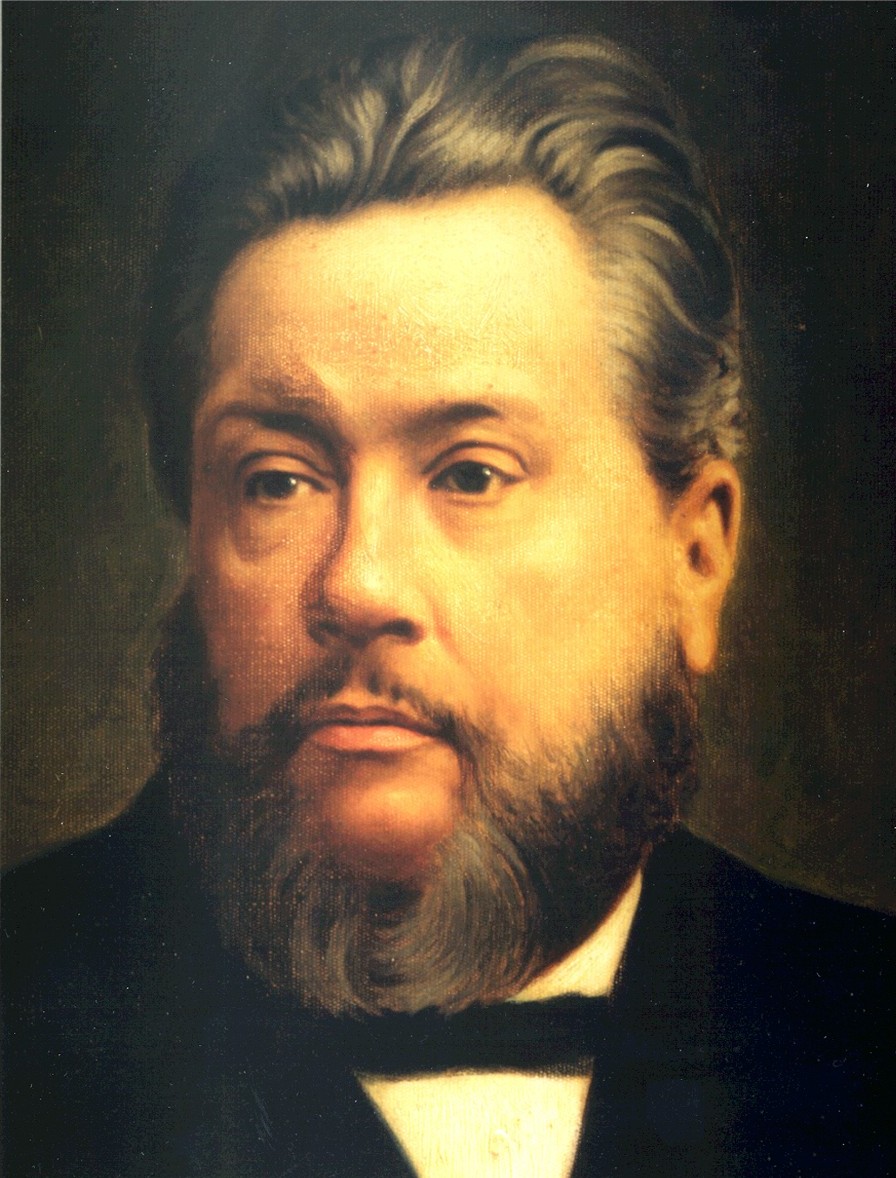
Church Planting is trendy, but is it new? Every heard of C.H. Spurgeon’s involvement in Church Planting? What was the purpose of the Pastor’s College?
“Twenty-Seven churches were founded by students form the Pastor’s College between 1853 and 1867. In the second half of the nineteenth century, the number of Baptist churches in London doubled and nearly all of these were founded, in one way or another, under Spurgeon’s influence. Students were sent out to new areas or existing churches, normally at the command of “the guv’nor,” as students called Spurgeon…Spurgeon joined with two other London Ministers, Landels of Regent park and Brock of Bloomsbury, to found the London Baptist Association, with the goal of building one new chapel each year. Both Brock and Landels had planted their churches and started local missions, but Spurgeon’s vision was London-wide.”
From: Michael Nicholls, “Missions, Yesterday and Today: Charles Haddon Spurgeon (1834-92) Church Planter, ” in Five ‘Til Midnight: Church Planting for A.D. 2000 and Beyond, ed. Tony Cupit. Quoted in Stetzer, Planting Missional Churches (2006) p. 67
After forwarding this quote to a few friends, I received this email from Robert Briggs- a Scottish pastor in Sacramento California. AMAZING!!!
“Matt
I thought you might be interested to know.
My home church as I call it, the one I was nurtured in, near Edinburgh Scotland, was planted by David Tait who was 77 years old when he planted it, in 1933.
He was a student at the Pastors College under Spurgeon in his 20’s back in the 1880’s. Your article was spot on and I like to think of myself in a nostalgic sort of way as being part of the fruit of that wonderful ministry over a century later.
The Pastors College model has been the one I have been looking into for us here in Sacramento. Two years of training proven, gifted men and sending them out.
Enjoyed the fellowship yesterday.
Warmest regards
RB”
How Many Have Not Heard the Gospel?
Here is a humbling, inspiring “clock” with figures about the number of people in the world who have not heard, and cannot hear of the gospel of Christ.
It is from the International Missions Board.
Another helpful resource is the Joshua Project
A Great Interview With a Man From Arica
I found this interview with Oscar Muriu who is a church planting guy in Kenya. We obviously come from different perspectives, still I was amazed by the great vision the man has for reaching the lost, training leaders and planting churches. I was also amazed by his simple but pentrating insights into the Western mindset. The article is lengthy by worth the read. I am planning on reading it to my kids tonight and discussing it for family devotions.
A Book to Set the Heart on Fire

I have been re-reading this precious book, “Words to Winners of Souls” little by little, using it to fire my soul, especially on days of prayer and fasting. Horatius Bonar was a Scottish minister from the past who had a zeal to see pastors awake and alive to the issues of eternity and the need to win souls. This book is aimed at pastors, but beneficial to others. My copy was given to me over 1o years ago by Pastor Michael Crawford, and I can remember reading it together and praying in his study. You can get it at amazon.com or a discount version at Chapel Library.
I read some of it yesterday and it lead me to pray and seek God with earnestness. He is one of the “old boys” that lays it down straight. Bonar (1808-1889) was not a puritan, but quoted them extensively. It is interesting to me that of all the interest in puritanism and the theology of the past that has been reborn in the last 50 years, there are precious few that have sought to emulate their lives when it comes to soul-winning. Bonar says some remarkable things:
- Having good theology and a cold heart can be worse than having bad theology or an open life of sin. ” Even when sound in the faith, through unbelief, lukewarmness and slothful formality, they [ministers] may do irreparable injury to the cause of christ, freezing and withering up all spiritual life around them. The lukewarm ministry of one who is theoretically orthodox is often more extensively and fatally ruinous to souls than that of one grossly inconsistent or flagrantly heretical.” (p. 1-2)
- “The object of the Christian ministry is to convert sinners and to edify the body of Christ.” That sounds like part 1 and 2 of the great commission to me. Sadly many people who are “concerned” about too much evangelism in the church, and strong evangelistic preaching to the lost attempt to justify this stance from a posture of “respect” for the preachers of the past. They seem to think that the pastor should only be concerned with part 2 of the Great Commission– tending the sheep. Nothing could be further from the truth. Bonar quotes the famous Puritan John Owen: “Ministers are seldom honored with success unless they are continually aiming at the conversion of sinners.” (p. 5)
- The most important aspect of being a soul-winner is a close and lively walk with God. By this Bonar means a life of complete consecration to prayer and the word. We fire our souls during time alone with God. He quotes John Berridge, “It is much to be feared that we are weak in the pulpit because we are weak in the closet.” (p.11) He says with great skill that we should study the lives of great men of the past more than their sermons, because the power of their closeness to Christ is was brought blessing.
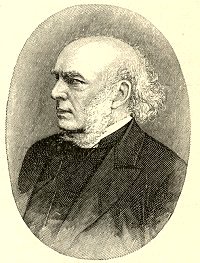
I was struck while looking through a hymnal that Bonar thought about this a lot. He also wrote this hymn which is a poetic expression of these ideas. I just printed a copy of this and taped it above my desk to stir me to this kind of zeal.
Go, labor on: spend, and be spent,
Thy joy to do the Father’s will:
It is the way the Master went;
Should not the servant tread it still?
Go, labor on! ’tis not for naught
Thine earthly loss is heavenly gain;
Men heed thee, love thee, praise thee not;
The Master praises: what are men?
Go, labor on! enough, while here,
If He shall praise thee, if He deign
The willing heart to mark and cheer:
No toil for Him shall be in vain.
Go, labor on! Your hands are weak,
Your knees are faint, your soul cast down;
Yet falter not; the prize you seek
Is near—a kingdom and a crown.
Go, labor on while it is day:
The world’s dark night is hastening on;
Speed, speed thy work, cast sloth away;
It is not thus that souls are won.
Men die in darkness at thy side,
Without a hope to cheer the tomb;
Take up the torch and wave it wide,
The torch that lights time’s thickest gloom.
Toil on, faint not, keep watch and pray,
Be wise the erring soul to win;
Go forth into the world’s highway,
Compel the wanderer to come in.
Toil on, and in thy toil rejoice!
For toil comes rest, for exile home;
Soon shalt thou hear the Bridegroom’s voice,
The midnight peal, “Behold, I come!”
Some Highlights from a Good Book
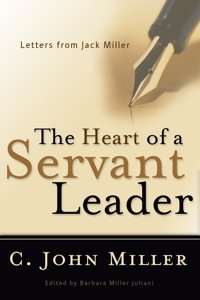 I have been reading this book recently and it has really fed my soul. Sooo….in order to convince my pastor friends and aspiring preachers and church planters to buy this book, I decided to read a few excerpts to give you a flavor. There are about 7 minutes of highlights here, I hope you enjoy!
Our Destiny Is To Say These Small Words Forever
“I have often wondered, perhaps in part simply because the term is so rarely used today, what it might mean to ‘glorify’ God forever. It will undoubtedbly mean a great many things, but one of them surely must be that we will continually thank him.
We will thank him for his graciousness and goodness to us, and for inviting us into conversation. Along this line, I would think that we anticipate our ‘chief and highest end’ every time we behold something beautiful and find that after we have exclaimed, ‘Ah, how wonderful!’ we are almost compelled to say ‘Thank you!’
Our destiny is to say these small words forever and so experience the gratitude that is the perfection of happiness.”
—Craig M. Gay, Dialogue, Catalogue & Monologue (Vancouver, BC: Regent College Publishing, 2008), 48-49
Great Time!

This last week April and I were able to get away for a few days and spend time strengthening our marriage. Throughout our 17 years of marriage these times have been critical in helping us grow closer to one another and closer to Christ. We had a special opportunity to go horseback riding on the beach! This has kind of been a lifelong dream. This photo is taken at Oceano State Beach, near San Luis Obispo.
Over the years I have found that a large part of trying to be a “good husband” involves ample time to talk to my sweetheart. I think that 80% of loving your wife as Jesus loves the church is done in conversation, and getting away from normal obligations and time tables can encourage conversation that is deep and free.
 MattTroupe.net