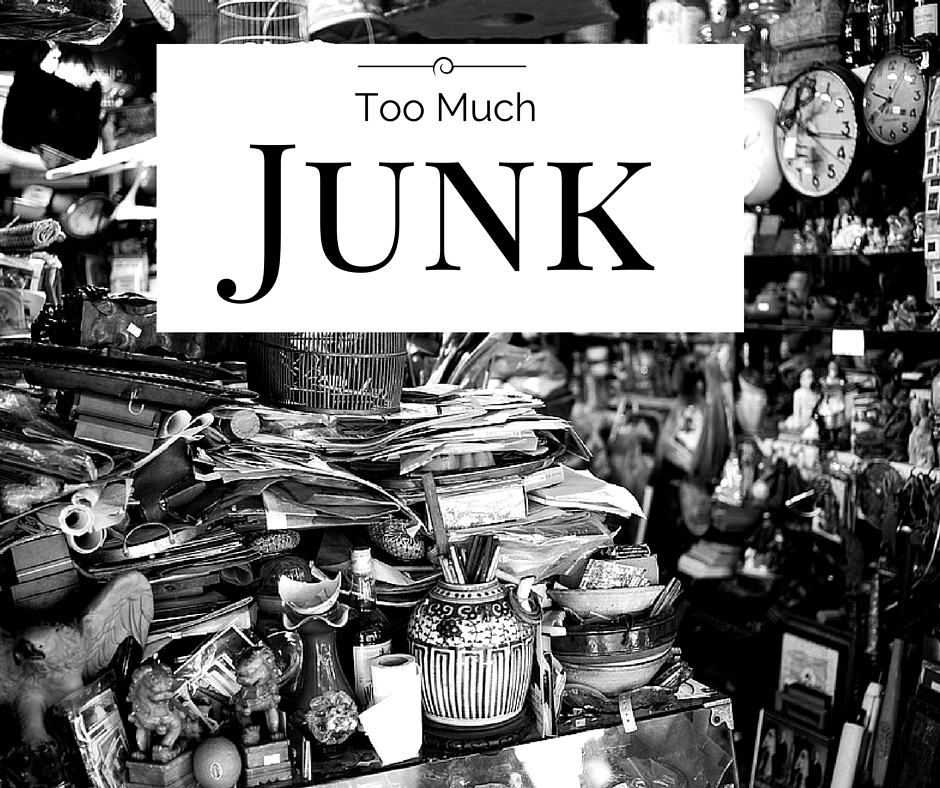
21 Surprising Statistics That Reveal How Much Stuff We Actually Own

21 Reasons

Here is a list of 21 factoids to “prove” (if you had any doubts) that Americans suffer from possession gluttony.  We are obese from stuffing our lives full of empty possessions.  Our closets, drawers, and garages are crammed with decades of detritus.  A few of these statistics seem suspect to me, but overall the point is clear. We have too much stuff.

What is the problem with having this much stuff? 2 things stand out. First, it is unique in our own history. By the standard of any previous generation we are all hoarders.  So much for being on the “right side of history.”  Second, it is bad for us.   Owning this much stuff, the way we own it, has adverse effects on our daily routines, our financial bottom line, our mental health and our relationships.

“19. Over the course of our lifetime, we will spend a total of 3,680 hours or 153 days searching for misplaced items.The research found we lose up to nine items every day—or 198,743 in a lifetime. Phones, keys, sunglasses, and paperwork top the list”

#19 above stood out to me because I have experienced it, and I have family members that face this daily.  We have so much stuff that we forget what we have. We are afraid to “throw it away” because it has value. And we might need it some day.  But unless we become full time archivists of our own stuff there is no way we can remember and/or locate what we need.  The result? We go out and buy another one of the very thing that we need, but already own. And this happens because we can’t find it.

And by the way, even if we could keep everything catalogued… is that really what we want to spend our precious attention on?

Consider this. The size of our homes has tripled, and they still aren’t big enough so we have to rent a storage facility.  I think we should make it a weekly habit to throw things away or donate them. Just this week we took 3 boxes of old housewife and decorations to the thrift store. They were good items, they have value. But we realized they have a negative value to us. Someone else can use it and the rescue mission can benefit from the resale.  Win. Win. Win by losing unnecessary stuff!

via 21 Surprising Statistics That Reveal How Much Stuff We Actually Own.


Photo courtesy of Kevin Utting. Some Rights reserved

Ashley Madison Data Leak Leads to Possible Suicides and Extortion

Nuclear explosions are dangerous in a number of ways.  But it is the fallout after the explosion that causes the most enduring damage.

It seems there is some strange fallout from the Ashley Madison info leak. If you don’t know about it, Ashley Madison is a website that was created to help people commit adultery in anonymity.   And evidently the kinds of people that used the site REALLY don’t want their private behavior to become public.  This makes them easy prey for people with the truth and bad intentions.  For some the release of this information is not just embarrassing, it is devastating.  And this makes them prime targets for extortion.

None of this should come as a surprise. Ashley Madison is not some small, insignificant website with a few users. This site had 30 MILLION people trusting that it would become a safe secret place for dark deeds.  And it should be evident now that such a place does not exist.  As Benjamin Franklin is reported to have said, “Three can keep a secret if two of them are dead.”  And ironically the world is not only full of unscrupulous adulterers, it is also full of people that want to take advantage of them.

This level of infidelity can only be remotely possible when we are satisfied with hypocrisy, when we are more upset about immoral people exposing infidelity than we are about immoral people practicing infidelity. Right now the news is that hackers have breached this information, when the real story is that we are so desperate to lead double lives.

In a fascinating and hopeful twist, this whole situation may become a golden opportunity. It is an open door to come clean. It may be an opportunity for marriages to heal, and root causes to be exposed.  People that have been skulking about in the shadows may paradoxically stumble into hope when the light dawns on them.  That is my prayer.

It’s not good to find out you have cancer, unless you have cancer.

We wrongly suspect that the revelation of our misconduct is the big problem, when it is actually just a symptom.  It’s not good to find out you have cancer, unless you have cancer. Then finding out opens the door for treatment.

Ashley Madison leak leads to possible suicides, Toronto police say – The Globe and Mail.

Your Anxiety Is Ruining Your Furniture

old chair

A fascinating anecdote from Mark Buchanan about stress and anxiety:

“Anxiety and stress are our number one killers. I heard recently a story about Meyer Friedman, the psychologist who devised the Type A/ Type B personality profiles— where Type B is placid and limber, taking life as it comes, and Type A is two-fisted and bristling, taking life by the horns. Friedman’s initial insight that led to his personality theory came after a discussion with a chair upholsterer. The upholsterer said that most of his business came from replacing the upholstery on the chairs in cardiologists’ offices, the chairs wore first, and quickly, on the front edge. Apparently, heart patients are so impatient that, even while listening to their doctor’s life-threatening diagnosis or lifesaving prescription, they sit taut and restless, poised to flee, chafing at the delay. At the edge of their seats. The very reason their hearts are sick is written in that threadbare upholstery.”

Buchanan, Mark (2007-03-11). The Rest of God: Restoring Your Soul by Restoring Sabbath (pp. 109-110). Thomas Nelson. Kindle Edition.

All The Good Ideas Have Already Been Thought Of…

All The Good Ideas Have Already Been Thought

All The Good Ideas Have Already Been Thought Of…

No, they haven’t.

“Want the best for your child, not for your child to be the best”

%22Want the Best for your child, Don't want

Our children and young adults are facing a lot of pressure to succeed. GPA. AP courses. College admissions. This observation is coming from those that watch our kids, and it is coming more frequently.  We all want our children to succeed and have bought into the American narrative that the only way for this to happen is for them to earn degrees from prestigious schools. This has a number of untoward effects.  One is huge student debt. Another is a disdain for the trades. We just don’t look at plumbers and welders and think “success.”

Perhaps the most troubling of these effects is the mental and emotional pressure it places on our young adult children. We impose our own aspirations on them, at times even denying them of normal elements of childhood play.  The pressures can be too much for many to carry, and the overall effects are not good.  At the extreme end of the spectrum It seems that more teenagers are deciding to jump in front of trains.

Frank Bruni writes about the suicide rates among teenagers in places like Palo Alto and the Washington DC suburbs.  They are higher there than other places.  And as researchers look for causes they find that the high pressure world of adult competition is trickling onto our children and contributing to a life of anxiety and despair.

Some of this reveals the irony of wealth and success.  Having all that one could want in this world may be one of the worst things that could happen.

Bruni writes,

“Adam Strassberg, a psychiatrist and the father of two Palo Alto teenagers, wrote that while many Palo Alto parents are “wealthy and secure beyond imagining,” they’re consumed by fear of losing that perch or failing to bequeath it to their kids. “Maintaining and advancing insidiously high educational standards in our children is a way to soothe this anxiety,” he said.”

Strasbourg offers some wise advice,

“Want the best for your child, not for your child to be the best.”

Best, Brightest — and Saddest? – The New York Times.

How Great Leaders Avoid Burnout | Inc.com

Burnout

Add this to the long list of people talking about burnout and rest.

The article makes some good observations and important suggestions. #1 is great.  Having a group of trusted mentors that can tell you hard truths is GREAT advice.

But the second paragraph stood out to me, because it makes a naive recommendation. It goes like this, “If you want to avoid burnout, don’t measure success by money or power. Instead use a 3rd metric. Measure success by changing the world”  Ha.

Haha

Hahahahaha

“Fighting the good fight” can lead to burnout just as quickly as working for Wall street.

Anyone who has worked with churches or nonprofits knows that “fighting the good fight” can lead to burnout just as quickly as working for Wall street.  In fact, it might be even more devastating. When you work for a “cause” it is easy to believe that since you are working for something virtuous that you ought to be successful and appreciated.  And when you experience the opposite, that instead you are often opposed and criticized, you may find yourself suffering from burnout + disillusionment. I can provide a long list of these people for you right now, right off the top of my head.

Here is  the highlight from the article:

“One day in 2007, Arianna Huffington found herself lying on the floor of her home office in a pool of blood. After an MRI, a CAT scan, and an ECG, she learned there was no underlying problem–it was exhaustion which had caused her to faint, her head smashing the corner of her desk and cutting her eye.

“The incident prompted her to ask deeper questions about her life of 18-hour workdays, seven days a week. By the time she delivered a commencement speech at Smith College in 2013, she was preaching the gospel of a good night’s sleep and asking graduates to measure their lives by a “third metric”–changing the world for the better–in addition to those timeless standards, money and power. ” (emphasis mine)

Having a cause is important. But it is not enough. We need wisdom in how we serve the cause.

via How Great Leaders Avoid Burnout | Inc.com.

You’re Not Multitasking, Your Switching Between Tasks. And It Doesn’t Work

Multitasking Doesn't  Work Twitter

This is a good and (mercifully) brief article on the not-so-obvious truth about multitasking. We often do it because we think we are getting more done. The truth is the opposite. When we try to focus on more than one thing at a time, we end up gettting less done, it takes longer, and the work is generally of a lower quality. This article includes some good suggestions and links to research.

“What does it even mean anyway: multitasking?

“The actual term ‘multitasking’ is misleading because we might think we’re doing more than one thing at once, but that’s not what our brain is actually doing.

“What essentially happens when we switch between tasks is just that – we switch between tasks.

“Our brain is easily distracted and jumps from task to task, taking longer to complete all tasks simultaneously than it would if it attacked them one by one.”

3 Deadly Effects of Multi-Tasking, and Why It’s Worse Than Marijuana.

Photo credit: “SunsetTracksCrop” by Arne Hückelheim – Own work. Licensed under CC BY-SA 3.0 via Wikimedia Commons – 

Why Does It Take So Long to Say We Are Sorry?

Why does it take so long to say that we are sorry? To acknowledge wrong doing and ask for pardon? Why do whole societies refused to acknowledge their past injustices and thereby turn them into present evils? Why do onlookers stand by, becoming complicit by their silence and inaction? Why are we more afraid of the loss of money, influence, and political good will than we are for the cancer of cowardice that grows inside when we stand by in silence?

Armenian Memorial

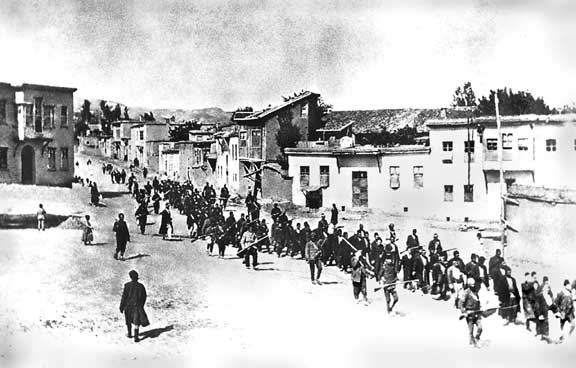
I just attended an important event at the Armenian Genocide memorial at Fresno State.  It was very moving to me. My eyes were filled with tears. I am sad to say that before moving to Fresno in 2009 I hadn’t even heard of this event. But many Armenian friends have shared the history and even personal accounts from their families.  Oddly enough, I had tears in part because of the great injustice, but they were also tears of joy because an evangelical Turkish pastor had come to continue a process of reconciliation and healing. Even though others would not acknowledge the genocide, he was there to acknowledge, apologize, and seek reconciliation among brothers in Christ. It was a beautiful event. It was a miracle a century in the making.

This year is the 100th anniversary of this great evil, and still the government of Turkey and many others refuse to acknowledge that it even happened, let alone to apologize.  My own president and government have refused to make a simple statement using that “G” word.  And it is strange because the U.S. Doesn’t even need to apologize as the perpetrators of what happened in 1915. We don’t need to acknowledge that WE did it.  We just need to acknowledge that someone else did a great crime. But so far, we won’t. But I am hopeful that this will change.

Armenians_marched_by_Turkish_soldiers,_1915
Armenians marched by Turkish soldiers in 1915


When we refuse to call evil exactly what it is, we give it power.  Others may be emboldened to repeat similar acts with a sense of impunity. It was only 24 years after the great outbreak of the genocide in 1915 that Hitler acknowledged it, but in a sinister way. He said, “who, after all speaks today of the annihilation of the Armenians.”  He was posturing for the annihilation of the Jews, and he viewed this as the trial run.  The worldwide silence on this issue, the failure of other nations to intervene or even “remember” what happened while the events were still fresh in memory had implications. It inspired Hitler. It made him feel that he could not only repeat these acts, but that he could get away with it. He interpreted the silence and concluded hat this group of people were so despised that the world would be better off for their destruction. Such are the depraved justifications of mad men.

But why would it take so long for a nation like ours, one so entangled in its own quest for social justice, to even call this event what it is?

There are many answers, but none of them will can bear the weight of our silence.  What does matter is that now we have become part of the problem, we have refused to leave the great stream of indifference that flows through history.  Even while we pat ourselves on the back for our moral progress.  Now, even though we weren’t the perpetrators we need to apologize for failing to act, and failing to offer the simple gesture of words. We must ask forgiveness for our unwillingness to pay the price for speaking the truth. And we must acknowledge that it took us far too long to do it.

Haiku 8.3.15

Haiku 8.3.15

Haven’t had as much time for poetry lately. Here are a few offerings.

Study Abroad

A video call

Daughter in London, good times

Retold taste better


Patio 

August in Fresno

Finally a cool morning

A rare summer treat


Essentials

Downsizing our home

Hard, but good in many ways

Unclutter my life


Recent Philosophical and Scientific Challenges to Darwinism

Here are some highlights from a worthwhile piece at the Intercollegiate Review. The article is an excerpt from the Book, “Darwin Day In America: How Our Politics and Culture Have Been Dehumanized in the Name of Science”  The title alone is fascinating and points to something that is blind to many of my science-loving friends that don’t seem to understand the difference between science and philosophy.

Perhaps most interesting to me is the way that any dissent on the topic of evolution, even when based on scientific observations and coming from other scientists and atheists is treated as “dangerous.”

Perhaps most interesting to me is the way that any dissent on the topic of evolution, even when based on scientific observations and coming from other scientists/atheists is treated as “dangerous.”  Scientists have felt oppressed in the past, and these feelings are justified. They felt that open inquiry was not allowed.  Seems like they are returning the favor.  We look down at radical islamic countries with their anti-blasphemy laws, but we have our own blasphemy code.  If you suggest that maybe, perhaps, that possibly darwinism doesn’t exactly follow from the evidence itself… you may find angry crowds gathering around you with a heap of stones.

Now listen to John West for yourself:


“If someone prior to 2012 had predicted that Oxford University Press would publish a book with the title Mind and Cosmos: Why the Materialist Neo-Darwinian Conception of Nature Is Almost Certainly False, one might have wondered about his sanity, or at least about how familiar he was with current discourse in elite academia. But Oxford did in fact publish the book, and the intellectual aftershocks have yet to subside.

“The book’s author, philosopher Thomas Nagel, is a professor of long standing at New York University and the recipient of numerous awards and honors, including an honorary doctorate from Oxford University, fellowships from the National Science Foundation and the National Endowment for the Humanities, and election to such august bodies as the American Academy of Arts and Sciences and the American Philosophical Society. It is a testament to Professor Nagel’s stature that his dissent from Darwinian theory was allowed to be published at all. But his stature has not prevented a flood of abuse and even occasional suggestions of creeping senility….

“Nagel attracted special displeasure for praising Darwin skeptics like mathematician David Berlinski and intelligent-design proponents like biochemist Michael Behe and philosopher of science Stephen Meyer. As the New York Times explained, many of Nagel’s fellow academics view him unfavorably “not just for the specifics of his arguments but also for what they see as a dangerous sympathy for intelligent design.” Now there is a revealing comment: academics, typically blasé about everything from justifications of infanticide to the pooh-poohing of pedophilia, have concluded that it is “dangerous” to give a hearing to scholars who think nature displays evidence of intelligent design.

“Nagel ultimately offered a simple but profound objection to Darwinism: “Evolutionary naturalism provides an account of our capacities that undermines their reliability, and in doing so undermines itself.” In other words, if our mind and morals are simply the accidental products of a blind material process like natural selection acting on random genetic mistakes, what confidence can we have in them as routes to truth?

“The basic philosophical critique of Darwinian reductionism offered by Nagel had been made before, perhaps most notably by Sir Arthur Balfour, C. S. Lewis, and Alvin Plantinga. But around the same time as the publication of Nagel’s book came new scientific discoveries that undermined Darwinian materialism as well. In the fall of 2012, the Encyclopedia of DNA Elements (ENCODE) project released results showing that much of so-called junk DNA actually performs biological functions. The ENCODE results overturned long-repeated claims by leading Darwinian biologists that most of the human genome is genetic garbage produced by a blind evolutionary process. At the same time, the results confirmed predictions made during the previous decade by scholars who think nature displays evidence of intelligent design.

“Even critics of Darwin’s Doubt found themselves at a loss to come up with a convincing answer to Meyer’s query about biological information. University of California at Berkeley biologist Charles Marshall, one of the world’s leading paleontologists, attempted to answer Meyer in the pages of the journal Science and in an extended debate on British radio. But as Meyer and others pointed out, Marshall tried to explain the needed information by simply presupposing the prior existence of even more unaccounted-for genetic information. “That is not solving the problem,” said Meyer. “That’s just begging the question.”

“C. S. Lewis perceptively observed in his final book that “nature gives most of her evidence in answer to the questions we ask her.” Lewis’s point was that old paradigms often persist because they blind us from asking certain questions. They begin to disintegrate once we start asking the right questions. Scientific materialism continues to surge, but perhaps the right questions are finally beginning to be asked.

“It remains to be seen whether as a society we will be content to let those questions be begged or whether we will embrace the injunction of Socrates to “follow the argument . . . wherever it may lead.” The answer to that question may determine our culture’s future.”

via The Book That Deflated Darwin Day | Intercollegiate Review.