An Unexpected Way To Learn From Our Failures

learning from Failure

Common sense tells us that we should learn from our mistakes.  Well, as Voltaire said, “Common sense is not so common.”

Some of the best learning available comes from failure.  This learning can be intellectual- like trying and failing to solve a math problem.  Or this learning can be moral- realizing that revenge and bitterness is self destructive, it eats away at your own soul.

In order to really learn from our mistakes we need to be deliberate.  We need to spend time thinking about why we failed.  The kernel of folly is to keep repeating the same mistakes over and over. Every time we complete a project, achieve a milestone, or fall on our faces we have a chance to become our own teachers. The opportunity is especially rich when we fail.  A lot can be learned in the post-mortem examination of disappointment. About life. About ourselves.

Nothing shocking about that.

But there is another amazing opportunity that is lurking in our failures. And that is the idea of serendipity.  Serendipity is an accidental discovery. It is a happy accident. It is the pleasant surprise of looking for one thing, and finding something else, often something entirely different yet wonderful.  And many of the most amazing advances in human knowledge and culture have been made “by accident.”  And this is more common than you might think. Penicillin, microwaves, Velcro, Teflon, vulcanized rubber, Coca-Cola, radioactivity, the Post-it note, and Viagra were all the result of “accidental discoveries.”  In reality the list is much longer.

According to Steven Johnson in his book, “Where Good Ideas Come From,” one of the key elements in taking advantage of serendipity is paying attention. Evidently small versions of these accidental discoveries are all around us, but we may miss them if we don’t recognize them.  And we won’t recognize them if we don’t slow down and pay attention.  This involves taking the time to think about what is happening and why.

Here is another reason to be willing to fail and to learn from your failures. You might learn how to do better next time. Or you might discover something else altogether. Something that could change the world forever.

All The Good Ideas Have Already Been Thought Of…

All The Good Ideas Have Already Been Thought

All The Good Ideas Have Already Been Thought Of…

No, they haven’t.

Essentialism Ch. 4 Discussion Questions

Essentialism

This is a list of discussion questions to help work through the content of the book “Essentialism” By Greg McKeown.

Download a pdf of the questions that is more friendly for journaling here: Essentialism Questions Ch. 4

Major principles:

  • Every decision is a trade off. Since we can’t have it all, choosing one thing is not choosing another.
  • What trade off do I want to make? How can I do this deliberately rather than by default?
  • What can I go big on? Rather than “how can I do it all?” or “What do I have to give up?”
  • You need time and space to adequately consider the tradeoffs before you.

Key examples/illustrations

  • Southwest airlines deliberately rejecting certain options so they could focus on their core business.
  • Businesses that choose a straddling strategy. Trying to imitate a competitor while keeping their old strategy doesn’t work.
  • Johnson and Johnson’s response to the Tylenol cyanide crisis.
  • Businesses with lengthy mission statements or lists of values.
  1. The chapter opens by talking about the financial success of Southwest Airlines which is an example of a business with an essentialist strategy. Southwest said “no” to many things so they could focus on their strategy.  What does this suggest about the promise of essentialism?
  2. A person that is chronically late and stressed is often trying to fit in “just one more” email or action item. This has a domino effect on other important things. What insignificant things are you attempting in the name of “efficiency” that are undermining your focus?
  3. Are there tasks/responsibilities that are a part of your routine just because they seem easy for you to accomplish?  Are there things that you are doing that are not a priority, but that you don’t quit because they are not difficult?
  4. We often multitask when we fail to recognize the reality of trade offs. What happens when you multitask? What trade offs are you making?  What are you giving up? What are you gaining?
  5. There is a difference between making trade offs deliberately vs. by default. Think of a significant disappointment in your life/business. Was there a tradeoff in your choices?  Was it one that you made intentionally or that you allowed others to make?
  6. McKeown suggests that lengthy mission statements and lists of values show the failure to grapple with the reality of trade offs.  Have you seen this? Do you agree or disagree?
  7. The nonessentialist says “I can do it all,” the essentialist says, “which problem do I want?”  What problems are you facing because of your attempts to do too much?
  8. Think of a choice that is in front of you right now.  Consider the options and ask “which problem do I want?” This will require you to think of the potential outcomes of saying yes to various possibilities. Reflect on this.
  9. McKeown says, “instead of asking ‘what do I have to give up?’ ask ‘what do I want to go big on?’”  Think of an upcoming personal decision and use these two questions to analyze it. Make a list. How does each approach affect your feelings about the decision?
  10. We often feel guilt because of FOMO, “fear of missing out.” How can being deliberate about your choices help with these feelings of fear or guilt?
  11. In order to make tradeoffs wisely we have to take lots of time for exploration and reflection before we commit.  Consider a recent life decision. Did you have time to truly explore the various options before choosing? Why? Why not?
  12. Mckeown says, “To discern what is truly essential we need space to think, time to look and listen, permission to play, wisdom to sleep, and the discipline to apply highly selective criteria to the choices we make.”  What grabs you the most about this statement?
  13. Why do we need this “space” in order to make decisions based on “highly selective criteria?”

Photo courtesy of Daniel Oines. Some rights reserved

Essentialism Questions Ch. 3

You can download a journal-friendly version of the questions here: Essentialism Questions Ch. 3

This is a list of discussion questions to help work through the content of the book “Essentialism” By Greg McKeown. Why discussion questions? Because interacting with the material and thinking through how the principles apply in your own circumstances is more likely to produce real learning and lasting change.

Major principles:

Most things that occupy our time are NOT important. They are a part of the “trivial many” vs the “vital few.”

Key examples/illustrations

  • Boxer the Horse from Orwell’s Animal Farm
  • The difference in hourly rates for different jobs
  • El Bulli Restaurant
  • The Pareto Principle and the “vital few”
  • Warren Buffet’s investing strategy

T

Power Law graph from Forbes

  1. The chapter opens with a quote from Richard Koch, author of several books on the 80/20 (or Pareto) principle: “MOST OF WHAT EXISTS IN THE UNIVERSE— OUR ACTIONS, AND ALL OTHER FORCES, RESOURCES, AND IDEAS— HAS LITTLE VALUE AND YIELDS LITTLE RESULT; ON THE OTHER HAND, A FEW THINGS WORK FANTASTICALLY WELL AND HAVE TREMENDOUS IMPACT.”  This idea can seem at odds with common sense. Do you agree with Koch? If so why? If you are having trouble accepting this idea, why?
  2. McKeown mentions the story of Animal Farm and the horse “Boxer” who’s answer is to every problem is to work harder. Based on the ideas in this chapter what are the possible outcomes of such a strategy?
  3. Why are there limits to the value of “working harder?”
  4. Some types of effort yield more and better results than other kinds of effort.  Have you experienced this in your life before?
  5. What makes something essential or important for you? Make a very short list of what makes something truly important or vital to your life.
  6. Which activities are you spending your time on that are low yield? Which are high yield? Put another way, which activities are minimum wage or less for you? Which produce the greatest results in terms of money, outcomes, happiness, quality, etc.?
  7. After a certain amount of time, “working more, working harder” results in a plateau of productivity.  This can happen because of exhaustion, loss of resources, discouragement, mental fatigue, etc.  Are there any areas in your life where you are seeing a plateau of results? Do the hard work of being honest with yourself.
  8. Diversification is a common strategy for investors. Yet according to “The Tao of Warren Buffett,” billionaire Warren Buffet makes 90% of his money of just 10 investments. What factors drive the emphasis on diversification rather than focus? Where do you see these factors at work in your life?
  9. Take a moment to look up “power law theory.” You can do a brief search, or here is an example of a write up from Forbes. A power law distribution is very different from a normal “bell curve.”  This distribution shows some of the science behind the big idea in this chapter. Some people/ideas are far more influential than others.  What is your major impression from the power law theory? Take a moment to write this down.
  10. Power law theory demonstrates that most “inputs” (people, products, sales accounts, ideas, activities) in the tail fall below median. They do NOT yield average results, they produce below average results. What activities in your life are in the long tail, bringing you lower-than-average results? How can you exchange them? Which one can you quit this week?
  11. Talking about high performing employees, Mark Zuckerberg said, “Someone who is exceptional in their role is not just a little better than someone who is pretty good. They are 100 times better.” This is not only true of people, it is true in many areas of life. Which things might you do that are even 10x more effective than the “pretty good” activities that take up most of your time.
  12. Most people fail to become essentialists because they don’t know the difference between important vs unimportant.  How can you learn  the difference in your own life?
  13. Does it seem insulting or distasteful to say that most things are “unimportant?” Why?
  14. Marketers work hard to convince people that their products/services are important. Part of their success comes from the fact that their audience hasn’t decided ahead of time what is truly important.  This can lead to people constantly looking for success through purchasing a new product or software, changing to the newest and hottest business strategy, reading another self help book. Where do you see yourself influenced about what is important by outsiders?
  15. McKeown recommends that in light of these principles we spend ample time considering what is truly essential. Take time right now to make an appointment with yourself every week for reflection on your schedule and activities.


Speed Kills- Why The Pressure to Go Faster Is Eating Our Souls

Speed Kills – The Chronicle Review – The Chronicle of Higher Education.

Sometimes you read an article that powerfully says something you were already thinking, but had trouble putting into words.  This is one of those articles for me.  I am admittedly addicted to the same craving for speed that afflicts the rest of us. But more and more I am feeling cheated. I am feeling like I want to raise a protest. I want to “stick it to the man” that keeps yelling “SCHNELL!”

Mark Taylor has done a good job showing the deleterious effects of a lust for “more and more, faster and faster” on several dimension of our culture. He specifically discusses the impact on capital markets, communication, and education.

“The faster we go, the less time we seem to have. As our lives speed up, stress increases, and anxiety trickles down from managers to workers, and parents to children.”

Our ability to do things faster has had exactly the opposite effect that thinkers and politicians predicted.  We thought that being able to finish a job sooner would allow us to clock out and go home. That we would now have time for recreation, art, and family. Nope. Instead, “Contrary to expectation, the technologies that were supposed to liberate us now enslave us.”  He writes:

“With the emergence of personal computers and other digital devices in the late 1960s and early 1970s, many analysts predicted a new age in which people would be drawn together in a “global village,” where they would be freed from many of the burdens of work and would have ample leisure time to pursue their interests. That was not merely the dream of misty-eyed idealists but was also the prognosis of sober scientists and policy makers. In 1956, Richard Nixon predicted a four-day workweek, and almost a decade later a Senate subcommittee heard expert testimony that by 2000, Americans would be working only 14 hours a week.”

The quest for speed has been paired with our desire to measure success with numbers. This has destroyed or dismissed hard-to-count virtues like creativity, reflection, and problem solving. And Oh, yeah, what about happiness?  There is a difference between “rapid information processing,” the kind of thing we do when reading and writing online, and “slow, careful, deliberate reflection.”  By the way, when was the last time you read anything about “slow, careful, deliberate reflection.”   Yeah, me too.  Probably in too much of a hurry.  We are too busy to ask whether our pace is actually good for us.

By the way, when was the last time you read anything about “slow, careful, deliberate reflection.”

One of the other bad effects of speed is that it tends to diminish complexity in favor of simplicity. Now, simplicity is a good thing. But not everything is simple. And paradoxically, arriving at the kind of simplicity that is truly valuable takes a LOT of time. Greg McKeown has argued for this in his book Essentialism.  If you are going to figure out what is truly important you will need time and space to do it.

Life is moving too fast, and we are NOT better off because of it. Read this article and take another step toward deliberately slowing down.

Questions for Essentialism Ch. 2

Questions for Essentialism. You Can download a pdf here: Essentialism Questions Ch. 2

Ch. 1 questions are here

Chapter 2

This is a list of discussion questions to help work through the content of the book “Essentialism” By Greg McKeown. Why discussion questions? Because interacting with the material and thinking through how the principals apply in your own circumstances is more likely to produce real learning and lasting change.

Major principals for this Chapter:

The non essentialist believes 3 false Ideas: “I have to do it… All of it is important… I can do both.”

The essentialist replaces them with 3 key truths: “I choose to… Only a few things matter, I can do anything but not everything.”

Questions to help you work through the Material:

  1. Which things are crowding you the most? Make a list of tasks/responsibilities that seem to be crowding you right now.
  1. Choose the most troublesome item from #1, and reflect on it through these questions based on those three truths:
    1. Do you feel compelled (by outside pressures) or are you making a deliberate choice that something is important?
    2. Is this item truly important for you to make the highest possible contribution? Why? Why not?
    3. Can you seriously give yourself to this task as well as other things you believe are important? If you had to confidently give something up, what would have to happen for you to realize this? If you have come to this conclusion in the past, what helped you see this?
  1. What are the areas in your life/work where you are performing at a mediocre (or worse) level because of your aptitude? How did you come to this conclusion? Why are you still doing these things?
  1. Have there been times when you were “fed up” and realized you couldn’t do it all? What events or feelings brought you to that point?  What did you do when you got there?
  1. Look in your closet or garage (or your bookshelf). What items do you see that you believe are not really important to you? Think especially of ones that you purchased.  Which of them did you feel were important when you bought them? What has changed for you to view this differently now?
  1. On p. 33 McKeown says he felt that even though he was working really hard, he was not failing, but not really succeeding either.  Which areas of your work do you feel that you are not either succeeding or failing at? How much time are you giving to these activities?
  1. If you could only do one thing with your life right now, what would it be? What are you doing right now that doesn’t fit into that?
  1. “Keep your options open” sounds like a good plan. But it can lead us to attempt too many things. Are there relationships, projects, to do lists, etc. that you are holding onto just to keep your options open? What are they?
  1. McKeown says, “Choice is not a thing, it is an action.” What actions do you need to take to move forward with determining and doing what is truly important?
  1. Where do you feel stuck because you feel you do not have a choice? Are there areas of your responsibility/work activities that you would change or abandon if you could?
  1. The author discusses the concept of learned helplessness that leads to us surrendering our prerogative to choose. Are there areas of your life and work where you believe that your work or choices don’t matter?  Are there areas where you have given up?
  1. Where is hyperactivity a sign of loss of choice in your life? Where do you believe you have to have it all or do it all?
  1. Are there areas where you have had to say “no” that feel like a loss? Are there feelings or fears of loss that are driving your decisions?
  1. Which opportunities have you passed up that you most regret? Which opportunities have you passed up that you look back on with satisfaction? Is there any difference for you?


Seth’s Blog: Fear of Public Speaking

bored dog

Seth’s Blog: Fear of public speaking.

Want to get over your fear of public speaking? Seth Godin recommends you start small and consider giving your speech to your dog (or some dogs) for starters.  Brilliant!

His blog posts and books are consistently challenging to me, even though I don’t always agree.  One of the best things is that he doesn’t ramble. His blog posts are often short and direct.


Photo Used by Permission Joshme17. Some rights reserved

Questions for Essentialism Ch. 1

I am rereading the book “Essentialism” By Greg McKeown with a friend and trying to work the principals into my life. I think the content of the book is needed for a generation that is frantic and out of control. As a Christian I approach the answers from the perspective of Biblical priorities. But the questions and insight in the book are invaluable. I am also attaching a pdf to download Essentialism Questions Ch. 1

Essentialism Picture

Questions for Essentialism

Chapter 1

This is a list of discussion questions to help work through the content of the book “Essentialism” By Greg McKeown.

1. What are the things you do each week?  Take time to make a list of the items that occupy your time. This will be helpful throughout the book. It is important to actually and honestly evaluate what you are doing.

Progress

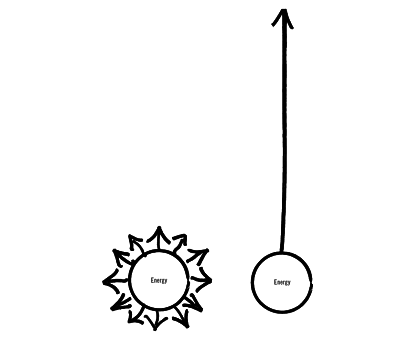
2. There is a diagram on p. 6 contrasting “a millimeter of progress in a million directions” vs. substantial progress in a single direction. Where are you working in too many directions? Do you feel you have a clear single direction? What would your one direction be if money and resources were not a problem?

3. What things on your activity list (#1) would you give up right now if you could? Why do you continue to doing these things?

4. Are there things that you have committed to do that you resent? What are they? Why did you say yes to them?

5. What activity would you say has made the biggest impact in the lives of others? In your career? In your income?

6. Who else is making your priorities for you?

7. The author mentions “decision fatigue.” What are you putting off because you are reluctant to make a decision about it?

8. We are often motivated (consciously or unconsciously) by the opinions of others. Which people are you trying to please? How is this helping or hurting you?

9. On p. 16 the author mentions the hospice nurse Bonny Ware, and her observation of the frequent regrets of dying patients. “I wish I’d had the courage to live a life true to myself, not the life others expected of me.” We often sell our souls to do what pleases others in ways that are bad. Other times we simply lack courage. How are you conforming to the expectations of others?

10. Note the questions on p. 22, and the diagram. It is not just about cutting things out, but cutting things out so you can figure out the right things.

a. “What do I feel deeply inspired by?

b. What am I particularly talented at?

c. What do I do that meets a significant need in the world?”

The Ministry of Listening


The Ministry of Listening


“The first service that one owes to others in the fellowship consists in listening to them. Just as love to God begins with listening to His Word, so the beginning of love for the brethren is learning to listen to them. It is God’s love for us that He not only gives us His Word but also lends us His ear. So it is His work that we do for our brother when we learn to listen to him. Christians, especially ministers, so often think they must always contribute something when they are in the company of others, that this is the one service they have to render. They forget that listening can be a greater service than speaking. Many people are looking for an ear that will listen. They do not find it among Christians, because these Christians are talking where they should be listening. But he who can no longer listen to his brother will soon be no longer listening to God either; he will be doing nothing but prattle in the presence of God too. This is the beginning of the death of the spiritual life, and in the end there is nothing left but spiritual chatter and clerical condescension arrayed in pious words. One who cannot listen long and patiently will presently be talking beside the point and be never really speaking to others, albeit he be not conscious of it. Anyone who thinks his time is too valuable to spend keeping quiet will eventually have no time for God and his brother, but only for himself and for his own follies.”

“Life Together” – Dietrich Bonhoeffer

What Does it Mean to Serve Others in Love?

Here is a quote I read from Jack Miller’s book, “Heart of a Servant Leader,” this morning. It is truly humbling and inspiring at the same time! I want to put others first for the Glory of Jesus!

“A particular challenge I’d like to put before you. What does it mean to serve one another in love? Practically it means to labor to make others successful. Ask yourself: What can I do to make the other team members successful? What about choosing one [team member] to major on–perhaps Richard–and working with intensity to make his work successful? Maybe this isn’t practical at this time, but still I have found that it can really release the gifts of others and give direction to the ministry” (HOASL, p. 146)