How Trigger Warnings Are Hurting Mental Health on Campus – The Atlantic

This is an important article from the Atlantic on how our attempts at censorship in the name of protecting students from hurt feelings is bad for them in just about every way. It is a longer piece, but worth the time if you can make it all the way through without gouging out your own eyes in disbelief and frustration. The article is full of examples about the insanity of the reigning version of political correctness.

I think it is a significant article because it is polite, but also coming from the more liberal side of the field. The author approaches the topic from the standpoint of counseling (specifically cognitive psychology) and so is in a good position to address the concerns behind all the trigger warnings (e.g. “you are going to make people relive trauma”).

As I waded through the examples in the article,  I kept mumbling to myself in shock.  Are we trapped in a Monty Python sketch?  Yet, the big ideas resonate with me because I have seen some of this personally.  I just didn’t realize this monster was growing so quickly.

“Attempts to shield students from words, ideas, and people that might cause them emotional discomfort are bad for the students. They are bad for the workplace, which will be mired in unending litigation if student expectations of safety are carried forward. And they are bad for American democracy, which is already paralyzed by worsening partisanship. When the ideas, values, and speech of the other side are seen not just as wrong but as willfully aggressive toward innocent victims, it is hard to imagine the kind of mutual respect, negotiation, and compromise that are needed to make politics a positive-sum game.

“Rather than trying to protect students from words and ideas that they will inevitably encounter, colleges should do all they can to equip students to thrive in a world full of words and ideas that they cannot control. One of the great truths taught by Buddhism (and Stoicism, Hinduism, and many other traditions) is that you can never achieve happiness by making the world conform to your desires. But you can master your desires and habits of thought.”

Here is an editorial from the LA Times expressing the opposite perspective. After reading the Atlantic piece, it seems pretty weak.

Source: How Trigger Warnings Are Hurting Mental Health on Campus – The Atlantic

Haiku on Propaganda

I wrote these in light of recent events. You can guess which.
Diversion
To conceal evil
use words for greatest effect
words to blind the heart
.
 bean banner
Repetition
Propaganda works
Words like many coats of paint
Covering evil
.
 bean banner
Hidden Malice
The darkest villain
Wears the mask of a victim
To conceal his knife

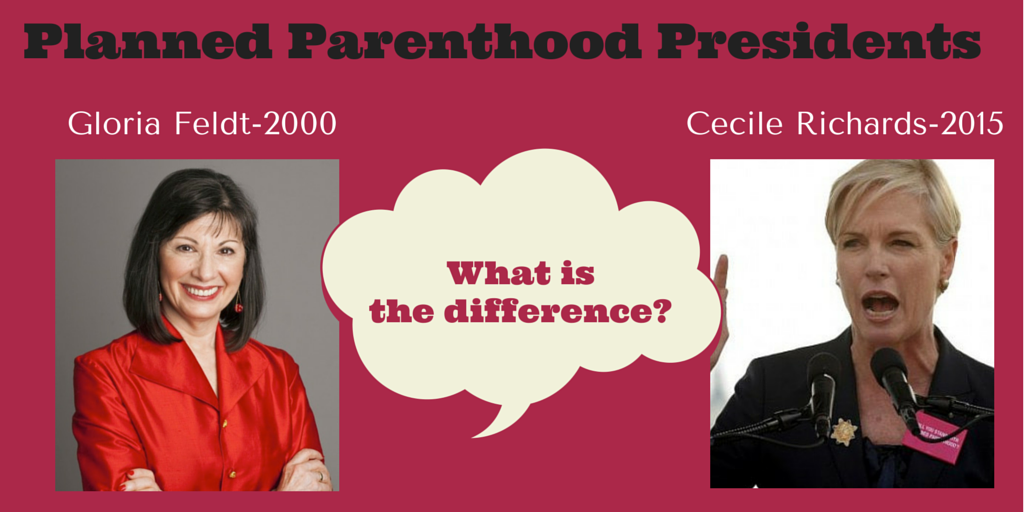
What is the Difference Between Planned Parenthood Presidents Cecile Richards and Gloria Feldt?

PlannedParenthood Presidents

The Internet makes all the difference. 15 years ago Chris Wallace was part of an undercover investigative report about several companies obtaining fetal tissues from abortions and turning around and selling them for profit. The doctor in this video said that he can obtain a fetus for $50 and turn around and sell the parts for $2,500. But did you hear anything about it back then? You aren’t hearing much about it now from the mainstream networks, but the power of social media and the Internet has dislodged the choke hold that mainstream media has on the stories it wants to cover. I suppose you could say that the video is “heavily” edited, but you will never know because 20/20 doesn’t release the complete footage of their work, unlike the Center for Medical Progress.

Watch the Video Here.  It is worth the 7 minutes of your time for some historical context. And if you are familiar with the current investigative videos it will seem like deja vu.


Note also that this video exposes a history of:

  • Compromised consent procedures, including outright dishonesty.
  • Changing medical procedures during abortions in order to obtain “better” specimans for sale.
  • And profiting from the sale of the bodies of these unborn children.

Here is something else important. Note how Gloria felt responds to the charges raised by the undercover video (back in 2000). The  former Planned Parenthood president said, “It seems inappropriate, totally inappropriate. Where there is wrong doing it should be prosecuted, and people doing that kind of thing should be brought to justice.” (7:22 in the video) That is a far cry different from what we are getting from current Planned Parenthood president Cecile Richards. What we are getting now is an apology about “tone,” and the constant message that any outrage over this is political and anti-woman… That any investigations must be motivated by partisan interests. We are hearing lots of name calling (“extremist”) for anyone concerned about these illegal activities, etc.

Read more about this from lifenews.com here.

Essentialism Ch. 4 Discussion Questions

Essentialism

This is a list of discussion questions to help work through the content of the book “Essentialism” By Greg McKeown.

Download a pdf of the questions that is more friendly for journaling here: Essentialism Questions Ch. 4

Major principles:

  • Every decision is a trade off. Since we can’t have it all, choosing one thing is not choosing another.
  • What trade off do I want to make? How can I do this deliberately rather than by default?
  • What can I go big on? Rather than “how can I do it all?” or “What do I have to give up?”
  • You need time and space to adequately consider the tradeoffs before you.

Key examples/illustrations

  • Southwest airlines deliberately rejecting certain options so they could focus on their core business.
  • Businesses that choose a straddling strategy. Trying to imitate a competitor while keeping their old strategy doesn’t work.
  • Johnson and Johnson’s response to the Tylenol cyanide crisis.
  • Businesses with lengthy mission statements or lists of values.
  1. The chapter opens by talking about the financial success of Southwest Airlines which is an example of a business with an essentialist strategy. Southwest said “no” to many things so they could focus on their strategy.  What does this suggest about the promise of essentialism?
  2. A person that is chronically late and stressed is often trying to fit in “just one more” email or action item. This has a domino effect on other important things. What insignificant things are you attempting in the name of “efficiency” that are undermining your focus?
  3. Are there tasks/responsibilities that are a part of your routine just because they seem easy for you to accomplish?  Are there things that you are doing that are not a priority, but that you don’t quit because they are not difficult?
  4. We often multitask when we fail to recognize the reality of trade offs. What happens when you multitask? What trade offs are you making?  What are you giving up? What are you gaining?
  5. There is a difference between making trade offs deliberately vs. by default. Think of a significant disappointment in your life/business. Was there a tradeoff in your choices?  Was it one that you made intentionally or that you allowed others to make?
  6. McKeown suggests that lengthy mission statements and lists of values show the failure to grapple with the reality of trade offs.  Have you seen this? Do you agree or disagree?
  7. The nonessentialist says “I can do it all,” the essentialist says, “which problem do I want?”  What problems are you facing because of your attempts to do too much?
  8. Think of a choice that is in front of you right now.  Consider the options and ask “which problem do I want?” This will require you to think of the potential outcomes of saying yes to various possibilities. Reflect on this.
  9. McKeown says, “instead of asking ‘what do I have to give up?’ ask ‘what do I want to go big on?’”  Think of an upcoming personal decision and use these two questions to analyze it. Make a list. How does each approach affect your feelings about the decision?
  10. We often feel guilt because of FOMO, “fear of missing out.” How can being deliberate about your choices help with these feelings of fear or guilt?
  11. In order to make tradeoffs wisely we have to take lots of time for exploration and reflection before we commit.  Consider a recent life decision. Did you have time to truly explore the various options before choosing? Why? Why not?
  12. Mckeown says, “To discern what is truly essential we need space to think, time to look and listen, permission to play, wisdom to sleep, and the discipline to apply highly selective criteria to the choices we make.”  What grabs you the most about this statement?
  13. Why do we need this “space” in order to make decisions based on “highly selective criteria?”

Photo courtesy of Daniel Oines. Some rights reserved

Monday Morning Haiku- Friendship

Conversation Haiku

I wrote these after our son unexpected stopped by our home.  He attends a nearby university and we hadn’t seen him in a little while (about a week, I know that is not long, but it still feels long when you enjoy your children). Our conversation volleyed back and forth like a good tennis match. These poems are as much about conversation as friendship. Is there really much of a difference?

Haiku 3.23.15

Together Again

Conversation flows

Between friends after a break

Catching up on life.

-mtroupe 2015


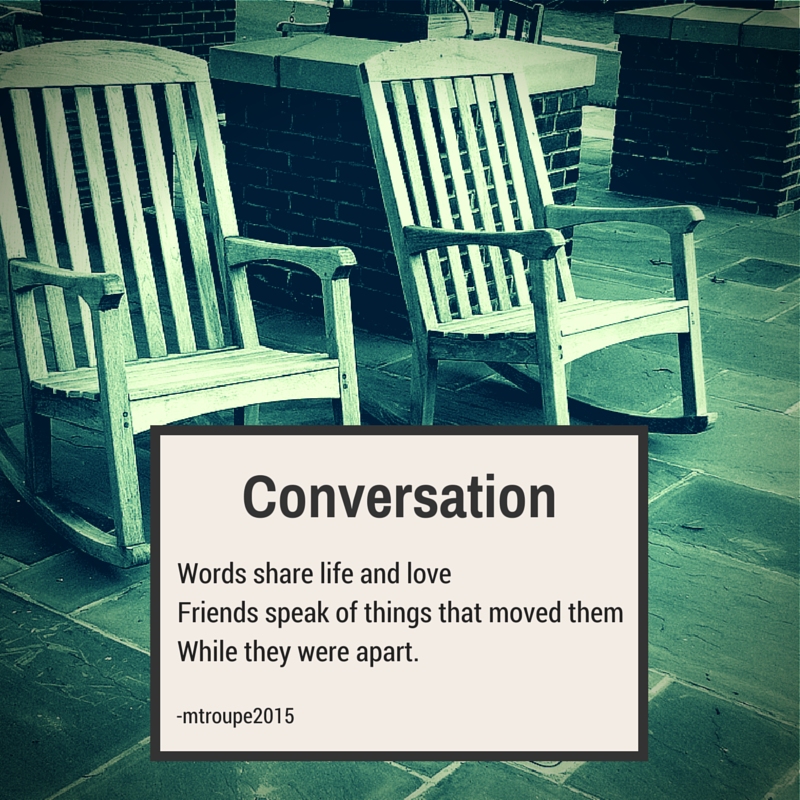
Conversation

Words share life and love

Friends speak of things that moved them

While they were apart.

-mtroupe 2015


Soul Food

Stories delight us

Nourishing the souls of friends

Bringing joy to life.

-mtroupe 2015

Edited photo used by permission of Kathleen Conklin. Some rights reserved

God Loves Me & So Does My Dog, But It’s Different

God Loves Me,And So Does My Dog. But 2

I have a 1-year old chocolate colored poodle. She’s a great dog and she’s always happy to see me. Wait, that’s an understatement. She goes nuts when we come home.  She is so excited that often she wets herself.  We feed her, and pet her.  We take her for walks occasionally. We play with her and hang out together. And that’s enough, she thinks we are wonderful.  She jumps on the bed in the morning and licks my face to wake me up. She always wants to play. And even when we aren’t playing she just wants to be near me. She follows us around the house and lays at my feet.  And all her enthusiasm and love is great for my self-esteem.  And she does this even when we ignore her. Sometimes we have to lock her up in a crate for most of the day to keep her from destroying the house. But when we come home and let her out, it’s a celebration.

For some Christians, this is a close description of how they understand God’s love.  He is really excited about us, makes hardly any demands, and won’t mind if we lock him away in a crate when we have better things to do. They have attempted to tame God, and as a result his love is… Well… Just okay.  But it doesn’t match the love we see at Calvary where we see Christ pouring out his life for an unfaithful spouse.   The puppy-dog  kind of love doesn’t produce the (seemingly) irrational joy, worship, and sacrifice we see described in scripture.  It doesn’t buoy up the soul in the face of great sin and suffering.

I am slowly working my way through “Yawning At Tigers” by Drew Dyck. He writes about this phenomenon, and our tendency to domesticate God.  Writing about modern preachers, he says:

“Unfortunately, in our efforts to make the Bible interesting and relevant, we try to normalize God. We become experts at taking something lofty, so unfathomable and incomprehensible, and dragging it down to the lowest shelf. We fail to account for the fact that God is neither completely knowable nor remotely manageable”

Unfortunately, in our efforts to make the Bible interesting and relevant, we try to normalize God.

He says that we are often uncomfortable with the mysterious, and transcendent descriptions of God. They are too strange or even unpleasant to our American sensibilities, so we explain them away.  Again, he writes “Here’s the beautiful irony: making God strange actually enables us to know him more. Once we have marveled at his magnitude and mystery, we are able to achieve the deep intimacy that grows out of a true appreciation for who God is. Instead of treating him as an equal, we approach him with reverent awe. Only when we’ve been awestruck by his majesty can we be overwhelmed by his love.”

I love my dog, and enjoy the way she worships me. And that would be the best word to describe it!  But God’s love is different, it’s not about his infatuation with my greatness.  One of the reasons we are “yawning at tigers” is because we are not impressed with the love of God. And we are underwhelmed with his love because we don’t understand his holiness, majesty, and greatness. If we did, we would understand our own sin as well and see just how much it cost him to love us.  And that would make his love something to live for.

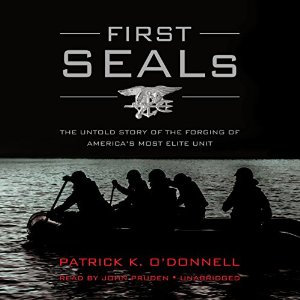
Book Review- First Seals by Patrick O’Donnell


Seals book

The First Seals by Patrick K O’Donnell

I have read a number of books about special operations history, it is a kind of a hobby.  Some of these were personal memoirs and others books about unit histories.  The First Seals certainly ranks as one of my favorites.  It tells a believable story that is still amazing. And it does it without too much machismo or chest pounding.  It gives a broad history, but also focuses enough on specific individuals that you can understand the characters.  After reading this one, I want to dig into the rest of O’Donnell’s works.

If you like books about military history, read this book. 

If you like books about World War II, you will love the the back story. There are aspects of the war told in this book that I haven’t read anywhere else. Who knew that the Italians were the best in underwater demolition?

If you like books about sabotage, espionage, and partisan warfare, read this book.

If you like books about entrepreneurship, and people creating new things… If you like the books about people solving problems and taking risks, read this book.  Not all creative people work in business.

If you’re one of those people who likes fiction, but thinks that truth is often better than fiction,  you will enjoy this book.

Toward the end of the book when Lt. Taylor (one of the central figures in the story) is rescued from the Mauthausen concentration camp, I teared up. If I hand’t been driving, I would have cried. It is a great story not only of the units and tactics that would become the US Navy Seals, but a great example of American Heroism in the fight against fascism. What is amazing is that so many of the other prisoners sacrificed their lives to keep O’Donnell alive because they knew that the world would be more likely to believe an American officer.  Taylor would later serve a key role in the investigation and prosecution of Nazi war criminals.

I sound like a fan… I know.  But this was a truly great read. I consumed it on Audible.com and the reader was terrific as well. You can find it here 

You can watch original footage of Jack Taylor’s interview the the US forces liberated the Mauthausen Concentration Camp. He begins talking at 50 seconds into the video.

I first heard of the book in an article by O’Donnell in National Review that you can read here.  “Christmas with America’s First Seal in A Gestapo Prison.”


Monday Morning Haiku on Rest

haiku-logo

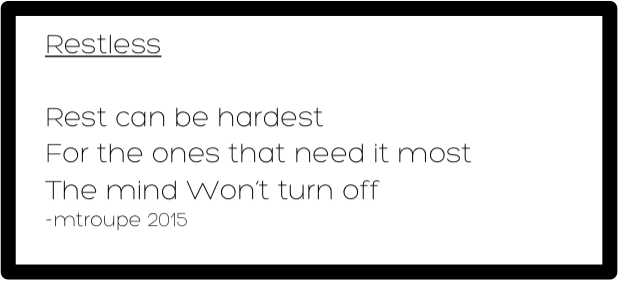
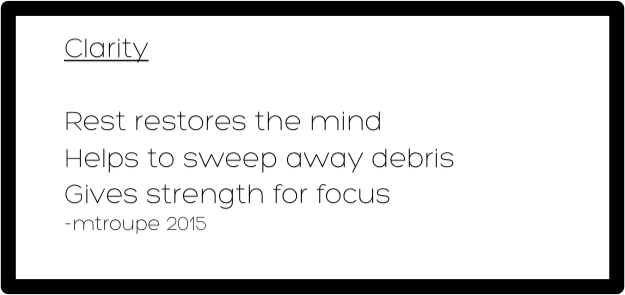
More amateur poetry offerings.  In the last year I have been writing more haiku. Today I am taking a day off and wrestling with the benefits and difficulties of rest when it is both needed and difficult. I am a workaholic and have been learning that rest is a form of both worship and repentance. It is a way to confess that I am not God,  and that it doesn’t all depend on me. It is also a way to express my trust that he will take care of “business” while I enjoy some time of restoration. Enjoy.

Haiku_rest_3_1_15_pages_pdf__1_page_


Haiku_rest_3_1_15_pages_pdf__1_page__1


Haiku_rest_3_1_15_pages_pdf__1_page__2


Argumentative People are Dangerous People

Boxer

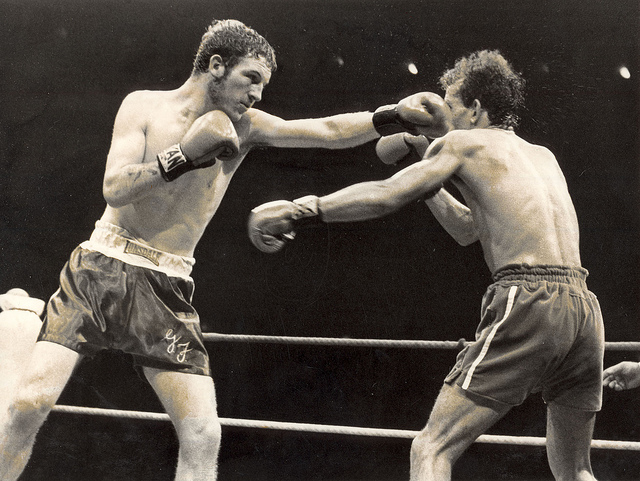
There is a difference between having an argument and being an argumentative person.

There are times when we need to “argue” and even “fight” for the truth or an important idea.  But there is a difference between having an argument and being an argumentative person.  In Jude 3 we read, Beloved, although I was very eager to write to you about our common salvation, I found it necessary to write appealing to you to contend for the faith that was once for all delivered to the saints.”  Jude’s readers were under attack by people that were distorting the gospel of Jesus.  There was a need to fight for the truth, and that is what motivated him to write. Unfortunately, some folks take passages like this as  permission, or even a mandate to fight.  About anything and everything. And this has never been more apparent than during the age of social media.

There will always be enemies to battle.  But the argumentative person has a polarizing effect. They can turn every conversation into a debate and every person into a potential enemy.   In the margin of my Bible at the end of  the book of Titus, I have a list of these passages that all have to do with the problem of being an quarrelsome person.  They are listed below (ESV) with some observations.

I Tim 1:4, 6-7  “…nor to devote themselves to myths and endless genealogies, which promote speculations rather than the stewardship from God that is by faith… Certain persons, by swerving from these, have wandered away into vain discussion, desiring to be teachers of the law, without understanding either what they are saying or the things about which they make confident assertions.”

This passage strikes me because it points to the danger of speculations. There are some things in scripture that are really clear and really important.  But other things are less clear.  Many Christian movements and denominations are based on speculation.  People fight about the implications of Bible texts, and about the implications of implications.  And strangely the people that know the least about a subject are the quickest to voice their opinion. It has been said, “more heresy is preached in application than exegesis.”  How true. Controversy is more common and more damaging when we wander away from things that are clearest.

I Tim 2:8 “I desire then that in every place the men should pray, lifting holy hands without anger or quarreling.

We cannot come to God rightly if we have ongoing problems with our brothers and sisters. Unfortunately, frequent arguments and debates lead to anger and fractured fellowship. It prevents us from entering into prayer the way He intends.

The argumentative person can turn every conversation into a debate and every person into a potential enemy.

I Tim 6:3-5 “If anyone teaches a different doctrine and does not agree with the sound words of our Lord Jesus Christ and the teaching that accords with godliness, he is puffed up with conceit and understands nothing. He has an unhealthy craving for controversy and for quarrels about words, which produce envy, dissension, slander, evil suspicions, and constant friction among people who are depraved in mind and deprived of the truth, imagining that godliness is a means of gain.”

Some people crave controversy. This is NOT a virtue.  And these kinds of people love to argue about words. Of course words are important. But these kind of people see words as opportunities to act like lawyers looking for loopholes.  What is startling about this passage is how it describes the fruit of quarreling, “envy, dissension, slander, evil suspicions, and constant friction.”  All of the works of the flesh thrive in the atmosphere of controversy.

2 Tim 2:14-16 “Remind them of these things, and charge them before God not to quarrel about words, which does no good, but only ruins the hearers. 15 Do your best to present yourself to God as one approved, a worker who has no need to be ashamed, rightly handling the word of truth. 16 But avoid irreverent babble, for it will lead people into more and more ungodliness.”

Here we are actually commanded not to argue. And the reason is all the nasty fruit: The “ruin of the hearers,” and “more and more ungodliness.”  An approach to Christianity that is constantly fighting destroys people, and leads to nothing good.  Passages like this should make us pause before entering the fray and ask if it is really worth it.  Being a brawler is not an innocent pastime.

2 Tim 2:24-25 “And the Lord’s servant must not be quarrelsome but kind to everyone, able to teach, patiently enduring evil, 25 correcting his opponents with gentleness. God may perhaps grant them repentance leading to a knowledge of the truth.”

Here Paul is clear that those in ministry shouldn’t be quarrelsome.  And when they do need to step into an argument they need to do with patience and gentleness.  The intent should always be constructive, one of love and hope for the other person. The desire to destroy others is in conflict is desperately evil.

Titus 3:2, 9-10 “speak evil of no one, to avoid quarreling, to be gentle, and to show perfect courtesy toward all people…But avoid foolish controversies, genealogies, dissensions, and quarrels about the law, for they are unprofitable and worthless. 10 As for a person who stirs up division, after warning him once and then twice, have nothing more to do with him.”

Sadly arguments often lead to insults and rudeness.  We move from arguing for the truth, to verbally attacking people.  In the process we lose track of courtesy.  We are to avoid these kinds of controversies. Some things are not worth arguing over because there is little to be gained. They are “unprofitable and worthless.” This is one of the few times in the Bible we are told to avoid people.   “I’m sorry I can’t be around you, you are a trouble maker.”

Tim Keller wrote a helpful series on this called, “Gospel Polemics.”  You can find it here.

Photo courtesy of the Museum of Hartlepool

Priests On The Night Shift

Night sky

“Come, bless the LORD, all you servants of the LORD, who stand by night in the house of the LORD! Lift up your hands to the holy place and bless the LORD! May the LORD bless you from Zion, he who made heaven and earth!

(Psalm 134 ESV)

Photo used by permission Daita Saru. Some rights reserved.