15 Mobile Trends to Watch in 2015

15 Mobile Trends to Watch in 2015.

“2015 is, more than anything else, the year the smartphones and mobile tablets will be used more than all other devices in the market”

This from Mashable. Interesting stuff. I am not an old guy that hates technology, but to be honest some of this causes anxiety for me.  The changes that are coming along with our technology and devices is accelerating faster than our security, ethics, and our ability to navigate a connected world.  So… we will be able to be constantly connected all the time, everywhere, with every device. But is that actually going to help us live a good life? Questions that we need to ask before we quaff the whole bottle.

One big take away for me is the need for two factor authentication for accounts such as Google, Banking, Evernote, etc..  This is a procedure that requires 2 “passwords” to confirm access to an account. It prevents someone who may steal a password or device from accessing your stuff.  You can find more info on two factor authentication here.


Questions for Essentialism Ch. 1

I am rereading the book “Essentialism” By Greg McKeown with a friend and trying to work the principals into my life. I think the content of the book is needed for a generation that is frantic and out of control. As a Christian I approach the answers from the perspective of Biblical priorities. But the questions and insight in the book are invaluable. I am also attaching a pdf to download Essentialism Questions Ch. 1

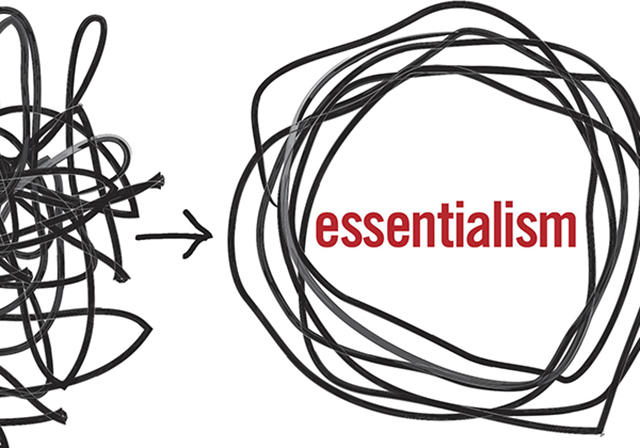
Essentialism Picture

Questions for Essentialism

Chapter 1

This is a list of discussion questions to help work through the content of the book “Essentialism” By Greg McKeown.

1. What are the things you do each week?  Take time to make a list of the items that occupy your time. This will be helpful throughout the book. It is important to actually and honestly evaluate what you are doing.

Progress

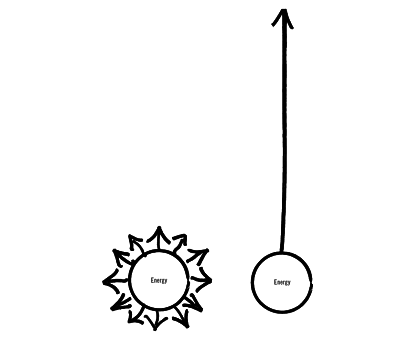
2. There is a diagram on p. 6 contrasting “a millimeter of progress in a million directions” vs. substantial progress in a single direction. Where are you working in too many directions? Do you feel you have a clear single direction? What would your one direction be if money and resources were not a problem?

3. What things on your activity list (#1) would you give up right now if you could? Why do you continue to doing these things?

4. Are there things that you have committed to do that you resent? What are they? Why did you say yes to them?

5. What activity would you say has made the biggest impact in the lives of others? In your career? In your income?

6. Who else is making your priorities for you?

7. The author mentions “decision fatigue.” What are you putting off because you are reluctant to make a decision about it?

8. We are often motivated (consciously or unconsciously) by the opinions of others. Which people are you trying to please? How is this helping or hurting you?

9. On p. 16 the author mentions the hospice nurse Bonny Ware, and her observation of the frequent regrets of dying patients. “I wish I’d had the courage to live a life true to myself, not the life others expected of me.” We often sell our souls to do what pleases others in ways that are bad. Other times we simply lack courage. How are you conforming to the expectations of others?

10. Note the questions on p. 22, and the diagram. It is not just about cutting things out, but cutting things out so you can figure out the right things.

a. “What do I feel deeply inspired by?

b. What am I particularly talented at?

c. What do I do that meets a significant need in the world?”

Nomadic Words

Words

Here is a brief article for people (read: NERDS) that are fascinated by words. I can’t remember where I found it. Maybe the Arts & Letters Daily. Anyway it is a write up on how certain words travel from one language and find their home in another. For instance, the Koreans don’t have a word for “salad,” so they borrow ours with a little change: saleodu.  But English-speakers don’t have a word for salad either, we just carjacked the latin term insalata. These are loan words or “calques.” So hearing a Spanish language sports announcer say “Los Dodgers” isn’t really strange after all.

Evidently the folks at Princeton University Press have published a whole entire book on this, especially focusing on the words and languages that have shaped the history of philosophy. You’ll want to buy one quick as they’re going fast.

Here is something else really interesting:

“There are more than 6,000 tongues spoken on the planet today (although more than half of them surely will die out by century’s close).”

Dictionary of Untranslatables — The Barnes & Noble Review.

Photo courtesy of Chris Duglosz Some rights reserved


Eric Metaxas: Rumors of God’s Death Were Premature

Science Increasingly Makes the Case for God – WSJ

Eric Metaxas has written a controversial piece in the Wall Street Journal suggesting that the more we learn about Science, the more it points to a creator.

“The greatest miracle of all time, without any close seconds, is the universe. It is the miracle of all miracles, one that ineluctably points with the combined brightness of every star to something—or Someone—beyond itself.”

via Eric Metaxas: Science Increasingly Makes the Case for God – WSJ.

Metaxas’ point is the universe itself is a miracle. That it could not exist on its own.

This probably won’t make much difference for committed skeptics.  It’s not like there was a lack of evidence for design 50 years ago. Although at least one prominent Atheist- Anthony Flew- was persuaded to change his mind due to the complexity of DNA. His book “There is a God” chronicles his change.

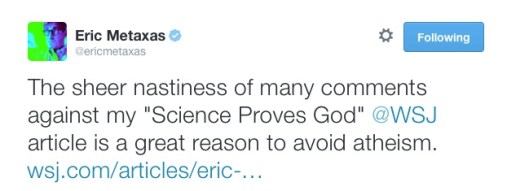
Eric_Metaxas_on_Twitter___The_sheer_nastiness_of_many_comments_against_my__Science_Proves_God___WSJ_article_is_a_great_reason_to_avoid_atheism__http___t_co_Sv7cFSjeRK_

I was recently reading in Flew’s book and he was discussing what DNA is and how it is a recipe not only for life via the creation of proteins, but also for the replication of itself and new cells that will contain, protect, duplicate, and enact the code of life.   Some folks have used the illustration of a prehistoric man walking on the beach finding a functioning watch.  It would be absurd to think that natural forces created the machinery of the watch, right? But in reality the problem is much worse. It is more like finding a watch that contains the blue prints for the watch inside. Also inside are the tools to make all the recipes in the DNA cook book, and to copy the blue prints, create the tools to make new watches, and to assemble these new watches so that they can repeat the process. The size of the problem is much bigger than a savage finding a rolex.  It is more like finding a factory along with a bunch of watches and blue prints that makes watches and other factories, as well all the equipment inside.

How Much Should We Give? CS Lewis’ Answer

“I do not believe one can settle how much we ought to give. I am afraid the only safe rule is to give more than we can spare. In other words, if our expenditure on comforts, luxuries, amusements, etc., is up to the standard common among those with the same income as our own, we are probably giving away too little. If our charities do not at all pinch or hamper us, I should say they are too small. There ought to be things we should like to do and cannot do because our charities expenditure excludes them. I am speaking now of ‘charities’ in the common way. Particular cases of distress among your own relatives, friends, neighbours or employees, which God, as it were, forces upon your notice, may demand much more: even to the crippling and endangering of your own position. For many of us the great obstacle to charity lies not in our luxurious living or desire for more money, but in our fear—fear of insecurity. This must often be recognised as a temptation. Sometimes our pride also hinders our charity; we are tempted to spend more than we ought on the showy forms of generosity (tipping, hospitality) and less than we ought on those who really need our help.”

From Mere Christianity

Fatherlessness

I recently heard of John Sowers book “Fatherless Generation” and began to snoop around. Here is his website devoted to the topic. Great info.

Jonathan Edwards on the Poor


Of the obligation of Christians to perform the duty of charity to the poor.

“THIS duty is absolutely commanded, and much insisted on, in the Word of God. Where have we any command in the Bible laid down in stronger terms, and in a more peremptory urgent manner, than the command of giving to the poor? We have the same law in a positive manner laid down in Lev. 25:35, etc. “And if thy brother be waxen poor, and fallen in decay with thee, then thou shalt relieve him; yea, though he be a stranger or a sojourner, that he may live with thee.” And at the conclusion of verse 38, God enforces it with saying, I am the Lord thy God.

“It is mentioned in Scripture, not only as a duty, but a great duty. Indeed it is generally acknowledged to be a duty, to be kind to the needy. But by many it seems not to be looked upon as a duty of great importance. However, it is mentioned in Scripture as one of the greater and more essential duties of religion. Mic. 6:8, “He hath showed thee, O man, what is good; and what doth the Lord thy God require of thee, but to do justly, to love mercy, and to walk humbly with thy God?” Here to love mercy is mentioned as one of the three great things that are the sum of all religion. So it is mentioned by the apostle James, as one of the two things wherein pure and undefiled religion consists. Jam. 1:27, “Pure religion, and undefiled, before God and the Father, is this, To visit the fatherless and widows in their affliction, and to keep himself unspotted from the world.”

“So Christ tells us, it is one of the weightier matters of the law. Mat. 23:23, “Ye have omitted the weightier matters of the law, judgment, mercy, and faith.” The Scriptures again and again teach us that it is a more weighty and essential thing than the attendance on the outward ordinances of worship. Hos. 6:6, “I desired mercy, and not sacrifice;” Mat. 9:13 and 12:7. I know of scarce any duty which is so much insisted on, so pressed and urged upon us, both in the Old Testament and New, as this duty of charity to the poor.”

Jonathan Edwards From The Duty of Charity to the Poor, Explained and Enforced

What is the Bible All About?

I just came across this great book, which was previously a series of lectures by DA Carson called “The God Who is There.” I am not sure if this is a title connection between Francis Schaeffer’s famous book. Anyway, the idea is to take a jet tour of the big story of the Bible in 14 lectures. Carson is a very learned, clear, and informed communicator and these talks are good! I have been challenged and refreshed. Best of all the talks are intended to be accessible to people who do not have a lot of previous bible knowledge.

Here is the first talk:

The God Who Is There – Part 1. The God Who Made Everything from The Gospel Coalition on Vimeo.

How does divorce affect children?

In doing some research to preach on marriage and divorce recently I have been simply overwhelmed by the mountain of evidence that shows that divorce is one of the worst things that can happen to a child. In many ways we are destroying our own future through the selfishness of divorce.

The Ministry of Listening


The Ministry of Listening


“The first service that one owes to others in the fellowship consists in listening to them. Just as love to God begins with listening to His Word, so the beginning of love for the brethren is learning to listen to them. It is God’s love for us that He not only gives us His Word but also lends us His ear. So it is His work that we do for our brother when we learn to listen to him. Christians, especially ministers, so often think they must always contribute something when they are in the company of others, that this is the one service they have to render. They forget that listening can be a greater service than speaking. Many people are looking for an ear that will listen. They do not find it among Christians, because these Christians are talking where they should be listening. But he who can no longer listen to his brother will soon be no longer listening to God either; he will be doing nothing but prattle in the presence of God too. This is the beginning of the death of the spiritual life, and in the end there is nothing left but spiritual chatter and clerical condescension arrayed in pious words. One who cannot listen long and patiently will presently be talking beside the point and be never really speaking to others, albeit he be not conscious of it. Anyone who thinks his time is too valuable to spend keeping quiet will eventually have no time for God and his brother, but only for himself and for his own follies.”

“Life Together” – Dietrich Bonhoeffer