You Can’t Slow Things Down by Speeding Up – Or- You Need Time To Delegate

The problem with being over-busy is that you might actually get more done. But this only lasts for a brief period of time at the beginning. But invariably the rushing/exhausted pace leads to bad decisions and the inability to make judgments about what is really important. This is the lesson I am trying to work out in my own life.

Here is more fuel for the fire on this whole discussion:

“If I take some time off – on a holiday, over the weekend, or even just not checking mail in the evening after closing time – my decisions get better. I don’t just keep grinding it out, trying to get strategic by processing ever more detail. I start to notice what is really important so I can leave the rest, or delegate it to someone more qualified or more motivated to do that thing.

“When running at full tilt I don’t even have time to think of passing it off to others.  I’ve seen this over and over again in my work with people leading teams. Things are stuck not because there is no one to do them, but because the person who has them on their plate doesn’t have (or take) the time to clarify who should be doing them.”

Source: You Can’t Slow Things Down by Speeding Up – Next Action Associates

The Value of Community and Solitude are Interdependent

lonely

I am studying for a sermon series on community and fellowship for our church and was struck by an odd realization.

The loss of a sense of community also signals the loss of meaningful solitude. The reason is that without meaningful relationships, solitude is no longer a nourishing respite. It is similar to the way sleep becomes different for a person that isn’t able to get out of bed. It still happens, but the way it is experienced is different from the person that is exhausted from a hard day of physical work. Without meaningful community we may fall into a state of constant loneliness, and in such a state periods of solitude may do little more than magnify the feelings of isolation.

Job Interviews, False Impressions, and Why People Get Fired

Here is a brief article with some fascinating ideas on how to avoid the reality of false impressions and deception in the job interviewing process. A short read, and worth it. The “car test” is very interesting… Also using the interaction with the secretary.

An interesting tidbit on the real reasons people get fired:

“According to one study, only 11 percent of new hires who failed in the first 18 months did so due to deficiencies in technical skills. The majority washed out due to problems with motivation, an unwillingness to be coached, or a lack of emotional intelligence.”

Source: The 1 Job Interview Technique You Need to Use | Inc.com

Even Bad Men Love Their Mamas

mafia

I found an article on mother’s day in the rabbit hole of internet cross-linking. It has a fascinating story of how an undercover FBI agent realized that the mafia basically closed up shop on mother’s day. Reminds me of the line that Ben Wade says from 3:10 to Yuma, “even bad men love their mama’s.” He says this right before killing a man for calling his mom a whore.

I guess it goes like this, “I plan on snuffing you out, but it’s mother’s day…”

“Taking break from homicides

Burke’s [a mafia leader] gesture was no surprise to his fellow hoodlums: Mother’s Day was the most important Sunday on the organized crime calendar, when homicide took a holiday and racketeering gave way to reminiscing — often over a plate of Mom’s pasta and gravy. 

“These guys, they do have a love for their mothers,” said Joe Pistone, the FBI undercover agent who spent six Mother’s Days inside the Bonanno family as jewel thief Donnie Brasco. “They thought nothing of killing. But the respect for their mothers? It was amazing.” 

So amazing, Pistone recalled, that Bonanno member Benjamin “Lefty Guns” Ruggiero once told him that the Mafia — like a suburban Jersey mall shuttered by blue laws — closed for business when Mother’s Day arrived each May.”

Stranger than fiction….


Find the article here

Relativism and the Double Standard

double standard

I had an epiphany yesterday. Almost every time someone announces that there are no rules, they are getting ready to tell the world how to behave. Usually they are about to tell me why it is WRONG for anyone to criticize them for their choices because of course the rules are relative.

If you pay close attention, the person who says that there are no rules (or morals) almost always means there are no rules for them.  It is the parlor trick played by tolerance magicians everywhere.  They don’t like the morality that says their behavior is wrong. But they do have a long list of things that others must not do. They don’t call them rules or morals. They usually get tagged as justice, decency, or love. But a rule by any other name is still a rule.

And every human society has rules for conduct. Call them mores, norms, or whatever. Human beings all have behavior codes and we enforce them in social ways. Making judgments about the behavior of other people is one of the things that we do constantly.  So, when a person insists it is wrong to ever make judgments about other people, they are making the broadest condemnation possible.

Ironically they are making a case that it is wrong to make moral judgments, while making moral judgments.

This brand of hypocrisy is endemic to western society: A generation of people telling others how to live while insisting it is immoral for others to tell them how to live.

Another Dark Chapter In The History of Free Sex

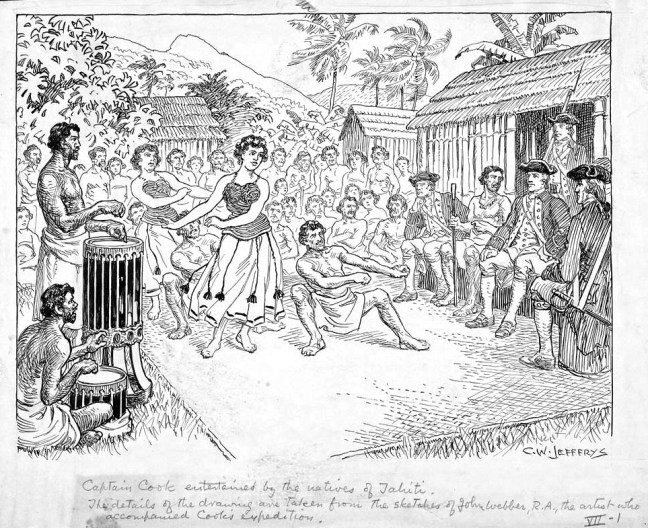
captain-cook-entertained-by-the-natives-of-tahiti

The section below is from the book, “The Age of Wonder” which is an award winning volume that chronicles the connection between scientific discovery and the ideals of the Romantic Age. In the first Chapter the author writes about the history of Captain Cook’s voyage of discovery. Here he gives ample attention to the time Cook and his crew spent in Tahiti.

I am posting a lengthy section below, and it is worth reading all 4 paragraphs. This narrative is largely taken from the diary of James Banks who documented their experience. As I read this I was struck with more than a bit of Deja Vu. There is something familiar operating here.  What they witnessed in Tahiti fits the appetites of our generation for a mythical paradise of free and open sex.  But, he also narrated the suffering that grows from this kind of selfishness. What am I talking about? Infanticide and more. It is tempting to view native cultures as pure and innocent, uncorrupted by the ideas of western culture. However, the truth is different.  Every society has it’s own virtues and vices. Attempts to  portray any one culture or age as a eutopia usually exaggerate the virtues and ignore the vices.

This snapshot from history is not unique. It has been repeated many times in cultures ancient and modern.  The American generation that started the sexual revolution forgot to study history.  So now we are stuck in the painful double loop of both repeating and failing to learn from the sins of the past.  In spite of our most prurient longings there is no such thing as sex without consequences.

Here are a few things I took away from this passage:

  • This level of sexual debauchery often starts early. Young girls were taught to engage in lewd dances before they reached puberty.
  • There is no sexual sin without grave consequences to others.  We seem to believe that as long as we do not transgress the one sexual absolute of consent that everything will be just fine. But the way we wield the weapon of sex leaves deep wounds. Every culture that lives this way ends up damaging the weak and vulnerable, even if they once offered their consent. The rest of the account describe the horrible consequences of the plague of sexually transmitted diseases among the natives and sailors.
  • There is always a double standard in the world of free sex. In Tahiti men were allowed to get away with adultery while a woman would be beaten for it.  Part of this is because of that natural strength advantage that men have. The other is the fact that in reproduction the woman’s body is designed to carry the child. This is the way we are and it has implications, even in our sin. And the answer to this double standard is NOT that women should be able to be just as bad as men.
  • Banks spoke with several couples that had previously murdered 2 or 3 children and THEY EXPERIENCED NO REGRET. This is the long term effect of cultural sin. The fact that some people can commit horrible acts without empathy doesn’t make those acts virtuous. Just because some cultures engage in certain practices doesn’t mean they ought to.
  • The decision to kill an infant was driven by the men. When a man wanted free sex but was unwilling to take responsibility for the child, then that child would be killed, even against the wishes of the woman. The way that men manage their strength and leadership is often a driver in this kind of depravity.
  • The status of motherhood was despised. Once a woman had born a child, she was viewed with some degree of contempt.  High views of motherhood  are not compatible with a free-sex culture.

“The idea of sexual innocence proved more complicated for a European to accept: ‘All privacy is banished even from those actions which the decency of Europeans keep most secret: this no doubt is the reason why both sexes express the most indecent ideas in conversation without the least emotion; in this their language is very copious and they delight in such conversation beyond any other. Chastity indeed is but little valued especially among the middling people; if a wife is found guilty of a breach of it her only punishment is a beating from her husband. Notwithstanding this some of the Eares or chiefs are I believe perfectly virtuous.’

“What later came to be regarded as the most scandalous of all Tahitian customs, the young women’s seductive courtship dance, or ‘timorodee’, Banks describes with calm detachment and a certain amused appreciation: ‘Besides this they dance, especially the young girls whenever they can collect 8 or 10 together, singing most indecent words using most indecent actions and setting their mouths askew in a most extraordinary manner, in the practise of which they are brought up from their earlyest childhood. In doing this they keep time to a surprizing nicety, I might almost say as true as any dancers I have seen in Europe, tho their time is certainly much more simple. This excercise is however left off as soon as they arrive at Years of maturity. For as soon as ever they have formed a connection with a man they are expected to leave of Dancing Timorodee-as it is called.’

“The only Tahitian practice that Banks found totally alien and repulsive was that of infanticide, which was used with regularity and without compunction as a form of birth control by couples who were not yet ready to support children. Banks could scarcely believe this, until he questioned several couples who freely admitted to destroying two or three children, showing not the slightest apparent guilt or regret. This was a different kind of innocence, one far harder to accept. Banks pursued the question, and found that the custom originated in the formation of communal groups in which sexual favours were freely exchanged between different partners: ‘They are called Arreoy and have meetings among themselves where the men amuse themselves with wrestling &c. and the women with dancing the indecent dances before mentioned, in the course of which they give full liberty to their desires.’

“He also found that the Arreoy, and the custom of infanticide, owed their existence ‘chiefly to the men’. ‘A Woman howsoever fond she may be of the name of Arreoy, and the liberty attending it before she conceives, generally desires much to forfeit that title for the preservation of her child.’ But in this decision he thought that the women had not the smallest influence. ‘If she cannot find a man who will own it, she must of course destroy it; and if she can, with him alone it lies whether or not it shall be preserv’d.’ In that case both the man and the woman forfeited their place in the Arreoy, and the sexual freedoms associated with it. Moreover, the woman became known by the term ‘Whannownow’, or bearer of children. This was, as Banks indignantly exclaimed, ‘a title as disgracefull among these people, as it ought to be honourable in every good and well governed society.”

Holmes, Richard. The Age of Wonder: How the Romantic Generation Discovered the Beauty and Terror of Science. Print. p. 37

That Annoying Rattle- What A Snare Drum Can Illustrate About The Heart

Snare Drum
This is the bottom of a snare drum. Notice the beads stretched across the bottom drum head. 

I have two teenage sons that are both involved in high school percussion. They are in the marching band and play with several other ensembles at school and church. Prior to this high school music experience it would be safe to say that I was almost completely ignorant of the world of rhythm and percussion. I carefully maintained this state in spite of drumming on the steering wheel for most of my adult life. Anyway, I have learned a lot from their passion for drums. And I have learned that the world of rhythm is a delicate (yes “delicate”) blend of tones and instruments. Good drummers are serious about the smallest details.

One important instrument is the snare drum. The ones I have seen include a set of “snares”– very small beads strung across the bottom of the drum (see the picture above). When the drum is played the beads on the snare gently rattle against the surface of the drum adding a unique sound. This rattling is very sensitive to any action on the drum, even delicate strokes from a brush. Many snare drums have an off/on lever that can pull the snare away from the drumhead to keep it from rattling. The drum can still be played, but it makes a different sound. No rattling.  I hope you are impressed a little, and now slightly informed.

I mention this because a few nights ago I went to see one of my boys play in a concert where the snare drum featured prominently. This was unfortunate because it was NOT supposed to feature prominently. The high orchestra played first and then a visiting university symphony followed them. The music was beautiful, but because they were sharing the same space, some of the percussion instruments were left on the stage and moved to the side. As the university ensemble was playing, it was obvious that something wasn’t quite right. There was a strange noise overlaying the beautiful music. I am sure my face was wrinkled with irritation because there was something incongruent between the music I knew they were trying to play the sound I was hearing. Their group was larger and louder than the high school band. The increased volume caused a nearby, unused snare drum to vibrate. In response, the snares on the bottom of the drum began to rattle. It was NOT pleasant. After a while one of the band members walked over and switched the lever to the off position, silencing the annoyance.

This made me think of the conscience. Often this  effect is what happens inside our souls when we hear the truth of God. Human beings are unshakably moral creatures. And even relativists like to take the moral high ground when they insist it is wrong to judge them. God has reserved an ambassador within the soul, and when he speaks, our conscience rattles like that snare drum. This is especially true when we step over the line into the world of evil. It happens when we hear the truth spoken by friends or enemies, echoed in stories or songs, or read in the Bible. And often it happens during our own self-talk. We know how we ought to act, and that inner voice reminds us when we are in step or when we fall short.

Speaking of people that have never heard of the God of the Bible the Apostle Paul writes, “the law is written on their hearts, while their conscience also bears witness, and their conflicting thoughts accuse or even excuse them.” (Romans 2:15)  I say this so that you will recognize the sound the next time you hear it. This sound is actually desirable- it was put there by the composer. Don’t try to turn it off.

Photo used by permission CC3.0 OCDP

I wrote this post several years ago, but lost track of it. It was recently discovered and I am happy to share it with you here.


What Science Can Tell Us About Bad Science

Scientists and scientific claims are too often regarded as unquestionable.  Yet, few things are manipulated as often as scientific data points.  I feel like I am more aware of scientists making confident claims in nonscientific areas (like politics, morality, etc).  Is it happening more often? I don’t know, it could just be me. But I do know that scientific failures are under more scrutiny that in the past.  Because of all this,  I am fascinated when scientific researchers point out what is behind the curtain in Oz. Here is yet more information confirming what we would rather not believe: scientists are frequently wrong and sometimes intentionally so. 

“By one estimate, from 2001 to 2010, the annual rate of retractions by academic journals increased by a factor of 11 (adjusting for increases in published literature, and excluding articles by repeat offenders)…”

“Retractions are born of many mothers,” write Ivan Oransky and Adam Marcus, the co-founders of the blog Retraction Watch, which has logged thousands of retractions in the past five years. A study in the Proceedings of the National Academy of Sciences reviewed 2,047 retractions of biomedical and life-sciences articles and found that just 21.3 percent stemmed from straightforward error, while 67.4 percent resulted from misconduct, including fraud or suspected fraud (43.4 percent) and plagiarism (9.8 percent) .

“Surveys of scientists have tried to gauge the extent of undiscovered misconduct. According to a 2009 meta-analysis of these surveys, about 2 percent of scientists admitted to having fabricated, falsified, or modified data or results at least once, and as many as a third confessed “a variety of other questionable research practices including ‘dropping data points based on a gut feeling,’ and ‘changing the design, methodology or results of a study in response to pressures from a funding source’ ” [4].As for why these practices are so prevalent, many scientists blame increased competition for academic jobs and research funding, combined with a “publish or perish” culture.” (Emphasis added)

Yikes, this is scary. This kind of attention has the potential to be good for science in the long run. Hopefully it will bring some much needed humility.  It should definitely put to death the false notion of objectivity. Science is always a handmaiden to the allegiances of the scientist.  

Source: What Science Can Tell Us About Bad Science – The Atlantic

Is Hearing More Important Than Seeing?

“Helen Keller maintained that the gift of hearing was far more important than the gift of sight because hearing allows the gift of speech, and speech allows the nurturing of relationship. language connects us to the heart of others in a way nothing else can.”

This is a quote from “Minute of Margin,” a book by an author that has had a huge impact on my thinking.  My wife and I are currently reading the book together for the second time. It is about overload, burnout, and the peaceful life. Dr. Swenson wrote another book called “Margin” that covered the same general topic. But he turned the content into daily readings for more accessibility. Evidently most of the people that need to hear about rest and margin are too busy to read a whole book on the topic.

Swenson, Richard A. A Minute of Margin: Restoring Balance to Busy Lives. Colorado Springs, CO: NAVPRESS, 2003. Print.

What’s Wrong With Teaching 9 Year Olds To Murder?

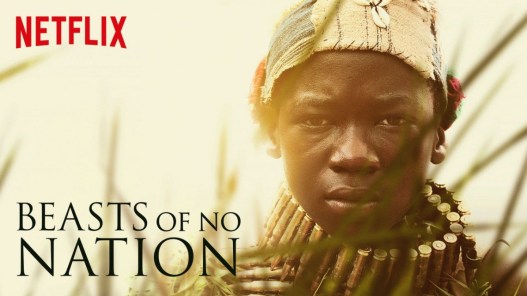
beasts-of-no-nation-1140x641

I recently watched the movie “The Beasts of No Nation” on Netflix. The movie was recommended on several critic top movie lists and so I was lured in. The film is about child soldiers in Africa. It is extremely violent, very graphic, and vulgar language seeps throughout the script like water from a clogged toilet. It is absolutely not for children, and in general I cannot recommend it. I had to turn my eyes away several times. For instance there is a scene in which a child is pressured to kill an unarmed prisoner with a machete while he begs for mercy.  It frustrates me when directors make movies this way. There seems to be a loss of subtlety and no concern for the imagination of the audience.

Why would the film’s creators make the movie this way? Why would they produce a film with so much gore and graphic bloodshed? I do have a little sympathy in this case because I think they were trying to reveal something of the depravity of a situation that has been hidden out of site. They were trying to open the door for the rest of the world to see what is actually happening. Simply put, armies in Africa are recruiting orphans to become members of death squads.

I spend a lot of time in my life thinking about morality and ethics. Movies like this can be a challenge for Christians because it brings up the problem of evil. How could a good God allow such things? And in my opinion this is an important question that has compelling answers. My intent is not to provide answers here, but to suggest that the people that use such questions to dismiss Christianity need to provide an explanation as well.  In my experience people of faith are the only ones that blush when faced with such questions.   But they shouldn’t be.

The atheist that uses the problem of evil to undermine Christianity (or any other religion) is also in a difficult spot. In order to shoot at theists like this he has to walk out on the quicksand. I say this because they have to assume that evil actually exists in order to use it as an argument against God. Then after they “win” the argument and the embarrassed Christian goes home, the honest atheist must face the world he has tried to articulate. It is a world in which there is no consistent reason to believe in the existence of good or evil as anything other than a cultural construct. That means that good an evil don’t really exist in the world. They are a matter of human perception much like our hatred of brussel sprouts.

I don’t mean to suggest that atheists don’t really believe in good and evil. They do. In fact they get angry if you suggest that there is any problem with their morality.  Further, they behave in ways that are often moral and virtuous, and I applaud this. I don’t mean to imply that every atheist is a monster. My point here is more subtle. At the risk of over simplifying things (I realize there is a broad spectrum of beliefs out there), the atheist narrative provides no compelling reason to believe in the existence of evil. It says there is nothing but matter in the universe. We are nothing more than complex systems of electrons colliding according to the laws of physics. From the standpoint of physics, the murder of children is no different from the killing of a rhino or a rose bush.  Just matter in motion.  A world without an absolute, immaterial standard of ethics provides a weak protest against the kind of evil in the “Beasts of No Nation.”

I remember my first day of college chemistry class.  My professor stood up and pointed to the periodic table of elements on the wall. He said, “Everything that exists is on that table. Can anyone name anything that exists that is not on that table?” The class was silent (except for me).  But if he is right, then our actions are just a bunch of chemical reactions from the periodic table. Our thoughts are just the chemical depolarization of neurons in the brain. This is true for all thoughts. Bloodthirsty ones as much as altruistic ones.  Evil and good are the same thing: matter in motion. Nothing more than that. And when we logically analyze the common atheist protests against injustice (things like wealth inequality, rape culture, or the recruitment of children into death squads) the logic sounds a lot like, “I don’t like it,” or “we don’t like it.”  Or maybe, “the brain isn’t wired to work that way.” Which of course is not true, the brains of those child soldiers and their recruiters definitely ARE wired that way. But that point aside, for a system of ethics to be meaningful it must provide a compelling reason for people to live in a certain way. It must tell the bad person why they MUST not be bad. It must tell the person that wants to rebel against the moral conventions of our society why they MUST conform.  What in the universe compels the killer not to kill? Especially when the darker dimensions of human psychology and culture seem to be compelling them to kill and rewarding them for it?

The movie was obviously intended to create outrage. And that is exactly what it has done. There is nothing quite like staring directly in the face of evil at close range to bring out our inner moralist. How could anyone teach children to be so violent and bloodthirsty?   It is hard to watch a movie like this and then conclude that your revulsion is nothing more than a personal or cultural preference.

The great question for the atheist is this: What is wrong with teaching nine-year-olds to maim and murder? If we are just animals, and there is no absolute moral authority, if there is no objective ethical standard that applies to everyone… Then what is wrong with that?

If we are simply the product of time and chance acting on matter… if we are nothing more than biology, what is wrong with people acting like animals?  This is the significance of the movie’s title. The main actor makes a statement at the end of the movie that he has become like an animal. And he’s right. Most of us don’t like it. But what is wrong with it in any absolute sense? Isn’t our outrage just an example of a ethnocentric perspective that wants to tell other people how to live?

In a material world isn’t all of this just a matter of cause and effect? Aren’t we just reactants in a global test tube? If a poor child watches his family murdered by an invading army, isn’t it predictable that he will get snatched up by a violent militia looking for recruits? Isn’t this predictable? If it is nothing more than cause and effect at work, how could we protest? Dogs hate cats. Lions kill hyenas. Humans hate other tribes of humans.  It’s all the result of DNA at work in an unfeeling and uncaring world. It can be nothing more, because nothing more exists.

We could say that people shouldn’t act like animals, that human societies have evolved social norms and mores to control our behavior.  But if we mean by that, that there are no human beings that act like animals, we would be wrong. In fact the truth is exactly the opposite.  The real problem is that a great many humans very frequently act like animals in just this sense.  And its not just Africa. Arguably, European history is far more beastly than anyone other. But why should it be any different?  To say that these things threaten our existence, or cause  psychological pain really begs the question. Of course animals engage in behavior that threatens their own existence, and causes them harm?   The history of the world is a history of extinction.

What is wrong with herds, and packs, and tribes fighting against one another for resources? What is wrong with one organism killing another organism in order to survive? Watch any nature show, this is the way of the world.  And no one ever watches animal behavior and then makes a moral protest.  We don’t say, “sharks shouldn’t kill fish.” To the contrary, in the evolutionary/atheist view of the world it is precisely that kind violence which has helped successful species (like humans) adapt and unsuccessful ones to evolve or become extinct. That kind of behavior has actually helped us to survive.

Social pundits, college professors, and cultural revolutionaries like to tell us that there is no such thing as morality. They often do this in an attempt to normalize their own deviant sexual behavior. When they say, “there are no rules,”  too often they mean “there are no rules for me.”  But if they are right, they have proven too much. “Normal” isn’t a concept that only applies to their preferred version of wickedness, it applies to all behavior. It applies to child abuse and child nurture.  Freedom and tyranny.  Gay marriage and gay bashing.  It is all common and normal.  Of course, there are a few statistical anomalies. But isn’t that the way of nature as well?

Sadly there aren’t enough voices to point out the failings of this kind of moral relativism. These ideas are only seen for what they are in the face of extreme wickedness.  And a movie like “The Beasts of No Nation” has once again reminded me of this. Christians may have trouble finding an answer for why God would allow such evil and suffering in the world.  But the atheist or philosophical materialist has a much greater problem in my opinion.

What is wrong with teaching nine year-olds to murder?