“Do As I Say.” Shouldn’t Ethics Professors Behave Ethically? They don’t

How_often_do_ethics_professors_call_their_mothers__–_Eric_Schwitzgebel_–_Aeon

This article is interesting, disturbing, disappointing and a little humorous at the same time.

It is a fascinating look at how professional academics devoted to studying morality actually behave.  Wouldn’t you expect them to at least try to be good people? Beyond that, there is the question of whether we ought to expect them to behave better than people who are uninformed about the subject.

The author asked his 7 year old son, and he replied: ‘The kids who always talk about being fair and sharing,’ I recall him saying, ‘mostly just want you to be fair to them and share with them.’ Interesting.

The author says he is the only one that he knows that has looked into this question in this narrow sense. That in itself is pretty tragic. By the way, Paul Johnson’s book “Intellectuals” does something similar from the perspective of history.  A worthwhile book for sure.

It seems many professors are aiming at mediocrity, being just about as “good” as everyone else.  I guess that helps to fight off self-righteousness.  But they don’t mind telling the rest of us how we ought to live. This shouldn’t surprise us, because with few ideological exceptions, most modern ethical theories suggest that good and evil is merely a human social construction.

It seems that many pastors aren’t much better.

We should all remember that there is a very specific word in the English language for this whole phenomenon. It is called hypocrisy. And that label won’t fall off just because everyone’s doing it.

via How often do ethics professors call their mothers? – Eric Schwitzgebel – Aeon.

Sawing Off The Limb That Holds You

Sawing

The problem of evil and suffering is a real problem. We struggle with it from a rational/philosophical standpoint and also from an emotional perspective. Christians often struggle more with the emotional dimension than just wrestling with the logic behind the question because we believe that God has a morally sufficient reason for the evil and suffering that is in the world.

But atheists can bring this up in debate as a trump card. And it often “works” because of it’s strong emotional appeal.  Ravi Zacharias does a good job treating this in this in his book “Jesus Among Other Gods.”  He says that often this issue is raised with a list of the worst atrocities in history. This is fine,  and is actually part of my point here. The way those atrocities are discussed suggests that the person really believes they are wrong.  The world should be different than it is. The argument is a kind of protest.  And sometimes it is a protest against a god they believe should have prevented this. This outrage is used to show that an all loving and all powerful God couldn’t exist.  The conclusion: There is no god.

What they don’t realize is that the problem of evil is not just a problem for Christians. It is a problem for every philosophy and worldview.

What they don’t realize is that the problem of evil is not just a problem for Christians. It is a problem for every philosophy and worldview.  And unwittingly by removing idea of God, the atheist has removed any absolute standard of right and wrong. Now the very list of atrocities no longer wear the label “wrong” or “evil.”  The atheist may dislike them, but it is no more than personal or societal preference. These things are not examples of either justice or injustice because those things do not exist except in our minds.  The world just IS.  That is just the way things are.  And yet the very protest is making a plea that the world should be different than it is.  At the very lease, the atheist believes it is wrong for christians to believe what they do. It could be phrased in some other way,  but there is an “ought” in the protest that could only be true if there were some greater moral imperative.  In the end, the protest defeats itself.

Zacharias quotes GK Chesterton, who has made the point with a flourish:

“All denunciation implies a moral doctrine of some kind and the modern skeptic doubts not only the institution he denounces, but the doctrine by which he denounces it. Thus he writes one book complaining that imperial oppression insults the purity of women, and then writes another book, a novel in which he insults it himself. As a politician he will cry out that war is a waste of life, and then as a philosopher that all of life is waste of time. A Russian pessimist will denounce a policeman for killing a peasant, and then prove by the highest philosophical principles that the peasant ought to have killed himself. A man denounces marriage as a lie and then denounces aristocratic profligates for treating it as a lie.

“The man of this school goes first to a political meeting where he complains that savages are treated as if they were beasts. Then he takes his hat and umbrella and goes on to a scientific meeting where he proves that they practically are beasts. In short, the modern revolutionist, being an infinite skeptic, is forever engaged in undermining his own mines. in his book on politics he attacks men for trampling on morality; in his book on ethics he attacks morality for trampling on men. Therefore the modern man in revolt becomes practically useless for all purposes of revolt. By rebelling against everything he has lost his right to rebel against anything.”

The atheist wants to use the problem of evil to disprove the existence of god. But in the process he ends up disproving the existence of evil.  And this is not just a rational problem, it is an existential problem without compare.

G. K. Chesterton, Orthodoxy (Garden City, N.Y.: Doubleday, 1959), 41

Photo cropped and used by Permission Jo Jakeman. Some rights reserved 

Intellectual Cowardice – An Unexpected Discussion of Virtue

 The_Wizard_of_Oz_Bert_Lahr_1939

Intellectual cowardice | Features | Times Higher Education.

Chris Walsh has written a book on cowardice.  He admits that he had to face his own fears to finish the book.  This brief article about the book and journey was a fun read. It was also full of irony. He was driven to finish the book out of fear of being a coward

“What a bitter note to find in my obituary – couldn’t finish his book on cowardice! The thought had a way of concentrating the mind and fortifying the will.”

He talks about the fact that there hasn’t been a scholarly academic work on the topic, which caused him some fear. “Am I wasting my time?”

Something helpful (and searching!) for me was the idea that cowardice and fear can manifest itself in many ways:

  • Failing to stand up and take a side or express an opinion when we should.
  • Failing to finish a book or project out of concern about what others will think.
  • Being driven by fear to a neutral life that does neither good nor evil.
  • Fear of being found out that you are a fraud. This is especially true in higher education. So many wannabe academics are impressed by academic accomplishments and the intellect of their heroes.  They  pretend that they are brilliant,  but writing a book tells the truth.  Nothing will humble you like putting your mind on paper for all to read! Our hearts may whisper words of fear to us, “If I write a book then everyone will know who I am! I won’t be able to keep up the rouse!”
  • Too much revising before you ship or print. This can be fear-driven.
  • Too much qualifying of your claims and acknowledging the opinions of others.

“At a certain point, then, proper understanding of cowardice became not only the goal of the book but also its motive force. Cowardice and cowards have something to teach us, I kept telling myself. Let us speak of them!”

Perhaps most useful to me was his discussion of the place of cowardice in the realm of the writer/thinker.

 “Timidity may be especially characteristic of the scholar. As Peter Elbow notes in his essay “Being a writer vs. being an academic: a conflict in goals”, the writer comes to the reader exclaiming, “Listen to me, I have something to tell you!”, while the academic asks meekly, “Is this okay?”. The bespectacled professor citing great thinkers, hedging with “perhapses” and “I would suggests”, and lining the bottom of the page with footnotes to pad against a hard fall: he makes a fine figure of a coward.”

The Owl or the Egg

‘You remember the old puzzle as to whether the owl came from the egg or the egg from the owl. The modern acquiescence in universal evolutionism is a kind of optical illusion, produced by attending exclusively to the owl’s emergence from the egg. We are taught from childhood to notice how the perfect oak grows from the acorn and to forget that the acorn itself was dropped by a perfect oak. We are reminded constantly that the adult human being was an embryo, never that the life of the embryo came from two adult human beings. We love to notice that the express engine of today is the descendant of the “Rocket”; we do not equally remember that the “Rocket” springs not from some even more rudimentary engine, but from something much more perfect and complicated than itself—namely, a man of genius. The obviousness or naturalness which most people seem to find in the idea of emergent evolution thus seems to be a pure hallucination.’

CS Lewis—from “Is Theology Poetry?” (The Weight of Glory)


Do animals have rights or do we confer them?

The Swiss have decided not to give animals lawyers. This raises an interesting question. All moral questions are either raised by humans or about humans. This is profound, especially in light of the fact that the natural world is rather brutal, and that is the way of things. The weak are eaten by the strong. One organism survives at the expense of another. That is true of all organisms to some degree. Yet we all make exceptions for people. Why? I believe it is part of the inescapable reality of the image of God. The difference between people and animals is more profound that our location on the food chain. Humans have distinct value because they are like God.

Liberals, Atheists Are More Highly Evolved?

Liberals, Atheists Are More Highly Evolved?

Here is an interesting article from Nat Geo. It points to some research that is obviously questionable in its approach. But it builds on the idea that our behaviors are all genetically determined. Here is a thought. We have been told that gays are that way because of genetics and that they cannot therefore be wrong or changed. If we grant that line of reason, I wonder which behaviors are really genetically determined? What if being a part of the religious right is also determined. Then of course, we have to conclude that it is neither wrong, and should not be changed. The problem with concluding that behavior is chemically or genetically determined is that it falls into the “Is-Ought” fallacy. We cannot conclude that because something is a certain way (for whatever reasons) that it should be that way. The issue of “oughtness” is a question of ethics, and cannot be determined by science alone. We must bring our philosophical and religious convictions to arrive at the conclusion that anything that “is” shouldn’t be that way.

A Question that You Must Answer!

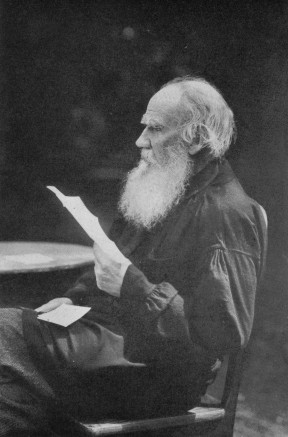
“Is there any meaning in my life that the inevitable death awaiting me does not destroy?”
from Leo Tolstoy, “A Confession”

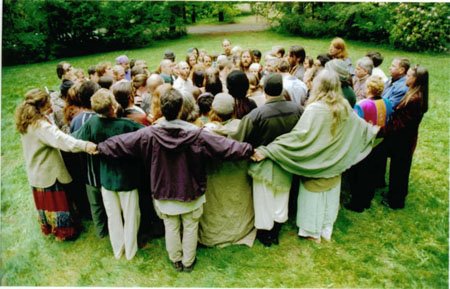
Postmodern Group Hug

Here is a link to an interesting article about a Pew research poll and some folks at Lifeway research that call the poll into question due to the wording of the survey. The research attempts to find out how many christians believe that christianity is the only way to eternal life. The folks at Lifeway bring up some valid points about the way that the questions were asked. However, even in their own survey (with better questions) they found that almost 40% of “Protestants” do not believe that faith in Jesus is the only way to heaven. That is almost half! Whoa, are we in trouble! The words of the Bible are pretty clear on this subject. Jesus said he was the only way (John 14:6), and his disciples echoed that (Acts 4:12). In this discussion someone HAS to be wrong. So we are left in a precarious position. We have to decide if Jesus is wrong, or if the universalists are wrong.

This poll is revealing about our new “kinder” “more tolerant” society. What can get you into trouble as a pastor or christian and bring on the beginning of persecution? This issue is perhaps one of the best examples. We are supposed to accept everyone NO matter what. If you say that what you believe is the only truth, get ready to be put through the meat grinder as an insensitive-unloving-radical.

This is becoming very clear as the debate on homosexuality warms up. They (and you now who they are) have constructed the questions and the nature of the debate in such a way that we have swallowed the rhetoric with very little protest. The only way to truly love homosexuals is to support their lifestyle by approving it. IF you disagree with them it is because you hate them and want to deprive them of their civil rights. The question: “why don’t you think gays should have civil rights?” resembles the well known fallacy: when are you going to stop beating your wife? The question is framed with lots of assumptions, and we need to be wise enough to address them.

John 12:42-43 “Nevertheless even among the rulers many believed in Him, but because of the Pharisees they did not confess Him, lest they should be put out of the synagogue; for they loved the praise of men more than the praise of God.”

So the bottom line is, everyone (in theory) will be welcome in the group hug except Jesus and the people who agree with him. I think that this will be one of the great tests of our faith in the next 40 years in America. Many have already fallen…

“But the cowardly… shall have their part in the lake which burns with fire and brimstone, which is the second death.” (Revelation 21:8)

Fuel in the Furnace of Salvation

Here is an insightful quote from Eugene Peterson. It is from his book “Run with Horses.” He is addressing the 2 visions in Jeremiah of the budding almond rod (God will accomplish his word) and the boiling pot from the north (God is in control of evil):

“We cannot afford to be naive about evil– it must be faced. But we cannot be intimidated by it either. It will be used by God to bring good. For it is one of the most extraordinary aspects of the good news that God uses bad men to accomplish his good purposes. The Great paradox of judgment is that evil becomes fuel in the furnace of salvation.

“Uninstructed by this vision, or something like it, we loose our sense of proportion and are incapacitated for living in open and adventurous response to whatever comes to us through the day. If we forget that the newspapers are footnotes to scripture and not the other way around, we will finally be afraid to get out of bed in the morning. Too many of us spend far too much time with the editorial page and not nearly enough with the prophetic vision. We get our interpretation of politics and economics and morals from journalists when we should be getting only information; the meaning for the world is most accurately given to us by God’s word.”

Run with Horses, Eugene Peterson(1983) Intervarsity Press p. 54.

Conversational Apologetics

Here is a link to 2 great talks on conversational apologetics from a guy who is very funny and very adept at reaching people with the gospel. This is good stuff…it is from Michael Ramsden who works with Ravi Zacharias Ministries. I have found that learning how to share my faith and answer common questions has strengthened my own heart and slaked many a doubt.