Recent Philosophical and Scientific Challenges to Darwinism

Here are some highlights from a worthwhile piece at the Intercollegiate Review. The article is an excerpt from the Book, “Darwin Day In America: How Our Politics and Culture Have Been Dehumanized in the Name of Science”  The title alone is fascinating and points to something that is blind to many of my science-loving friends that don’t seem to understand the difference between science and philosophy.

Perhaps most interesting to me is the way that any dissent on the topic of evolution, even when based on scientific observations and coming from other scientists and atheists is treated as “dangerous.”

Perhaps most interesting to me is the way that any dissent on the topic of evolution, even when based on scientific observations and coming from other scientists/atheists is treated as “dangerous.”  Scientists have felt oppressed in the past, and these feelings are justified. They felt that open inquiry was not allowed.  Seems like they are returning the favor.  We look down at radical islamic countries with their anti-blasphemy laws, but we have our own blasphemy code.  If you suggest that maybe, perhaps, that possibly darwinism doesn’t exactly follow from the evidence itself… you may find angry crowds gathering around you with a heap of stones.

Now listen to John West for yourself:


“If someone prior to 2012 had predicted that Oxford University Press would publish a book with the title Mind and Cosmos: Why the Materialist Neo-Darwinian Conception of Nature Is Almost Certainly False, one might have wondered about his sanity, or at least about how familiar he was with current discourse in elite academia. But Oxford did in fact publish the book, and the intellectual aftershocks have yet to subside.

“The book’s author, philosopher Thomas Nagel, is a professor of long standing at New York University and the recipient of numerous awards and honors, including an honorary doctorate from Oxford University, fellowships from the National Science Foundation and the National Endowment for the Humanities, and election to such august bodies as the American Academy of Arts and Sciences and the American Philosophical Society. It is a testament to Professor Nagel’s stature that his dissent from Darwinian theory was allowed to be published at all. But his stature has not prevented a flood of abuse and even occasional suggestions of creeping senility….

“Nagel attracted special displeasure for praising Darwin skeptics like mathematician David Berlinski and intelligent-design proponents like biochemist Michael Behe and philosopher of science Stephen Meyer. As the New York Times explained, many of Nagel’s fellow academics view him unfavorably “not just for the specifics of his arguments but also for what they see as a dangerous sympathy for intelligent design.” Now there is a revealing comment: academics, typically blasé about everything from justifications of infanticide to the pooh-poohing of pedophilia, have concluded that it is “dangerous” to give a hearing to scholars who think nature displays evidence of intelligent design.

“Nagel ultimately offered a simple but profound objection to Darwinism: “Evolutionary naturalism provides an account of our capacities that undermines their reliability, and in doing so undermines itself.” In other words, if our mind and morals are simply the accidental products of a blind material process like natural selection acting on random genetic mistakes, what confidence can we have in them as routes to truth?

“The basic philosophical critique of Darwinian reductionism offered by Nagel had been made before, perhaps most notably by Sir Arthur Balfour, C. S. Lewis, and Alvin Plantinga. But around the same time as the publication of Nagel’s book came new scientific discoveries that undermined Darwinian materialism as well. In the fall of 2012, the Encyclopedia of DNA Elements (ENCODE) project released results showing that much of so-called junk DNA actually performs biological functions. The ENCODE results overturned long-repeated claims by leading Darwinian biologists that most of the human genome is genetic garbage produced by a blind evolutionary process. At the same time, the results confirmed predictions made during the previous decade by scholars who think nature displays evidence of intelligent design.

“Even critics of Darwin’s Doubt found themselves at a loss to come up with a convincing answer to Meyer’s query about biological information. University of California at Berkeley biologist Charles Marshall, one of the world’s leading paleontologists, attempted to answer Meyer in the pages of the journal Science and in an extended debate on British radio. But as Meyer and others pointed out, Marshall tried to explain the needed information by simply presupposing the prior existence of even more unaccounted-for genetic information. “That is not solving the problem,” said Meyer. “That’s just begging the question.”

“C. S. Lewis perceptively observed in his final book that “nature gives most of her evidence in answer to the questions we ask her.” Lewis’s point was that old paradigms often persist because they blind us from asking certain questions. They begin to disintegrate once we start asking the right questions. Scientific materialism continues to surge, but perhaps the right questions are finally beginning to be asked.

“It remains to be seen whether as a society we will be content to let those questions be begged or whether we will embrace the injunction of Socrates to “follow the argument . . . wherever it may lead.” The answer to that question may determine our culture’s future.”

via The Book That Deflated Darwin Day | Intercollegiate Review.

An Overlooked Area Of Criminal Justice Reform.

Colin Miller has an interesting and brief article about wrongful convictions. He writes:

“Two key statistics: 95% of disposed American criminal cases are resolved by guilty pleas, often as a result of plea bargains. And 80% of people arrested in this country are represented by public defenders. These statistics are not unrelated. Public defenders are underfunded and overworked, and often refuse to take new cases.”

This brings up an important issue in reforming our very broken justice system. Why do we allow the lawyers that defend most of the accused in America to be low paid and inexperienced public defenders? Why isn’t there a national credential required for public defenders? I am told anyone that passes the Bar exam can become a defense attorney and defend the accused unless it is a capital case. I wonder if we would accept that for our surgeons? Why don’t we spend more money so that there are an adequate number of attorneys so that the accused can be adequately represented? Wouldn’t it be both more just and cheaper to do this than to incarcerate so many innocent people?

‘Serial’: How common are wrongful convictions in the U.S.?.

What Abortion Is Doing TO US

Have you wondered why it is so easy for the folks involved in the abortion industry to behave so badly? How is it possible that such obvious atrocities can garner such passing discussion in some quarters? Charles Krauthammer is on the money, and the whole article is worth reading:

“Abortion critics have long warned that the problem is not only the obvious — what abortion does to the fetus — but also what it does to us. It’s the same kind of desensitization that has occurred in the Netherlands with another mass exercise in life termination: assisted suicide. It began as a way to prevent the suffering of the terminally ill. It has now become so widespread and wanton that one-fifth of all Dutch assisted-suicide patients are euthanized without their explicit consent.”

via The price of fetal parts – The Washington Post.

If Planned Parenthood is The Sum of All Virtue, Why All The Secrecy?

ABORTION GAG
In recent weeks, 3 videos have been released exposing the unethical and illegal nature of Planned Parenthood’s fetal tissue practices.  But we  have been told that the disturbing nature of the videos is really just the messy reality surgical medicine. Surgeries are bloody and yucky.  And the casual way the doctors talk about surgery is disturbing to the lay person. “My goodness! I almost passed out when I saw my own surgery!”

If this is all it is, then why then a gag order? (Pursued by Stemexpress) There has been the unofficial media blackout on this issue, and for now a judge has prevented the release of any future videos. Why all this maneuvering if Planned Parenthood is simply about women’s health? Why not parade all that they are doing if it is so virtuous and beneficial? If no one is profiting from the sale of human organs and tissues, why not open up the books and let the world see?

Planned Parenthood supporter Camille Paglia called attention to the media black out and why it is so dangerous:

“Now let me give you a recent example of the persisting insularity of liberal thought in the media.  When the first secret Planned Parenthood video was released in mid-July, anyone who looks only at liberal media was kept totally in the dark about it, even after the second video was released.  But the videos were being run nonstop all over conservative talk shows on radio and television.  It was a huge and disturbing story, but there was total silence in the liberal media.  That kind of censorship was shockingly unprofessional.  The liberal major media were trying to bury the story by ignoring it.  Now I am a former member of Planned Parenthood and a strong supporter of unconstrained reproductive rights.  But I was horrified and disgusted by those videos and immediately felt there were serious breaches of medical ethics in the conduct of Planned Parenthood officials.” (Salon, emphasis mine)
Oh, and BTW Planned Parenthood didn’t show up for their own senate hearing in Texas to testify.  If everything is amazing, and they are helping women live extraordinary lives why not show up with fanfare and announce it from the rooftops? Why not rejoice that other groups are calling attention to all your noble deeds? Why not thank them for the opportunity to set the record straight? If I were pro-choice, I would have great reasons for my position and I would everone to see and hear the unvarnished truth. I would be confused by all the skulking cloak and dagger stuff.

Besides, Americans are used to watching medical dramas, hacker films, and surgery on live TV.  If this is just “medicine unfiltered,” why does it need to be hidden?  Why can’t you allow the American people to see the whole business? The Center for Medical Progress (the one’s gagged by the court order) have released the full videos of their undercover episode.  They clearly want all the cards on the table.  Why have your PR firm tell major networks NOT to run the footage?

The answer is simple and disturbing.  The things that they are doing can only be done behind a veil. The veil of euphemisms and distraction. The veil of lies and misinformation that we have seen this week.  Every attempt has been made by the abortion industry to keep their business in the dark, and to suppress anyone who would dare reveal it.  And yet we hear the continual parade of comments from Planned Parenthood and their posse that their work is so noble, so essential to the happiness of women.  If this is true why not let it out in the sunshine? Why not let women see the whole thing? Something doesn’t fit. Someone is lying.

Edited photo courtesy of Katie Tegtmeyer Some rights reserved

Is Real Life Too Boring for Social Media, or Have We Lost Touch With Goodness?


Kyle Vanhemert of Wired magazine writes about a new social media app (Beme) that is supposed to help us overcome the unreality of our staged, edited, and photoshopped lives on social media. The need is real and the concept has merits, but the review is critical on several fronts.   The observation that struck me is a reflection on what has become “the curated self” and how that self is so often different from the real self. And how disappointed we are with our “real selves” and our real lives.  Our homes, and our children, our dinners, and our vacations seem so “ho-hum” compared to uninterrupted ecstasy that everyone else enjoys.

“SOCIAL MEDIA APPS encourage us to share certain parts of our lives and particular versions of our selves. Judging by Facebook, you’d think everyone you know is in a happy, healthy relationship—it’s weird to post a status update saying you’re lonely or pining for your ex. Instagram’s no different: You share a pic of your meal at the hot new brunch spot, not the French-bread pizza you just warmed in the microwave.

“You might call this phenomenon the rise of the Curated Self.”

After noting several problems with the app, the author writes, “a more vexing problem might be something closer to the heart of sharing itself. Namely, that for most of us, authenticity is boring. Most of my meals aren’t worth showing off. Most of the sunsets I see aren’t particularly brilliant. This is why Instagram first blew up, after all: Its filters made our ordinary lives look extraordinary. This same appeal holds true for many of today’s most popular social apps. Life is usually more interesting when it’s edited and scrutinized before being rebroadcast.” (emphasis mine)

This makes me wonder if we even know what the real problem is and where it resides.  Is everyone else’s life really such a bore that we have to lie about it? Or have we lost a definition of what is worthwhile in life?  Are we immersed in deep and rich wonder, but to blinded to see it? And is social media feeding this great deception?

via Beme Has a Problem: Authenticity Is Boring | WIRED.

Is It Unloving To Give A Cancer Diagnosis?

4.0.4
4.0.4

Is it rude to point out a growth that might be cancer?

Is it judgmental to diagnose a malignant tumor?

Is it mean spirited to suggest that unchecked, the cancer will grow, and grow, and grow?

Is it uncaring to point out that growing cancer will spread and destroy vital organs and ultimately lead to death?

Is it condemning to explain that radical and unpleasant treatment is needed to save someone’s life?

Is it too negative to say that treatment should begin while the problem is still small and manageable?

Of course, to suggest any of this is ridiculous.  But in the realm of moral cancer, few of us want a physician to deliver bad news.   No one wants to hear that a certain relationship is toxic, that our habits are self destructive, or that our innocent pleasures are growing into addictions, or that our compromises are numbing our conscience.

And yet when pastors and leaders fail to be clear and direct about sin they are engaging in spiritual malpractice.

This happened in the book of Lamentations. After destruction had fallen on the nation of Israel, the prophet Jeremiah offers a post-mortem assessment of one of the factors that led to the death of the patient: “Your prophets have seen for you false and deceptive visions; they have not exposed your iniquity to restore your fortunes, but have seen for you oracles that are false and misleading.” (Emphasis added) (Lam 2:14)

It is never fun to find out you have cancer. But if you have cancer, finding out about it may be the most merciful thing that can happen. It opens the door to hope before it is too late.  When God’s law points out the cancer of sin, it is actually a mercy because it points us to the Christ the great physician.

Insights On Human Nature From a Book Review on Maturity and Moral Reasoning.

Dr_Jekyll_and_Mr_Hyde_poster_edit2

Vivian Gornick wrote a review of the book “Why Grow Up: Subversive Thoughts for an Infantile Age,” and hiding in there I found a few great observations, and several golden sentences that beautifully express the great contradiction of human nature: that we are both full of virtue and potential, yet also perennially evil and powerless to do what we know is right. For Christians this is understood in the tension between the image of God and common grace on the one hand set against original sin on the other.

“The desire to submit to the constraints of established authority at the very same time that we long to break loose of them seems to me a fair account of one of the major miseries of the human condition.”

She also talks about the human tendency toward revolution and says that throughout history, “the cycle of submission and rebellion repeats itself, without much permanent progress having been made.” Consistently today’s revolutionary liberator becomes tomorrow’s oppressive tyrant.

Gornick also says, “The catch is that learning to think for oneself is not a given; it is an ideal, one achieved only with immense effort. We resist making the effort as it involves damned hard work.”

“The Hebrew philosopher Hillel urged that we do unto others as we would have others do unto us. Kant urged, similarly, that we not make instrumental use of one another. With all the good will in the world—and remarkable numbers of people have it—we have not been able to make these noble recommendations carry the day. Not because we are lazy or venal or incompetent but because most of us live in a state of inner conflict that makes purity of behavior an impossibility. Every day of our lives we transgress against our own longing to act well: our tempers are ungovernable, our humiliations unforgettable, our fantasies ever present. We cannot stop ourselves from scorning, dismissing, challenging, and discounting. We spend years on the couch struggling to make our reasoning intelligence subdue our impassioned outbursts. When given a recipe for the good life, we want these realities on the ground incorporated in the mix.

“Aside from that of our own permanently conflicted selves, another unchanging reality is that the world as it is has been decried since time immemorial. Throughout history women and men have been writing—letters, diaries, poems, and novels—claiming theirs the worst time ever. While many have been truly horrendous, not one is without some redeeming feature.”

via Your Own Worst Enemy | Boston Review.

“Do As I Say.” Shouldn’t Ethics Professors Behave Ethically? They don’t

How_often_do_ethics_professors_call_their_mothers__–_Eric_Schwitzgebel_–_Aeon

This article is interesting, disturbing, disappointing and a little humorous at the same time.

It is a fascinating look at how professional academics devoted to studying morality actually behave.  Wouldn’t you expect them to at least try to be good people? Beyond that, there is the question of whether we ought to expect them to behave better than people who are uninformed about the subject.

The author asked his 7 year old son, and he replied: ‘The kids who always talk about being fair and sharing,’ I recall him saying, ‘mostly just want you to be fair to them and share with them.’ Interesting.

The author says he is the only one that he knows that has looked into this question in this narrow sense. That in itself is pretty tragic. By the way, Paul Johnson’s book “Intellectuals” does something similar from the perspective of history.  A worthwhile book for sure.

It seems many professors are aiming at mediocrity, being just about as “good” as everyone else.  I guess that helps to fight off self-righteousness.  But they don’t mind telling the rest of us how we ought to live. This shouldn’t surprise us, because with few ideological exceptions, most modern ethical theories suggest that good and evil is merely a human social construction.

It seems that many pastors aren’t much better.

We should all remember that there is a very specific word in the English language for this whole phenomenon. It is called hypocrisy. And that label won’t fall off just because everyone’s doing it.

via How often do ethics professors call their mothers? – Eric Schwitzgebel – Aeon.

Just Finished Season 5 of Blue Bloods

BlueBloods

My wife and I just finished watching Blue Bloods. We watched it all through the end of season 5. There is no more for now… Groans and frustration. The next season starts in September 2015.  We watched it slowly over the last few months on Netflix and Amazon Prime.

We have enjoyed the characters and stories so much that we jokingly created a little dance (really just bobbing our heads and arms) that we break out during theme song to embarrass our children. I am not a ring tone kind of guy, but I considered getting the ring tone. I know, this is some serious nerd stuff

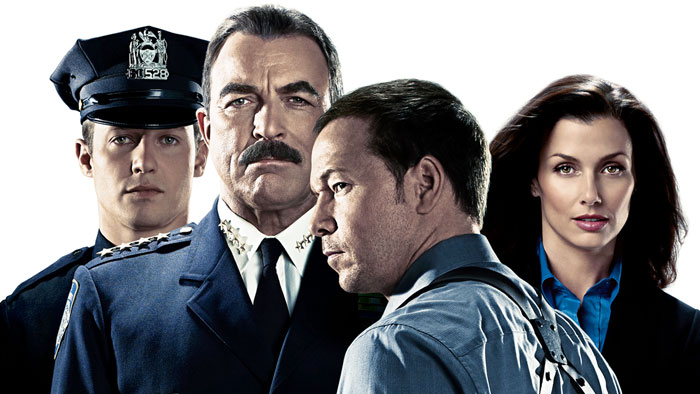
In case you aren’t familiar with the show… The story centers around the Reagan family. They have been involved in NYPD law enforcement for several generations. The father, Frank Reagan (played by Tom Selleck) is the police commissioner as his father was before him.  This adds an interesting dimension to the well-worn cop genre as the family often has to work through their own struggles and sometimes heated disagreements. Additionally there are the authority issues of having your dad being your boss and the most powerful law enforcement figure around. All of this makes for some good TV.

Here are several things I really enjoy about the show:

The depiction of an honest and ethical police commissioner is refreshing.  Throughout all 5 seasons the character of Frank Reagan plays a major role.  For me it is one of the best parts of the series. He is decisive, wise, insightful, and a man few words. He genuinely cares about the law, the people of New York, and his police officers. He frequently has to fight against political pressures, corruption, and enticements to compromise. Consistently his character holds firm and I found myself enamored by his resolve.  Here is an example: One phrase that gets repeated throughout the series is something like this: “It’s important to work as hard to exonerate an innocent man as to convict a guilty one.”

The Reagan family is far from perfect. To the contrary, they have a number of frustrating flaws. And yet the family is presented as virtuously catholic.  This is not a secondary element of the series. They actually pray in Jesus name.  It is a big deal and has felt so unusual that I have been shocked. The standard fair from Hollywood ubiquitously depicts christians as hypocrites or self righteous.  So it came as a shock to see them create characters that actually look like the people I know. One of the important plot lines throughout the show is the Sunday dinner where the family both laughs, cries, and argues their way through the difficulties of life. It is honest and often touching, without being sappy or cliched.

The cast also consistently displays the scars and wounds that face law enforcement families. So there is a fascinating juxtaposition: It is hard to love a job that ends up hurting you.  The show explores marriage problems, sibling rivalry, grief, PTSD, and moral failures that face law enforcement.

Additionally, the show is set in New York city.  This provides the ready opportunity to explore a variety of topics like gang violence, racism, police corruption, terrorism, stop and frisk policing, etc.

Any show that runs for 5 years will bump up against unrealistic situations and dialogue, and Blue Bloods doesn’t escape this. But it’s still worthy in spite of the little blemishes. I am looking forward to season 6.

Essentialism Ch. 5 Questions for Discussion- The Escape


Solitude Quote Picasso

Questions for Essentialism  Chapter 5

This is a list of discussion questions to help work through the content of the book “Essentialism” By Greg McKeown.

Download a pdf of these questions here: Essentialism Questions Ch. 5

Major principles:

In order to figure out what is essential we need designated times and spaces in order to think.  These must be free from other obligations and distractions.

Key examples/illustrations

  • “Do not call Monday” from Frank O’brien of Conversations
  • The d.school at Stanford and their thinking spaces.
  • Isaac Newton and his time of solitude writing the Principia Mathematica
  • Jeff Weiner CEO of LinkedIn schedules 2 hours everyday where nothing is planned.
  • Bill Gates habit (think week) of taking 2 weeks off each year to read and think.
  1. Often our distracted schedules and frenetic pace prevent us from having time to think and reflect. How would you rate your life and schedule in this regard? Does the idea of carving out time for this seem like a reality in your life?
  2. Frank O’brien sets aside one day per month for his employees to get away to think and reflect. This helps them maintain a level of clarity and innovation.  Availability for this is also a barometer for him to understand his work force. “If somebody can’t make the meeting because of too much going on, that tells me either we’re doing something inefficiently or we need to hire more people.”   What does this barometer say about your life?
  3. It is often difficult to make time and space for reflection because of our daily demands.  We get caught up responding to needs and emergencies that we cannot extricate ourselves to improve the systems and organizations behind the emergencies. Which parts of your weekly/monthly schedule keep you from time to reflect?
  4. What is keeping you from scheduling uninterrupted time for peaceful reflection?
  5. Do you have a place where you can “escape” and think? How well is this working? List 3 possible locations you can use to escape the calls, tweets, emails, and emergencies that keep you from time to reflect.
  6. According to McKeown, “focus is not only something we have, it is something we do.”  What keeps you from “doing” focused work? Make a list of the top 5 interruptions and distractions in your life and business.
  7. What can you do to get several hours away from these top interruptions and distractions from #6?
  8. Does technology distract you? What aspects of your connectivity hinder you from the most important things?  (smart phone, social media, email, voicemail, etc).
  9. McKeown tells the story of the highly distracted executive that just couldn’t disconnect. In a moment of desperation he decided to give his phone away and to go to a motel with no internet access to get work done. He stayed there for 8 weeks until the major project was completed. What major project or life goal could you accomplish if you were willing to get away for just a day or two? Explore this idea before moving on.
  10. What nonessential things can you give up so that you can schedule regular (weekly/monthly) time for solitude and reflection?  List something to give up or “quit” this week for a higher purpose.
  11. Jeff Weiner of LinkedIn said his single most valuable productivity tool was planning 2 hours every work day where nothing else was scheduled.  (p. 68) Right now take a moment to dream (in writing) about how your life and work would change if you did this? What can you imagine would happen to your stress level? To your focus? To the way you treat others? To your productivity?
  12. Whether you take a whole day or week off to read and think, where can you build in a small amount of time to enrich your mind and soul through reading and thinking?
  13. List 3 books/articles that can help you understand your life/business/market better.  Take a moment to write out what the potential benefits of this. If you can’t think of any, write down the names of 2 people you can talk to for suggestions. What will you ask them?