HOLD YOUR HORSES!!!!!

STOP RIGHT NOW!

Everything you have heard about evolution is a lie!!! in a new book, which I admit I haven’t read, but I did get a good chuckle out of the synopsis, Dr. Aaron G. Filler is going to set the record straight. For all of you who chucked your bible in the garbage because you believed that you descended from Apes, prepare for the shock of it all: you believed a lie!

There is now COMPELLING EVIDENCE, even more compelling that the indisputable evidence we had before, but threw away so we could sell more books, compelling evidence that things happened the other way around. APES ACTUALLY DESCENDED FROM US! This explains a lot, especially if you watch wrestling on TV.

I actually am not making this up. look for yourself on Amazon

I agree with Malcom Muggeridge who said that in the future a retrospecitve glance at evolution will view the whole thing as one of the great jokes of history.

Quote By Calvin on Unity Among Churches


No not that Calvin, the other one….

Calvin writes, “The pure ministry of the word and pure mode of celebrating the sacraments are, as we say, sufficient pledge and guarantee that we may safely embrace as church any society in which both these marks exist. The principle extends to the point that we must not reject it so long as it retains them, even if it otherwise swarms with many faults. What is more, some fault may creep into the administration of either doctrine or sacraments, but this ought not to estrange us from communion with the church. For not all articles of true doctrine are of the same sort (emphasis mine). Some are so necessary to know that they should be certain and unquestioned by all men as the principles of religion. Such are: God is one; Christ is God and the Son of God; our salvation rests in God’s mercy; and the like. Among the churches there are other articles of doctrine disputed which still do not break the unity of faith” (Institutes, 4:1:12; 2:1025).

Great Poem about Manhood by Kipling

Rudyard Kipling

If

If you can keep your head when all about you
Are losing theirs and blaming it on you;
If you can trust yourself when all men doubt you,
But make allowance for their doubting too;
If you can wait and not be tired by waiting,
Or, being lied about, don’t deal in lies,
Or, being hated, don’t give way to hating,
And yet don’t look too good, nor talk too wise;

If you can dream – and not make dreams your master;
If you can think – and not make thoughts your aim;
If you can meet with triumph and disaster
And treat those two imposters just the same;
If you can bear to hear the truth you’ve spoken
Twisted by knaves to make a trap for fools,
Or watch the things you gave your life to broken,
And stoop and build ’em up with wornout tools;

If you can make one heap of all your winnings
And risk it on one turn of pitch-and-toss,
And lose, and start again at your beginnings
And never breath a word about your loss;
If you can force your heart and nerve and sinew
To serve your turn long after they are gone,
And so hold on when there is nothing in you
Except the Will which says to them: “Hold on”;

If you can talk with crowds and keep your virtue, Or walk with kings – nor lose the common touch; If neither foes nor loving friends can hurt you; If all men count with you, but none too much; If you can fill the unforgiving minute With sixty seconds’ worth of distance run – Yours is the Earth and everything that’s in it, And – which is more – you’ll be a Man my son!

4 Lessons for Teachers from Ezra 7:10

Ezra 7:10
“For Ezra had prepared his heart to seek the Law of the LORD, and to do it, and to teach statutes and ordinances in Israel.”

Ezra had just completed a 4 month journey from Babylon to Jerusalem. Verse 9 says that his journey was successful because God’s hand was upon him. Verse 10 gives an explanation of one of the reasons why God’s hand was on Ezra, his heart was right in God’s sight. “Every way of a man is right in his own eyes, But the LORD weighs the hearts (proverbs 21:2).” In this case, the Lord had searched Ezra’s heart and found it pure and sincere. What was pleasing to the Lord about Ezra as a teacher?

1. Ezra had made the study of God’s word a matter of the heart. When we grow in learning we may become proud. We may begin to think that our knowledge gives us privilege or some special standing. Knowledge is nothing if it doesn’t change our heart. The heart is our innermost being where motives, intentions, and goals arise. Jesus, quoting Isaiah, had condemned the Pharisees for their great learning and meticulous detail because their hearts were blackened, “these people draw near with their mouths And honor Me with their lips, But have removed their hearts far from Me (Isa. 29:13).” There is a word for people who study and teach the Bible without the involvement of their hearts: Hypocrit. This indictment was not true of Ezra. He drew near with his mind and his heart. Those who do not know the truth with their hearts do not really know it. And no one should teach the truth that doesn’t really know it.

2. Ezra’s approach was intentional. To put it another way, this focus on his heart was an active duty. He had prepared his heart. Focusing on our hearts in the study of the truth is the hardest thing of all. Our flesh resists. It is so much easier to learn the truth in order to win an argument or teach a lesson. But to preach the truth to your own heart is difficult. Why is it difficult? It involves seeing unpleasant things about ourselves. It also requires the humbling work of repentance when we see our sins. It requires that we see God’s word as a way to draw close to God Himself. We cannot do this in our own strength; we need God’s help. But this will never happen on accident, it must be the resolve of the heart. Lastly, the hard work of applying the truth to the heart is difficult because it is unseen. There are no bulging biceps, no certificates on the wall, no initials or letters to leave after your name, no pay raise. No one compliments you for it, because no one else sees it. It is one of the truest signs of real religion because it is done for God.

3. The study of the word, applied to the heart brought about certain results. The effect was obedience. Ezra was a doer of the word. What this means is that you would not need to say about Ezra, “do what he says but do not follow his example.” A careless life will sweep away the best teaching. Those who obey the truth through the many seasons of their lives have the best insight into what the word really means. Furthermore, teachers who are “doers” appeal to more than just the mind of their hearers. They are able to petition the heart. A life committed to God calls out to something inside the hearer, to something that looks at an orderly life and finds it attractive. A teacher who is a doer is a man who dresses up the gospel. The example of an obedient, happy life says that the obedience is not only right, it is beautiful; by grace it is possible by real people, and it is satisfying to the heart.

4. The last step in this description of Ezra is last for a reason. It comes after all these other things. It is unfortunate that so many want to put it sooner. They want to teach before the truth has affected their hearts, and their lives. They want to study and then teach. This can be done with many subjects…but not with the Law of God. Note as well that teaching God’s people was Ezra’s resolve and final goal. To be a faithful teacher to God’s people takes resolve and commitment, and should be done willingly.

Seminary Lectures and Training for Free

I love to find free stuff, if it is good quality. BiblicalTraining.org is doing a great job. They offer a bunch of seminary classes from good evangelical teachers for free. I am currently listening to the one on Philosophy and it is good. There is a series of 3 lectures on the history of the English Bible by Daniel Wallace. It is wonderful. He is a true scholar and presents compelling reasons to thank God for our Bible translations. (and also to see that the King-James-only position has some serious historical hurdles). Anyway I hope you enjoy. There is no excuse in America to be ignorant!

Greg Bahnsen is Now on YouTube!!!

Though dead, yet he speaks! Some of his stuff is now available on Youtube for the world to see.
If you like rigorous thinking applied to Christianity and a critical analysis the unbleliever’s view of the world you will certainly benefit from his material.

He has lots of lectures available. I have enjoyed the debates, and his apologetics lectures. Here are some things I have learned:

  • That the Christan faith is not only rationally defensible, it is the foundation of rationality.
  • That unbeliever’s have plenty of faith assumptions that they cannot prove. They are often dishonest about this. Christians are also often guilty of intellectual dishonesty and it is our job to think clearly according to scripture.
  • That we have nothing to fear from the truth. God is the author of all truth and will vindicate himself.
  • There is a difference between proof and persuasion. You may present a sound argument for some position that is both valid and true. However, that does not mean that everyone is going to cry uncle. The heart is involved, not raw intellect.
  • Jesus is the source of all wisdom and knowledge.

How Does God Deliver Us?

“Call upon me in the day of trouble, I will deliver you and you shall glorify me.”
Psalm 50:15

In meditating upon this verse I asked myself, “how does God deliver us?” This led me to think about the nature of our troubles and I came up with this attempt to help me understand the kinds of trouble I face and how Jesus helps me.

Concerning trouble (and deliverance from it) I would suggest that there are three things to consider. There are probably other ways of looking at this, but this was helpful to me. To help illustrate this, let me give an example from the story of David and Goliath:

  • The cause(s) of trouble: Goliath and the Philistine army.
  • The trouble itself: we will suffer painful injuries.
  • The results of the trouble: we will die and our people will be enslaved.

I think that God delivers us from the days of trouble in many different ways. I have come up with these 9 that have been a rebuke to my anxious unbelief. In some of these I use the concept of the cause of trouble and the trouble itself loosely and interchangeably because they are so often connected.

1. He gives us a different view of the trouble. He teaches us what the real trouble is. Sometimes after the fact we find that we were mistaken. Jesus teaches us this when He says that the fear and anxiety associated with lack of food or clothing can help us to learn that our lives are more than food and the body more than clothing. Sometimes the problem is “us.” Sometimes we are the cause of our problems with our sin and carelessness. We would like to escape the consequences without escaping our waywardness. But God delivers us by chastening us for our good.

We could further illustrate this by thinking of a scared child who is learning to swim. The child is crying and afraid, reluctant to get into the water, even in his mother’s arms. The child has a fear of drowning. We might say that this is the trouble for them. Although drowning is possible, in his mother’s arms there is little danger of this. The real problem is the fear of the water and not knowing how to swim. Through the tears the mother grabs the child (against his will!) and teaches him to swim and overcome his fear of the water.

2. He destroys the cause of the trouble Himself. At the Red Sea the children of Israel were faced with death and slaughter at the hands of pharaoh’s army. The Lord parted the Red Sea and destroyed the king of Egypt. At Jericho God interceded and miraculously brought down the walls of the city. The Lord sent and angel to deliver Peter from prison, and many times provided bread and water in the desert. When Hezekiah was threatened with siege and defeat at the hands of the king of Assyria, God sent an angel to kill 185,000 men and sent Sennacherib away (2 Kings 19:35).

3. He uses us and He uses our own efforts to overcome and destroy the trouble. We must trust first and call upon the Lord. Our own efforts won’t be enough to deliver us without God’s help. Yet often the Lord uses our efforts to overcome the trouble. It was the stone from David’s sling that brought down the giant, and the boy’s hand gripped the sword that severed Goliath’s head. Noah and his family were saved from the flood by they boat that he and his sons had built.

4. He causes our enemies (or trouble) to destroy themselves. Several times we read this kind of language in the book of proverbs: Proverbs 26:27, “Whoever digs a pit will fall into it, And he who rolls a stone will have it roll back on him.” God brings victory through Gideon by driving the Midianites to destroy themselves (Judges 7). Several times when the Pharisees came questioning Jesus because of their jealousy, He returned a question that they could not answer. Their own jealousy put them to shame.

5. He helps us to understand and endure the trouble, and sometimes prevents the effects. We experience this when we “endure” temptation without giving in (James 1:12). In Jesus’ parable of the houses built on the rock and the sand, the storm comes upon both (Matt 7). Yet there is a very different outcome. Joseph is not saved from the experience of slavery or imprisonment, but allowed to endure and at the end even to understand God’s gracious purpose (Genesis 50:20).

6. He sends someone or something to help us through the trouble. In the midst of drought and famine, God provides for Elijah by sending Ravens with food, and later the widow of Zarephath (I Kings 17:4 and 9). Daniel is not spared from the Lion’s den, but an angel is sent to spare him from their teeth (Dan 6:22). When Paul is in prison, Onesiphorus comes to refresh him (2 Tim 1:16). And how many of us have received an unexpected check when we have prayed for the Lord to provide for us?

7. He does not remove the trouble but prevents the consequences from coming upon us. A deadly viper bites Paul, but he is unaffected by the venom (Acts 28:3). God does not spare Meshach, Shadrach, and Abednego from the anger of the king, the trial and questioning, neither the shame of condemnation nor the furnace. But He spares them from the fire and honors them and Himself in the end.

8. He allows the consequences to come upon us to show us that He is our greatest treasure. God is going to judge the wickedness of the Jews, and He is going to use the military muscle of the Chaldeans to do it. Habakkuk is faced with the coming invasion that will be a judgment on the nation of Israel and lay waste her economy. Yet God gives grace and He is able to pray, “Though the fig tree may not blossom, Nor fruit be on the vines; Though the labor of the olive may fail, and the fields yield no food; Though the flock may be cut off from the fold, And there be no herd in the stalls—Yet I will rejoice in the LORD, I will joy in the God of my salvation (Hab. 3:17-18). In like manner when David is deprived of his royal palace, running from Absalom, and living in a desert wasteland, he prays, “O God, You are my God; early will I seek You; My soul thirsts for You; My flesh longs for You in a dry and thirsty land where there is no water (psalm 63:1).” In this case something else was keeping us from really seeing that God is our greatest possession.

9. He uses the trouble at hand to end all of our troubles and take us to heaven. To some this may not sound like deliverance at all. But it is. Sometimes in our day of trouble we may die. But God’s ways are not our ways, and His thoughts are higher than our thoughts. In Romans chapter eight Paul says, “Yet in all these things we are more than conquerors through Him who loved us.” What are “all these things?” “Who shall separate us from the love of Christ? Shall tribulation, or distress, or persecution, or famine, or nakedness, or peril, or sword? As it is written: ‘For Your sake we are killed all day long; we are accounted as sheep for the slaughter.’ Yet in all these things we are more than conquerors through Him who loved us. (Romans 8:35-27)” We become conquerors because we continue to trust and serve Him through the trials, and our enemies cannot touch our real security.

One amazing thought is that the death of Jesus as our ultimate deliverance involves many of these methods to bring us ultimate deliverance from our sin.

When I think of the different ways that God has delivered His people from trouble, and that He has promised to deliver me when I call upon Him, I am ashamed that I struggle with so much anxiety. May God help us to trust His promises.

Perhaps you can think of some other ways that God delivers us. I would love to hear about them.

The Famous British Preacher C.H. Spurgeon preached a sermon from this passage called “Robinson Crusoe’s Text” Download it

Great Internet Resource


I found this site at the recommendation of a friend. It is kinda like an internet library. It is an attempt to make public domain materials available free of charge. They have lots of out of print books that have been scanned, and also access to lots of free audio books. not all of the audio books are of good quality. Some are read by a computer, ghhhplt! But some others are well read by volunteers. There is lots of other stuff too, it is a good resource. lots of good quality FREE stuff.

Internet Archives

http://www.archive.org/index.php

Philosopher’s Soccer Match

Monty Python skit that is a very funny portrayal of German Vs. Greek philosophers playing soccer! No worries, its clean.

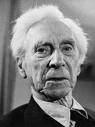
Bertrand Russell on "Why Study Philosophy"

In his article on “The Value of Philosophy,” Bertrand Russell attempts to make a case that the enterprise of philosophy is worthwhile for several reasons. It is interesting that this essay comes at the conclusion of a rather lengthy discussion of the problems of philosophy. Specifically, that there are a significant number of questions in the realm of philosophy that have not been adequately settled. Indeed, Russell is careful to tell us that certainty in philosophy is not really possible. So one of his major arguments is that philosophy is not important because of the answers, but because of the questions. It is not the destination but the journey. As far as he is concerned there is no real destination. “…it cannot be maintained that philosophy has had any very great measure of success in its attempts to provide definite answers to its questions. (p. 23)” He is careful to admit that in the areas where we have attained to certainty, we are no longer in the realm of the philosopher but of the scientist. This of course gives us some clue as to his definite conclusions with regard to numerous philosophical questions such as the nature of the material world, the reliability of the empirical method for obtaining knowledge, and the uniformity of nature.

He goes on at some length to discuss how the philosophical enterprise is a way to make life worth living; that is frees the mind from tradition and prejudice; and that it unites us with the world around us. Incredibly he makes these assertions dogmatically while decrying dogmatism. He speaks of “liberating uncertainty”, and that it is “unwise to pronounce dogmatically.” Furthermore, he seems to deprecate those practical sort of people who just live in the world, content with their assumptions unwilling to question the status quo. Whether or not philosophy has given us certainty on this issue, we know for certain Russell’s conviction on this matter. He definitely seems to look down on these simpletons. Concerning the unhappy life of people with convictions, uninterested in philosophy, he insists that if we are to be “great and free, we must escape this prison and this strife. (p. 25)”

While I agree that there is some utility in a continual quest for knowledge, and definite value in seeking the answer to philosophical questions, I disagree with the notion that certainty is unattainable. And if it is beyond reach, the philosophical enterprise might be satisfying to him, and to others but it is by no means obligatory or superior just because he seems to enjoy it. To insist otherwise would be a return to certainty. This whole perspective reminds me of my big german shepherd. He is very large, very loud, and can be frightening. But it is positively ridiculous to watch him chase his tail.

I disagree with Russell because he seems to contradict himself at so many points. I find it difficult to believe that he really believes what he is saying. He wants his readers to revel in questions with no answer, in a journey with no end, and in arguments without conclusion. All the while he makes numerous definite propositions about asserting the self, and “uniting the self with non-self”, “a wrong conception of the end [goal] of life,” that speculative interest is “killed by confining ourselves to definitely ascertainable knowledge.” (p. 26) He says, “philosophy is to be studied, not for the sake of any definite answers to its questions, since no definite answers can, as a rule, be known to be true, but rather for the sake of the question s themselves. (p. 26)” Yet in the previous paragraph he speaks of an “unalloyed desire for truth.” Which is it? Truth or liberating uncertainty?

Thankfully I have my own motivations for studying philosophy, for if I was left with Bertrand Russell I would definitely not choose this perpetual frustration as my life’s pursuit. I would rather shovel cow clap, though if we follow Russell’s path there is not much difference in outcome or expectation of success.