Driven to distraction: Our wired generation – Colorado Daily

motorcycle phone distraction

Do we need any more research confirming that we are VERY distracted As a culture?  Do we need more experts warning us about the danger of being constantly wired? Do we actually need someone to tell us that being distracted hinders students from learning?

I am convinced that we need to hear more about this for several reasons. First, the situation isn’t getting any better.  Mobile devices are now universal, especially for the younger generation. But gradually older folks are jumping on board. There is no turning back.

Second, the longer we live with connected devices, social media, mobile phones, etc. the more “normal” our distracted state becomes. We become numb to the side effects, and even forget that an undistracted life is possible.

Third, this much distraction is bad for us. The longer we study this subject the more we realize that distraction is hurting our brains, our relationships, and our joie de vivre.

Here is what Larry Rosen has to say:

“Recently my research team observed 263 middle school, high school and university students studying for a mere 15 minutes in their homes. We were interested in whether students could maintain focus and, if not, what might be distracting them. Every minute we noted exactly what they were doing, whether they were studying, if they were texting or listening to music or watching television in the background, and if they had a computer screen in front of them and what websites were being visited.

“The results were startling considering that the students knew we were watching them and most likely assumed we were observing how well they were able to study. First, these students were only able to stay on task for an average of three to five minutes before losing their focus. Universally, their distractions came from technology, including: (1) having more devices available in their studying environment such as iPods, laptops and smartphones; (2) texting; and (3) accessing Facebook…

“So, what was going on with these students? We have asked thousands of students this exact question and they tell us that when alerted by a beep, a vibration, or a flashing image they feel compelled or drawn to attend to that stimulus. However, they also tell us that even without the sensory intrusions they are constantly being distracted internally by thoughts such as, “I wonder if anyone commented on my Facebook post” or “I wonder if my friend responded to the text message I sent five minutes ago” or even “I wonder what interesting new YouTube videos my friends have liked.” Three-fourths of teens and young adults check their devices every 15 minutes or less and if not allowed to do so get highly anxious. And anxiety inhibits learning.” (emphasis mine)

Source: Driven to distraction: Our wired generation – Colorado Daily

The Art Of Leaving Things Undone

Noble Art of Leaving Things Undone

“Besides the noble art of getting things done, there is the noble art of leaving things undone. The wisdom of life consists of the elimination of nonessentials.”

-Chinese author and philosopher Lin Yutang

Maxwell, John C. (2008-11-16). Today Matters: (p. 67). Center Street. Kindle Edition.

‘Notes on the Death of Culture’ by Mario Vargas Llosa

Vargas

Wow… I want to read this book. Here are a few quotes from a review in the Irish Times. My first time at this website though I do have some Irish ancestry… In this book, an  aged Nobel Laureate and thoughtful critic mourns the state of our culture. He is not a Christian preacher, but according to the reviewer, his anger makes him sound like one at times. Is it possible for us to appreciate the speed of decay in our own generation?

He suggests that while we may not be living in the worst of times, we are living in the stupidest….

“It’s not easy, however, to be orderly on such an all-encompassing and sensitive subject as the way we live now. On some aspects, such as the art business, Vargas Llosa practically foams at the mouth. The art world is “rotten to the core”, a world in which artists cynically contrive “cheap stunts”. Stars like Damien Hirst are purveyors of “con-tricks”, and their “boring, farcical and bleak” productions are aided by “half-witted critics”.

“We have abandoned the former minority culture, which was truth-seeking, profound, quiet and subtle, in favour of mainstream or mass entertainment, which has to be accessible – and how brave if foolhardy of anyone these days to cast aspersions on accessibility – as well as sensation-loving and frivolous.

“Value-free, this kind of culture is essentially valueless.

“Vargas Llosa adopts a name for this age of ours coined by the French Marxist theorist Guy Debord. We live in the Society of the Spectacle. A name that recalls the bread and circuses offered to a debased populace in the declining Roman empire. Exploited by the blind forces of rampant consumerism, we are reduced to being spectators of our own lives rather than actors in them.

“Our sensibilities, indeed our very humanity, is blunted by those who traditionally saw their role as the guardians of it.

“The intellectuals, the supine media, the political class have abandoned substance and discrimination and with treacherous enthusiasm adopted the idea of the image as truth. The liberal revolution of the 1960s, especially the events of 1968 in France, and French theorists such as Michel Foucault and Jean Baudrillard come in for a lot of invective. They have turned culture into “an obscurantist game for self-regarding academics and intellectuals who have turned their backs on society”.

“Meanwhile the masses exist, docile and passive, in a world of appearances, reduced to no more than the audience in a kind of tawdry theatre where scenes shift from violence to inanity before our bored and brutalised gaze. Rock stars are given more credence than politicians, comedians are the new philosophers. Lifestyle merchants such as cooks and gardeners are revered as writers once were. It’s a sad and hopeless devolution from what we used to have and used to be.”  (emphasis mine)

Source: Book review: ‘Notes on the Death of Culture’ by Mario Vargas Llosa

The Racial Reality of Policing- Beware of Simple Solutions

It is dangerously attractive look for simple solutions to complex problems. And it is tempting to cling to them even against the evidence when they are offered.  Our country seems to be divided on the issue of homocide in the black community. And this division falls in line with a love of simple ideological answers.

Liberals are quick to blame the police and describe the situation as “open season” on black men.  To be sure, they have a growing body of evidence, much of it now on Youtube, that many police departments have been abusing their authority under the purview of the indifferent eyes of the white community. The facts tell a tale that blacks are disproportionately sent to prison for even minor crimes. And sadly, the list goes on from there. And this generates a distrust that undermines even sincere attempts for justice in black neighborhoods. Read the article for some troubling accounts from detective Conlon about times when his attempts to gain convictions for crimes committed by blacks against other blacks were unsuccessful.

Conservatives are quick to blame the black community and point out the disparity of numbers. If black lives matter, why are protestors focusing on the 129 black men killed by legal intervention (the number is likely much higher), and not focusing on the 6,739 black men murdered by mostly other young black men? They ask, why is there so little discussion absence of black fathers and the erosion of families?  Many conservatives are quick to discuss personal responsibility,  and act as if the only place to find racism is in the media.

This article by retired NYPD detective Edward Conlon is interesting to me because he acknowledges problems on many sides of this issue. Further, he suggests that those problems play against each other in some tragic ways.  They not only contribute to the problem, but work to hinder any practical solutions.  I have often felt like I was in the middle on this issue.  I have found myself occasionally listening to both sides on these issues and alternately agreeing or shaking my head in frustration.  It is frustrating when when we only see what we want to see, or repeat what our chosen news outlets tell us.

Last year Ta-Nehesi Coates wrote a lengthy and moving piece in the Atlantic on “A Case For Reparations.”  His essay was powerful and worth reading, but in the end I suspect he falls into the trap of oversimplification.  In a follow up article he wrote, “There is massive, overwhelming evidence for the proposition that white supremacy is the only thing wrong with black people.” That is to say, the black community is not responsible for any of its problems.  Coates is not alone in that kind of simplistic approach. There are plenty of white conservatives that would suggest the opposite, that whites aren’t responsible for anything wrong in the black community either. The cops are the problem. Blacks are the problem. A or B. Choose.  What is worse,  both groups are at risk of viewing even factual statements made by the other side with suspicion.  If you accuse the police of racism you must hate law and justice. If you suggest that the black community has an internal epidemic of violence, you must not care about police brutality. Either you are a black racist or a white racist.

I believe that the reality is far more complex, and it will only be when both sides acknowledge their contribution to the current mess that we have any hope of finding a solution. When someone points the finger instead of accepting responsibility, they loose credibility in the discussion and undermine any motivation to deal with their own problems.

Edward Conlon makes a good point, there were 2 reports released after Ferguson, and we need to read them both to get a clear picture.

“In March, Attorney General Eric Holder released two reports on Ferguson. One covered in great detail the shooting death of Michael Brown by Officer Darren Wilson; the other described the broader patterns of policing in the city. Partisans have tended to choose one report or the other to support their reading of events.

“No, Brown wasn’t shot in the back while attempting to surrender to a white cop, nor was he shot for jaywalking. He had just robbed a store, and he had punched Officer Wilson in the face and tried to steal his gun. In the wake of Brown’s death, Ferguson burned because people believed a lie; because many still believe it, cops have been shot there, and the threat of riot remains.

“The other report showed that Ferguson was a speed trap for people going nowhere, six square miles of mostly black people, mostly poor, with 50 cops, almost all white, who were ordered to milk them for every possible nickel by white city managers. Black people were further bled dry in a punitive cycle of fines and fees; missed court dates led to arrest warrants, which left them increasingly incapable of having a chance at a productive life.” (emphasis mine)

Ben Carson recently wrote an editorial on the “Black Lives Matter” movement.  He points to the complexity of these issues. He refuses to see this as a problem with a single cause. He points the finger at our schools, Hollywood, Washington, crack dealers, Democrats, and Republicans. I think he is on to something.

Source: The Racial Reality of Policing – WSJ

A New Kind Of War: JFK’s Prophetic Remarks at West Point in 1962

JFK at West Point 1962, forwhattheygave.com

These are some of the remarks that JFK made in 1962 to the graduating class at West Point.  The context was the fight against communism that was raging in Asia. I found this quote in the book “Legend” by Eric Blehm, which tells the story of Roy Benavidez, winner of the Congressional Medal of Honor. JFK’s words were written in the front of the training manual for the Green Berets.

He points to the fact that America was facing a different kind of war. One with different opponents, different objectives, and different requirements. His remarks were true enough then and he may not have known how much they would describe the evolution of war against extremist forces in the next 50 years.

“This is another type of war, new in its intensity, ancient in its origin–war by guerrillas, subversives, insurgents, assassins, war by ambush instead of by combat; by infiltration, instead of aggression, seeking victory by eroding and exhausting the enemy instead of engaging him. It is a form of warfare uniquely adapted to what has been strangely called “wars of liberation,” to undermine the efforts of new and poor countries to maintain the freedom that they have finally achieved. It preys on economic unrest and ethnic conflicts. It requires in those situations where we must counter it, and these are the kinds of challenges that will be before us in the next decade if freedom is to be saved, a whole new kind of strategy, a wholly different kind of force, and therefore a new and wholly different kind of military training.”

Source: John F. Kennedy: Remarks at West Point to the Graduating Class of the U.S. Military Academy.

American Capitalists and Socialists Have The Same Message

Capitalists socialists green

Recently I have noticed that in America the hard core consumer capitalists and socialists are really saying the same thing.  Both groups have morphed away from their traditional roots into distorted versions of themselves.  Marketing culture has now invaded every square inch of our lives.  I was at the DMV the other day, and this government office now has TV’s running advertisements to entertain people as they wait for their appointments.  The ad war has been so successful that we no longer believe it is possible to have a good life without more and more stuff.

In order to be successful, both groups have to move us to a place of discontentment, and even fear. They have to convince us that what we already have is not enough.  Then we are ripe to believe their propaganda: They can solve our problem.

The consumer capitalists, through the ubiquity of advertising, are telling us we need new shiny gadgets to have a good life.  Happiness is not possible without this stuff. So spend your money to buy happiness. Use a high interest credit card.  After all, what is happiness worth?  We are marinating in this narrative. We can’t escape it. It’s on TV, the internet, sporting events, nonprofits, schools, etc.  Not all of this is bad, but it does fuel the worst in human nature. We end up believing that happiness comes from stuff.  And that it comes from having stuff in a  particular way: the newest, the fastest, etc. And happiness is found in its highest concentration in having more stuff than our neighbors. So when you see your neighbor with the “next big thing” you need to go out and buy it. No interest, no payments for 6 months.

The socialists are saying that in spite of unprecedented prosperity (the majority of people considered poor have a vastly higher standard of living than the middle class 40 years ago),  happiness is not possible when others have more than you do.  You cannot be allowed to forget that the rich have more than you do.  And where this problem exists (and it is universal) there must be some cosmic inequity. You are a victim.  So the government will take other people’s money AND STILL GO INTO DEBT on your behalf so you can have the good life– which basically means more stuff.

Now poverty is real, and there are far too many poor in America where we have plenty of resources. So I don’t intended to diminish that.  More needs to be done to help those truly in need.  But I have observed that the socialist agenda wants to encourage more Americans to feel like they are poor.  To believe that they need government aid to survive. I just received a letter in the mail from our school district asking us to consider if we can qualify for free school lunches in a “need based” program.  What is the threshold to qualify?  For a family of 4 it is $52K/year.  But I wonder, If you are making this much money and you’re NOT spending it on food, where is it going? I think it is noteworthy that this is not assistance for “extras” like college applications, AP tests, field trips. That much might be understandable.  But this is for food.

My sense is that in the current context, many American socialists and capitalists are saying the same thing about where you can find the good life. They just have different plans on how to fund it. And in the end the good life won’t be found in stuff, no matter who is paying for it.

So don’t believe the lie, no matter which side is telling it.

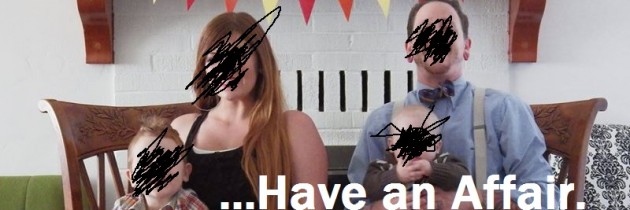
Fraud: Were There Any REAL Women On The Ashley Madison Site?


A fascinating look at the Ashley Madison situation from Peter Jones and the folks at Truth Exchange.  This little known detail is instructive about patterns of sin, the lies involved with temptation, and the guarantee of disappointment.  Of all the 39 million users of Ashley Madison, less than 3% were women, and that is using the generous estimates.   This sounds a lot like those crazy spam emails from desperate “women” around the world that are in my junk folder. The same thing just cleaned up a little, with a much higher price tag.

“Noel Biderman, the entrepreneur behind the company, claimed he was not looking for someone other than his wife. Hypocritically, while he and his wife made millions on cheaters, he claimed he was a devoted husband and father. She said she would be devastated if he were unfaithful. Not surprisingly, when the site was recently hacked, among the millions outed was Biderman himself, with emails proving he had used the site for multiple affairs with other women. The dissimulation continued, since evil has a way of multiplying its effects.

“Biderman stepped down from leadership, with the statement, “This allows us to continue to provide support to our members…We are steadfast in our commitment to our customer base.” You have to wonder what “commitment” means when the facts now show that of the 39 million “customer base,” only 12,000 of them, .03%, were real women. [Now a new claim of 87,600 women on the site is still only 2.2%]. It was all faked, meaning that virtually most of the millions of clients looking for “love” were men, with virtually no hope of actual “discreet encounters” with adulterous women.”

Source: Down the Decadent “Ashley Madison” Avenue | truthXchange

Vox: Where Philosophy Goes To Die


Crimes Against Philosophy

Trigger Warning: LOGIC

In this article (which you should read) philosophy professor Shaun Rieley takes Vox (a typically liberal publication) to task for its decision NOT publish an article by a prominent philosopher Torbjorn Tannsjo from Stockholm University.  Evidently the editors of Vox asked Tannsjo to contribute a piece for their magazine, but later decided not to publish it. What concerns Rieley, is not that Vox decided not to publish because they disagreed with the article, because they didn’t, but that they killed the piece because of the uncomfortable implications that might arrive from it.  That troublesome need for coherence…

Tannsjo argued that humans in general have a moral duty to reproduce offspring.  He arrives at this conclusion using some tight logical conclusions from utilitarian ethics.  The average person might think it is silly, but evidently his position is respected by professional philosophers and hard to evade.

All fine and good.   What is remarkable to me is that the editors at Vox don’t seem to disagree with Tannsjo, at least in general terms.  What bothers them is the idea that some conservative people might read the article and arrive at conclusions that are at odds with the editorial mission at Vox. They might use the ideas in the article to support a pro-life agenda.  It might become clear that Vox’s prochoice position is in conflict with their other values.

Rieley writes,

“In other words, it’s not so much that Tannsjo’s argument was wrong, so much as it could potentially be interpreted as giving aid to those who hold “wrong” (read: “conservative”) opinions on abortion and birth control.”

Now Vox has the right to publish whatever they like.  But what should concern everyone is that these kinds of ideological parlor tricks are happening more often.  The pattern of squashing dissent, or turning a blind eye seems to be happening more frequently in places where liberal thinkers run the show.  In my opinion, this is not intellectually honest. I have more respect anyone that acknowledges and attempts to wrestle through difficult questions  rather than toss them into the closet.

But instead we see the easy path of intellectual conformity.  We see a move to ignore or suppress facts and discussion that might disagree with the reigning wisdom.  It seems that Vox doesn’t trust people to think for themselves. They have to protect their dogma from any threats, even when those threats come from truth and reason.

Rieley continues,

“Philosophy proceeds by engaging with those various points of view, sometimes to defend what is being attacked, and sometimes to attack what is being defended. Indeed, this is how philosophy has proceeded since the time of Socrates. Without this back-and-forth, philosophy becomes all but impossible.

“Leiter laments that so few are interested in reasoning. This is true. It is much easier to retreat into the comfort of one’s own unexamined assumptions than it is to challenge them by thinking through difficult arguments that one finds disagreeable, and either assent to them, or learn to refute them.

“Nevertheless, free citizens of a republic are obligated to do the hard work of philosophical engagement. Liberty is hard work in this sense, but if liberty is to be sustained, this work is necessary. Unfortunately, by rejecting the piece, Vox has missed an opportunity to participate in the important task of facilitating this engagement.”

Source: Vox: Where Philosophy Goes To Die

How Trigger Warnings Are Hurting Mental Health on Campus – The Atlantic

This is an important article from the Atlantic on how our attempts at censorship in the name of protecting students from hurt feelings is bad for them in just about every way. It is a longer piece, but worth the time if you can make it all the way through without gouging out your own eyes in disbelief and frustration. The article is full of examples about the insanity of the reigning version of political correctness.

I think it is a significant article because it is polite, but also coming from the more liberal side of the field. The author approaches the topic from the standpoint of counseling (specifically cognitive psychology) and so is in a good position to address the concerns behind all the trigger warnings (e.g. “you are going to make people relive trauma”).

As I waded through the examples in the article,  I kept mumbling to myself in shock.  Are we trapped in a Monty Python sketch?  Yet, the big ideas resonate with me because I have seen some of this personally.  I just didn’t realize this monster was growing so quickly.

“Attempts to shield students from words, ideas, and people that might cause them emotional discomfort are bad for the students. They are bad for the workplace, which will be mired in unending litigation if student expectations of safety are carried forward. And they are bad for American democracy, which is already paralyzed by worsening partisanship. When the ideas, values, and speech of the other side are seen not just as wrong but as willfully aggressive toward innocent victims, it is hard to imagine the kind of mutual respect, negotiation, and compromise that are needed to make politics a positive-sum game.

“Rather than trying to protect students from words and ideas that they will inevitably encounter, colleges should do all they can to equip students to thrive in a world full of words and ideas that they cannot control. One of the great truths taught by Buddhism (and Stoicism, Hinduism, and many other traditions) is that you can never achieve happiness by making the world conform to your desires. But you can master your desires and habits of thought.”

Here is an editorial from the LA Times expressing the opposite perspective. After reading the Atlantic piece, it seems pretty weak.

Source: How Trigger Warnings Are Hurting Mental Health on Campus – The Atlantic

Science Headlines in the News are Frequently Wrong, & Scientists Are A Big Part Of the Problem

Bad Science Reporting

How Scientists Contribute to Bad Science Reporting – Pacific Standard.

This article from highlights the problem of errors in the way the media reports scientific discoveries.  Reporters are often a part of the problem, but a report from Cardiff University claims that official university press releases, approved by the scientists and their departments are most often the source of errors and exaggerations. Everyone loves to blame the media, but put down your pitchfork, in this case the media may not be to blame. The article reports:

“But a recent study [from the British Medical Journal] suggests that journalists aren’t the weakest link. The source of misrepresentations and exaggerations in science news stories is often much closer to the scientists themselves: press releases put out by researchers’ own institutions. Surveying hundreds of news stories and press releases about medical research, a group of scientists at Cardiff University found that most exaggerations and misrepresentations of science in print news “did not occur de novo in the media but was already present in the text of the press releases produced by academics and their establishments.” (emphasis mine)

There are likely a number of contributing factors. But the authors suggest that one source of the problem may be linked to inflated egos wearing lab coats. Scientists speak and write differently when talking to their educated peers than when they are speaking to the public.  They know that their peers will call them out when they overstate their research.  So official reports in scientific journals are subdued and highly qualified.  On the other hand, they are much more likely to exaggerate their claims when speaking to the uninformed public.

This doesn’t surprise me. I have long felt that the scientific community loves to be seen as the guardians of knowledge and progress.  This is another good reason to be suspect of sensational scientific research, especially when reported in the mainstream media.  These claims are never made apart from the temptations and motivations that corrupt politicians and marketers.