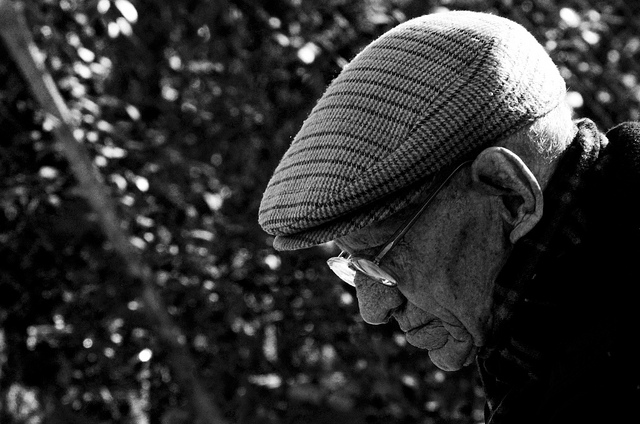
A Bright Spot At A Nursing Home

Elderly

Earlier today I went to visit my mom. She has lived in a nursing home for more than a year. She was recently admitted to the “regular” hospital for a severe infection in her legs.  The skin is red, and swollen, and hard from just below the knee. It is “cellulitis.” She has had battled this unsuccessfully for years.  The medications fight off the infection, but it always returns with fire. This time it was bad.  The doctor said if it wasn’t treated she could end up loosing her legs. At the hospital, the lab tests revealed it was a drug resistant strain- MRSA.

After several days she was able to return to the nursing home. She will be confined to an isolation room for a while. But she still has her legs, thank God.  Though they still look red and swollen.

After wiggling my large frame into the required yellow gown, and putting on the gloves, I entered her room. My dad was there visiting her, as he does every day.  He is there every day his own health allows him to come.  While I was there a couple of things occurred to me.

First, I am aware of my father’s love for her.  Today she was doing so-so. Not the best, not the worst.  But her mind wasn’t clear. Whether it was the medications or the infection, she was drifting off to sleep.  When she spoke, it made some sense, but something wasn’t right.  She reminded me of the aged Bilbo in the last Lord of the Rings movie. She would fall asleep while sitting in her wheel chair and the sudden bob of her head would startle her awake. Then she would look around embarrassed a little and laugh. We both encouraged her to lay down.  She took a long time to make this short journey. She kept getting distracted and falling back asleep. She rearranged the dishes on her tray.  She rechecked the locks on the wheel chair. She switched some of the pillows. It was frustrating because we were standing there waiting to help her and it was almost like she didn’t realize this.

And my dad was there. I made eye contact with him, both of us realizing that something wasn’t right. That her behavior was awkward. I smiled to him, trying to indicate that it was OK and there was no need for excuses or embarrassment. He smiled back. He is 78, and his own health is not great. He has battled through cancer, a heart attack, and several vascular surguries. But he is a faithful man in the real sense of that word.  And he has kept his vows to love my mother through the long years of sickness. To love her when love isn’t easy. To love her when the doctors don’t have any answers and there isn’t much hope. I was there with them today and this is what stood out to me.  His love. A bright light in a dark cave.  No doubt this is a gift of God’s grace. I am thankful for a dad like this. I want to be like him.

Second, I thought about my own future. This could be me some day. If I have the privilege of growing old, one day my body will give up. I may end up in a nursing home. What would that be like? I know my mom hates it here.  When we talk about this, I usually remind her that this is the best we can do under the circumstances. The nursing home is actually a pretty good one. But still no one wants this. But all things considered, this is where she can get the care she needs. And even with all this, she is still pretty sick. Maybe some day, this will be me. How would I feel about it?

Or maybe I will be the one visiting. Maybe my wife will be the one that is sick and stuck in a tough spot.  Today as I visited my mom, I was aware of the possible future that I would rather not consider.  But, I want to at least think about this. And I want to take it seriously. And I want to behave differently because I thought about it. I don’t want to arrive here at some point in the future and hate myself because I was too proud or too rushed to make such deliberations.

Photo Courtesy of Xavi Talleda. Some rights reserved

Absolute Goodness

Beware

“God is the only comfort, He is also the supreme terror: the thing we most need and the thing we most want to hide from. He is our only possible ally, and we have made ourselves His enemies. Some people talk as if meeting the gaze of absolute goodness would be fun. They need to think again. They are still only playing with religion. Goodness is either the great safety or the great danger—according to the way you react to it. And we have reacted the wrong way.”

CS Lewis, Mere Christianity


Photo Courtesy of James Quinn. Some rights reserved.

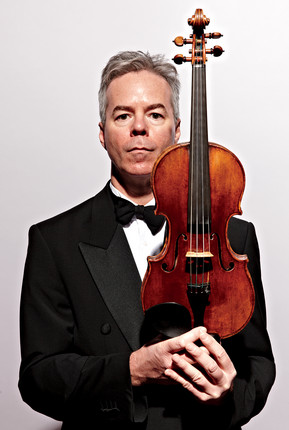
Why a Street Criminal Stole a Multi-Million-Dollar Violin | Vanity Fair

Why a Street Criminal Stole a Multi-Million-Dollar Violin | Vanity Fair.

If you like fascinating stories about true crime, here is a fun read.  It features the dumb criminal, the chatty get-away driver/wife, and a determined police chief that knows the historical significance of a Stradivarius violin. And… it’s not a long read.

The article brings up an important question, which the thieves didn’t consider: You stole it, now what?  Another is why would you want to steal this item when you can’t play it and you can’t sell it?  Even though it is worth $6 million, no one will buy it for that much.   It seems the robber has an ego, and one that exceeds his planning and skills.

Jesus and the Crowds

Crowds

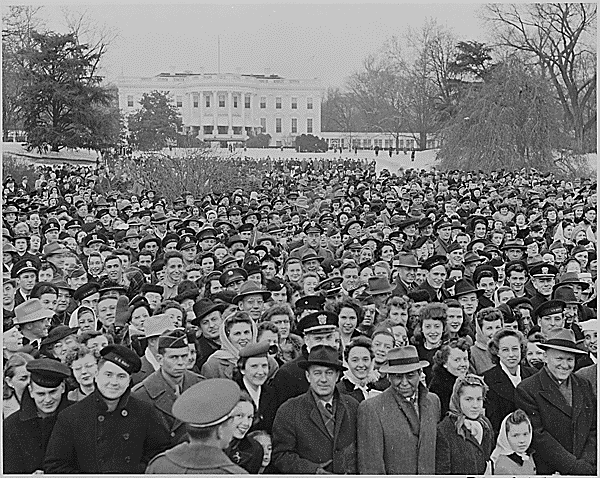
In his commentary on Luke, while discussing the parable of the sower, Darrell Bock says, “Jesus relates the parable to ‘a large crowd.’ In Luke the mention of a large crowd often means that a warning about not getting carried away about the response follows (cf. 12:1–2)”

There is a lesson here about crowds. Too often Christians view crowds according to their temperament (introvert/extrovert) or the success (or lack of success) of their church or theological tribe. “Large crowds are the sure sign of God’s blessing.” Or, “Large crowds equal compromise.”

The parable of the sower, and the rest of Jesus ministry shows us something different. We should neither worship nor despise crowds of people. He did not. We must look at them more critically. They are both opportunities for for ministry and occasions for temptation.

Bock, Darrell L. Luke. Grand Rapids, MI: Zondervan Publishing House, 1996. Print. The NIV Application Commentary.

Photo used by Permission National Archives 

Poem on Envy

Mansion

I love this poem. It is so easy to deceive ourselves. I first read it in high school and it left a deep impression. I have come back to it so many times when looking at favorite poems. And by the way, YOU MUST REVISIT FAVORITE POEMS!

Richard Cory

Whenever Richard Cory went down town,
We people on the pavement looked at him:
He was a gentleman from sole to crown,
Clean-favoured and imperially slim.

And he was always quietly arrayed,
And he was always human when he talked;
But still he fluttered pulses when he said,
“Good Morning!” and he glittered when he walked.

And he was rich, yes, richer than a king,
And admirably schooled in every grace:
In fine — we thought that he was everything
To make us wish that we were in his place.

So on we worked and waited for the light,
And went without the meat and cursed the bread,
And Richard Cory, one calm summer night,
Went home and put a bullet in his head.

Edwin Arlington Robinson

.Photo Used by permission Bruce Fingerhood. Some rights reserved

“Will I Ever Find a Man To Love Me Like That?”

Ring

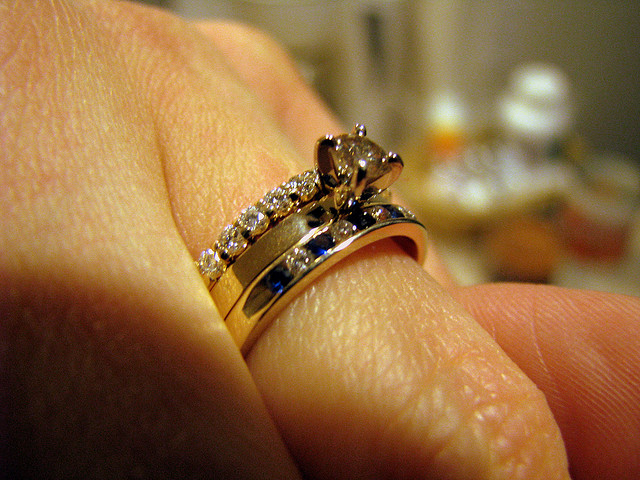
This is a very moving story about a man that loved his wife through 20 years of sickness with Alzheimer’s.  Truly,  love is more than a feeling. This episode is recounted by Ravi Zacharias in his book “Jesus Among Other Gods.”

“Dr. J. Robertson McQuilkin was formerly the president of Columbia Bible College and Seminary. He is one of the most remarkable people in our world. He is a conference speaker and author of note. But none of those credentials exceed his exemplary and heart-gripping love for his ailing wife, Muriel. She has walked down the grim and lonely world of Alzheimer’s disease for the last twenty years. Dr. McQuilkin gave up his presidency and numerous other responsibilities to care for her and to love her. He has penned his emotional journey in one of the most magnificent little books ever written. At one point in the book he recounts this incident:

“Once our flight was delayed in Atlanta, and we had to wait a couple of hours. Now that’s a challenge. Every few minutes, the same questions, the same answers about what we’re doing here, when are we going home? And every few minutes we’d take a fast paced walk down the terminal in earnest search of—what? Muriel had always been a speed walker. I had to jog to keep up with her!

“An attractive woman sat across from us, working diligently on her computer. Once, when we returned from an excursion, she said something, without looking up from her papers. Since no one spoke to me or at least mumbled in protest of our constant activity, “Pardon?” I asked.

“Oh,” she said, “I was just asking myself, ‘Will I ever find a man to love me like that?’”

McQuilkin, J. Robertson. A Promise Kept. Wheaton, IL: Tyndale House, 1998. Print. pp 18-19


Photo used by permission Mr. Thomas. Some rights reserved.

Questions for Essentialism Ch. 2

Questions for Essentialism. You Can download a pdf here: Essentialism Questions Ch. 2

Ch. 1 questions are here

Chapter 2

This is a list of discussion questions to help work through the content of the book “Essentialism” By Greg McKeown. Why discussion questions? Because interacting with the material and thinking through how the principals apply in your own circumstances is more likely to produce real learning and lasting change.

Major principals for this Chapter:

The non essentialist believes 3 false Ideas: “I have to do it… All of it is important… I can do both.”

The essentialist replaces them with 3 key truths: “I choose to… Only a few things matter, I can do anything but not everything.”

Questions to help you work through the Material:

  1. Which things are crowding you the most? Make a list of tasks/responsibilities that seem to be crowding you right now.
  1. Choose the most troublesome item from #1, and reflect on it through these questions based on those three truths:
    1. Do you feel compelled (by outside pressures) or are you making a deliberate choice that something is important?
    2. Is this item truly important for you to make the highest possible contribution? Why? Why not?
    3. Can you seriously give yourself to this task as well as other things you believe are important? If you had to confidently give something up, what would have to happen for you to realize this? If you have come to this conclusion in the past, what helped you see this?
  1. What are the areas in your life/work where you are performing at a mediocre (or worse) level because of your aptitude? How did you come to this conclusion? Why are you still doing these things?
  1. Have there been times when you were “fed up” and realized you couldn’t do it all? What events or feelings brought you to that point?  What did you do when you got there?
  1. Look in your closet or garage (or your bookshelf). What items do you see that you believe are not really important to you? Think especially of ones that you purchased.  Which of them did you feel were important when you bought them? What has changed for you to view this differently now?
  1. On p. 33 McKeown says he felt that even though he was working really hard, he was not failing, but not really succeeding either.  Which areas of your work do you feel that you are not either succeeding or failing at? How much time are you giving to these activities?
  1. If you could only do one thing with your life right now, what would it be? What are you doing right now that doesn’t fit into that?
  1. “Keep your options open” sounds like a good plan. But it can lead us to attempt too many things. Are there relationships, projects, to do lists, etc. that you are holding onto just to keep your options open? What are they?
  1. McKeown says, “Choice is not a thing, it is an action.” What actions do you need to take to move forward with determining and doing what is truly important?
  1. Where do you feel stuck because you feel you do not have a choice? Are there areas of your responsibility/work activities that you would change or abandon if you could?
  1. The author discusses the concept of learned helplessness that leads to us surrendering our prerogative to choose. Are there areas of your life and work where you believe that your work or choices don’t matter?  Are there areas where you have given up?
  1. Where is hyperactivity a sign of loss of choice in your life? Where do you believe you have to have it all or do it all?
  1. Are there areas where you have had to say “no” that feel like a loss? Are there feelings or fears of loss that are driving your decisions?
  1. Which opportunities have you passed up that you most regret? Which opportunities have you passed up that you look back on with satisfaction? Is there any difference for you?


Seeing the Beauty of Christ Through Brokeness: Book Review


Beauty Brokenness

This is a short book (I read it in one day, a little more than an hour- I guess that makes it a booklet) and for only .99 on Kindle you can’t beat it. I would recommend the book to add to your perspective on pride, humility and suffering.

It is full of some golden observations on the need for humility in the Christian life, and especially in ministry. It speaks a note that is frequently missing, and one we would rather not face.  We would all like success without the pain of failure, suffering, and self-denial. But God uses these important teaching lessons to bring us the greatest joy and greatest usefulness. I love the emphasis in this book on the importance of character and humility over the value of personal skills and gifts.  The book is full of practical stories that flesh out his ideas, and these are helpful. He is also honest about his own pride and struggles and reveals how the Lord has humbled him. That is a rare trait as a leader. It makes me want to meet him!

I am a little at a loss about the title. The book isn’t really about the beauty of Christ. It is more like the value of brokenness as a prerequisite to usefulness in ministry. At least that was my perception.  I think this is important, because one of the most valuable things that happens in suffering is that the Lord is stripping away all of our false trusts in order to show us why Jesus Christ is better than those trusts.  There are hints of this in the book, but not as much about the beauty of Christ as I expected. It is possible to be stripped down and not be strengthened in Christ, and that is not at all a valuable thing. I am pretty sure the author would agree with me on this.

At a number of points he makes some statements that I disagree with, and those may reflect his theological perspective. I am not sure what his background is, so I can’t comment. But his emphasis on free will and talk about what God “cannot” do made me pause at several points. Also, the way he suggests that Jesus needed to be broken seems strange to me,  Jesus submitted to the cross because of our sin not because of any lack in himself.  His death is an example and a patter for us, but our need to be broken is because of our sin and self sufficiency.  His need to be broken was because we aren’t what we ought to be.

There is also an emphasis on our need to choose to be broken that seems to leave out an the miraculous movement of God to change the heart through the Holy Spirit apart from our permission.  Or perhaps I should say, that we come to the point of giving our permission because his grace has changed us, and only because of that miracle.  Of course he uses suffering as one of his tools, but he also uses the Holy Spirit blessing the word of God. There are many people that suffer and are still never broken. Others suffer and become humble and teachable. The difference is more than the will of man, it is the miraculous grace of God. Otherwise I could say that I am humble because of my choice and he is proud because he failed to make the choice that I made.

In spite of my reservations theologically, the book still has a lot of value. Thank you to the author  for writing and sharing your experience.

Seth’s Blog: Fear of Public Speaking

bored dog

Seth’s Blog: Fear of public speaking.

Want to get over your fear of public speaking? Seth Godin recommends you start small and consider giving your speech to your dog (or some dogs) for starters.  Brilliant!

His blog posts and books are consistently challenging to me, even though I don’t always agree.  One of the best things is that he doesn’t ramble. His blog posts are often short and direct.


Photo Used by Permission Joshme17. Some rights reserved

THOSE Neanderthals Have An Ideology. I’m Glad I Don’t

pointing

It seems obvious when “extremists” kill or coerce in the name of their ideology. It looks crazy to us because we believe differently. But to the extremist, their ideology is reality.  Their view of the world is not a belief system. They see the world as it is.  One of the reasons they are dangerous is that they are blind to the fact that they even have an ideology.

And this isn’t just the obvious extremists (like say radical Islam), this is the U.S.A. too, right? Don’t we have an ideology that we push? And I don’t just mean conservatives.

It is easy to dismiss the idea of “belief” and “ideology” as dangerous.

John Mayer’s song “Belief” sings this. Belief is what makes for irrational wars. Belief is what puts 100,000 children in the sand. Belief is what kills, and we can never win if “belief is what we’re fighting for.” I actually like the song a lot. But not the message. It’s hypocritical. It’s blind. “Those people have an ideology. Glad I don’t.”

It’s dangerous (and arrogant) when you don’t see your own ideology.  But everyone has a philosophy, a belief, a value system that we use to interpret the world. And it is dangerous when we accuse “them” of living for their beliefs, but are blind to our own.

The real struggle is not between those with beliefs and those without them.  The struggle in our world is a conflict of ideas.

The real struggle is not between those with beliefs and those without them.  The struggle in our world is a conflict of ideas. Of truth, of facts, of reason, of coherency, of wisdom.  And as long as we acknowledge this, there is room for discussion. But when we refuse to acknowledge our own assumptions (“ideology”) we write “them” off for their beliefs. THEY are wrong by definition because they are following an ideology. Not me. I just see the facts. At this point civil dialogue is no longer possible.   Isn’t it ironic that the one who laughs at all the blind men groping around the elephant doesn’t question his own eyesight.

One of the marks of an extremist (or bully, or fool) in the making is that they don’t see or acknowledge that their view of the world is an ideology.  If you try to reason with them, they will dismiss what YOU say. They might attack YOU with words (or worse) for being a blind zealot.

People that acknowledge their own world view,  are in a position to appreciate it and reason with others.

Photo by a2gemma, used by permission. Some rights reserved.