Your Anxiety Is Ruining Your Furniture

old chair

A fascinating anecdote from Mark Buchanan about stress and anxiety:

“Anxiety and stress are our number one killers. I heard recently a story about Meyer Friedman, the psychologist who devised the Type A/ Type B personality profiles— where Type B is placid and limber, taking life as it comes, and Type A is two-fisted and bristling, taking life by the horns. Friedman’s initial insight that led to his personality theory came after a discussion with a chair upholsterer. The upholsterer said that most of his business came from replacing the upholstery on the chairs in cardiologists’ offices, the chairs wore first, and quickly, on the front edge. Apparently, heart patients are so impatient that, even while listening to their doctor’s life-threatening diagnosis or lifesaving prescription, they sit taut and restless, poised to flee, chafing at the delay. At the edge of their seats. The very reason their hearts are sick is written in that threadbare upholstery.”

Buchanan, Mark (2007-03-11). The Rest of God: Restoring Your Soul by Restoring Sabbath (pp. 109-110). Thomas Nelson. Kindle Edition.

Absolute Goodness

Beware

“God is the only comfort, He is also the supreme terror: the thing we most need and the thing we most want to hide from. He is our only possible ally, and we have made ourselves His enemies. Some people talk as if meeting the gaze of absolute goodness would be fun. They need to think again. They are still only playing with religion. Goodness is either the great safety or the great danger—according to the way you react to it. And we have reacted the wrong way.”

CS Lewis, Mere Christianity


Photo Courtesy of James Quinn. Some rights reserved.

The Owl or the Egg

‘You remember the old puzzle as to whether the owl came from the egg or the egg from the owl. The modern acquiescence in universal evolutionism is a kind of optical illusion, produced by attending exclusively to the owl’s emergence from the egg. We are taught from childhood to notice how the perfect oak grows from the acorn and to forget that the acorn itself was dropped by a perfect oak. We are reminded constantly that the adult human being was an embryo, never that the life of the embryo came from two adult human beings. We love to notice that the express engine of today is the descendant of the “Rocket”; we do not equally remember that the “Rocket” springs not from some even more rudimentary engine, but from something much more perfect and complicated than itself—namely, a man of genius. The obviousness or naturalness which most people seem to find in the idea of emergent evolution thus seems to be a pure hallucination.’

CS Lewis—from “Is Theology Poetry?” (The Weight of Glory)


How Much Should We Give? CS Lewis’ Answer

“I do not believe one can settle how much we ought to give. I am afraid the only safe rule is to give more than we can spare. In other words, if our expenditure on comforts, luxuries, amusements, etc., is up to the standard common among those with the same income as our own, we are probably giving away too little. If our charities do not at all pinch or hamper us, I should say they are too small. There ought to be things we should like to do and cannot do because our charities expenditure excludes them. I am speaking now of ‘charities’ in the common way. Particular cases of distress among your own relatives, friends, neighbours or employees, which God, as it were, forces upon your notice, may demand much more: even to the crippling and endangering of your own position. For many of us the great obstacle to charity lies not in our luxurious living or desire for more money, but in our fear—fear of insecurity. This must often be recognised as a temptation. Sometimes our pride also hinders our charity; we are tempted to spend more than we ought on the showy forms of generosity (tipping, hospitality) and less than we ought on those who really need our help.”

From Mere Christianity

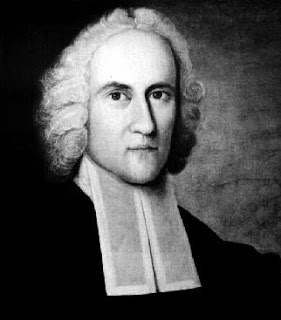
Jonathan Edwards on the Poor


Of the obligation of Christians to perform the duty of charity to the poor.

“THIS duty is absolutely commanded, and much insisted on, in the Word of God. Where have we any command in the Bible laid down in stronger terms, and in a more peremptory urgent manner, than the command of giving to the poor? We have the same law in a positive manner laid down in Lev. 25:35, etc. “And if thy brother be waxen poor, and fallen in decay with thee, then thou shalt relieve him; yea, though he be a stranger or a sojourner, that he may live with thee.” And at the conclusion of verse 38, God enforces it with saying, I am the Lord thy God.

“It is mentioned in Scripture, not only as a duty, but a great duty. Indeed it is generally acknowledged to be a duty, to be kind to the needy. But by many it seems not to be looked upon as a duty of great importance. However, it is mentioned in Scripture as one of the greater and more essential duties of religion. Mic. 6:8, “He hath showed thee, O man, what is good; and what doth the Lord thy God require of thee, but to do justly, to love mercy, and to walk humbly with thy God?” Here to love mercy is mentioned as one of the three great things that are the sum of all religion. So it is mentioned by the apostle James, as one of the two things wherein pure and undefiled religion consists. Jam. 1:27, “Pure religion, and undefiled, before God and the Father, is this, To visit the fatherless and widows in their affliction, and to keep himself unspotted from the world.”

“So Christ tells us, it is one of the weightier matters of the law. Mat. 23:23, “Ye have omitted the weightier matters of the law, judgment, mercy, and faith.” The Scriptures again and again teach us that it is a more weighty and essential thing than the attendance on the outward ordinances of worship. Hos. 6:6, “I desired mercy, and not sacrifice;” Mat. 9:13 and 12:7. I know of scarce any duty which is so much insisted on, so pressed and urged upon us, both in the Old Testament and New, as this duty of charity to the poor.”

Jonathan Edwards From The Duty of Charity to the Poor, Explained and Enforced

The Ministry of Listening


The Ministry of Listening


“The first service that one owes to others in the fellowship consists in listening to them. Just as love to God begins with listening to His Word, so the beginning of love for the brethren is learning to listen to them. It is God’s love for us that He not only gives us His Word but also lends us His ear. So it is His work that we do for our brother when we learn to listen to him. Christians, especially ministers, so often think they must always contribute something when they are in the company of others, that this is the one service they have to render. They forget that listening can be a greater service than speaking. Many people are looking for an ear that will listen. They do not find it among Christians, because these Christians are talking where they should be listening. But he who can no longer listen to his brother will soon be no longer listening to God either; he will be doing nothing but prattle in the presence of God too. This is the beginning of the death of the spiritual life, and in the end there is nothing left but spiritual chatter and clerical condescension arrayed in pious words. One who cannot listen long and patiently will presently be talking beside the point and be never really speaking to others, albeit he be not conscious of it. Anyone who thinks his time is too valuable to spend keeping quiet will eventually have no time for God and his brother, but only for himself and for his own follies.”

“Life Together” – Dietrich Bonhoeffer

Dealing With The Accuser

“Satan accuses Christians day and night. It is not just that he will work on our conscience to make us feel as dirty, guilty, defeated, destroyed, weak, and ugly as he possibly can; it is something worse: his entire play in the past is to accuse us before God day and night, bringing charges against us that we know we can never answer before the majesty of God’s holiness.

What can we say in response? Will our defense be, ‘Oh, I’m not that bad?’ You will never beat Satan that way. Never. What you must say is, ‘Satan, I’m even worse than you think, but God loves me anyway. He has accepted me because of the blood of the Lamb.”

—D.A. Carson, Scandalous: The Cross and Resurrection of Jesus(Wheaton, IL: Crossway, 2010), 98-99

Some Important Quotes from Calvin and Hobbes

Calvin: In my opinion, we don’t devote nearly enough scientific research to finding a cure for jerks.

Attack of the Deranged Mutant Killer Monster Snow Goons p58
Calvin: I used to hate writing assignments, but now I enjoy them. I realized that the purpose of writing is to inflate weak ideas, obscure poor reasoning, and inhibit clarity. With a little practice, writing can be an intimidating and impenetrable fog! Want to see my book report?
Hobbes: (Reading Calvin’s paper) “The Dynamics of Interbeing and Monological Imperatives in Dick and Jane: A Study in Psychic Transrelational Gender modes.”
Calvin: Academia, here I come!

Homicidal Psycho Jungle Cat p62


Calvin (writing, after being asked to explain Newton’s First Law of Motion “in his own words”): Yakka foob mog. Grug pubbawup zink wattoom gazork. Chumble spuzz. (speaking) I love loopholes.

There’s Treasure Everywhere p133


Calvin: History is the fiction we invent to persuade ourselves that events are knowable and that life has order and direction. That’s why events are always reinterpreted when values change. We need new versions of history to allow for our current prejudices.

Homicidal Psycho Jungle Cat p152
Calvin: I think life should be more like TV. I think all of life’s problems ought to be solved in 30 minutes with simple homilies, don’t you? I think weight and oral hygiene ought to be our biggest concerns. I think we should all have powerful, high-paying jobs, and everyone should drive fancy sports cars. All our desires should be instantly gratified. Women should always wear tight clothing, and men should carry powerful handguns. Life overall should be more glamorous, thrill-packed, and filled with applause, don’t you think?… Then again, if real life was like that, what would we watch on television?

The Indispensable Calvin and Hobbes p94


Calvin: I used to hate writing assignments, but now I enjoy them. I realized that the purpose of writing is to inflate weak ideas, obscure poor reasoning, and inhibit clarity. With a little practice, writing can be an intimidating and impenetrable fog! Want to see my book report?
Hobbes: (Reading Calvin’s paper) “The Dynamics of Interbeing and Monological Imperatives in Dick and Jane: A Study in Psychic Transrelational Gender modes.”
Calvin: Academia, here I come!

Homicidal Psycho Jungle Cat p62


Calvin: The problem with people is that they don’t look at the big picture. Eventually, we’re each going to die, our species will go extinct, the sun will explode, and the universe will collapse. Existence isn’t only temporary, it’s pointless! We’re all doomed, and worse, nothing matters!

Homicidal Psycho Jungle Cat p125
For an enjoyable print interview with the reclusive Bill Watterson visit this site.

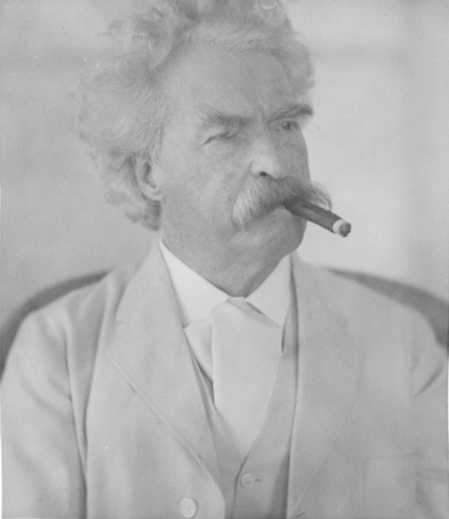
Mark Twain Quotes

I recently came across a little book full of little quips from Mark Twain. He was a wisecracker for sure, and definitely makes me chuckle. His observations about human nature often have an uncanny accuracy for someone who was not exactly friendly to Christianity. Enjoy!


“There are 3 kinds of lies: lies, damned lies, and statistics.”

“Get your facts first, then distort them as much as you please.”

“The man with a new idea is a crank until he succeeds.”

“If you pick up a starving dog and make him prosperous, he will not bite you . This is the principle difference between a dog and a man.”

“Man is the only animal that blushes, or needs to.”

“Familiarity breeds contempt. And children.”

“Soap and education are not as sudden as a massacre, but they are more deadly in the long run.”

“Few of us can stand prosperity. Another man’s, I mean”

“Clothes make the man. Naked people have little or no influence in society.”

“Good breeding consists in concealing how much we think of ourselves and how little we think of the other person.”