Here is a great (and brief) article on the importance of failure in developing character, growing businesses, and helping people have a good life. It turns out that trying to spare people (ourselves, our children, our employees, etc) from experiencing the pain of failure is bad in the long run. Why? We can’t gain deep wisdom without the process of learning from our failures. This is a list from the article at Forbes.com of ways to help people fail in a way that is positive for them and the organization.
“Here are some ways to increase employees’ comfort with the risk of failure, and to be resilient when it happens:
Share past stories of struggle. Everyone’s been there.
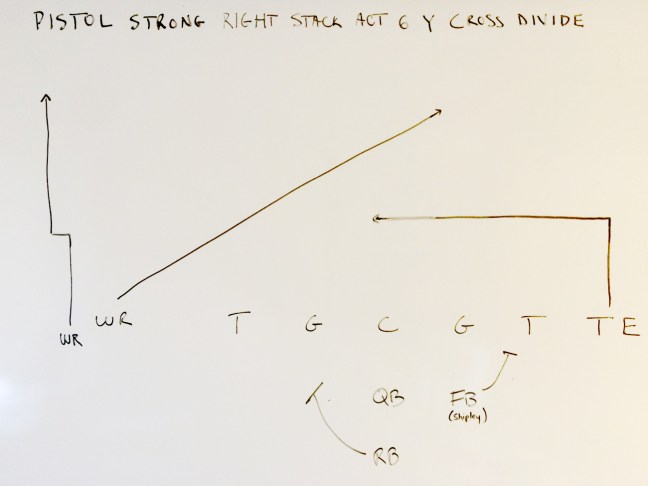
Practice recovery so people aren’t paralyzed by failure. When I was coaching sports, we didn’t just diagram plays. We always developed a Plan B. That’s why great organizations scenario-plan. It helps people think of struggle as part of the process.
Help people around you think like long-term investors in their own ideas and their own careers. The aim shouldn’t be to try to have one uninterrupted string of successes, but rather to have a portfolio of some winners and, yes, some losers.
If someone is struggling, your job is to figure out how to get them on the right path. The real job of a manager is to help people learn from failure and move forward.
Champion failure that turns to innovation. Find examples where ordinary failure has led to extraordinary opportunity.
Encourage failing fast. Sometimes we recognize that something is failing, and our instinct tells us to push harder to make it succeed. Knowing when to pull the plug is always difficult but is necessary.”
I have read several articles by John Gray and enjoy his writing and insight. I know when an author is connecting with something important to me because I talk out loud while I am reading it. I mumbled pretty much the whole time I was reading this one. I had to stop and reread several paragraphs for effect, and kept interrupting my wife to read several of his more powerful points to her. Yes, I am a nerd. This essay put into words a number of things I have been thinking.
Gray is not a believer, and so he has a very different outlook than I do (as a Christian), yet his awareness of the history of philosophy allows him to see the naked spots in the emperors wardrobe. He is disenchanted by the vocal tribe of evangelistic atheists that seem to be known for their pulpit-pounding-religion-hating self righteousness. (Dawkins, Harris, etc.) And he takes them to task, not because of their unbelief but because of their inconsistencies in applying what they believe. He is willing to explore the assumptions beneath their beliefs, and finds them to be often unreasonable.
In this essay, Gray very briefly chronicles the racist behavior of 19th and 20th century evolutionary atheists. Then he freely acknowledges that while modern atheists disavow these beliefs, they have repeated some of the same intellectual mistakes as their forbears. They have failed to acknowledge the difference between facts and values. And this is a dialogue-ender if you happen to disagree with them because you will be talking about your values while they dismiss you as unscientific. They believe that their values are scientific, and therefore as unassailable as discussing gravity. And sadly, too often this leads them to view their opponents with patronizing contempt.
By the way, this was the same problem with the communism of Russian and China. Marx’s writings insisted that his view of economics was “scientific.”
I paused to read several parts of this essay more than once, not only to understand his observations, but also to enjoy them. I disagree with his view of the world, but enjoy his intellectual honesty and clear view of the logical problems in the foundation of the new atheism.
“It has often been observed that Christianity follows changing moral fashions, all the while believing that it stands apart from the world. The same might be said, with more justice, of the prevalent version of atheism. If an earlier generation of unbelievers shared the racial prejudices of their time and elevated them to the status of scientific truths, evangelical atheists do the same with the liberal values to which western societies subscribe today – while looking with contempt upon “backward” cultures that have not abandoned religion. The racial theories promoted by atheists in the past have been consigned to the memory hole – and today’s most influential atheists would no more endorse racist biology than they would be seen following the guidance of an astrologer. But they have not renounced the conviction that human values must be based in science; now it is liberal values which receive that accolade. There are disputes, sometimes bitter, over how to define and interpret those values, but their supremacy is hardly ever questioned. For 21st century atheist missionaries, being liberal and scientific in outlook are one and the same.”
“For 21st Century atheist missionaries, being liberal and scientific in outlook are one and the same.”
Some other big ideas from this essay:
Atheism is not monolithic, and most of the values (and fact claims) advocated by modern skeptics are not self evident, and are not agreed on by everyone in their camp. This alone should challenge their confusion of facts and values. I have some atheist friends that like to point out how hard it is to find Christians to agree on any matter of doctrine. Well, evidently they live in the same world.
Many of the new atheists are ignorant of the nature of their own beliefs. They take their own view of the world for granted and are unwilling to subject it to the same intellectual scrutiny that they demand from others.
New Atheists have largely ignored the writings of Nietzsche. Why? Gray writes, “The reason Nietzsche has been excluded from the mainstream of contemporary atheist thinking is that he exposed the problem atheism has with morality. It’s not that atheists can’t be moral – the subject of so many mawkish debates. The question is which morality an atheist should serve.” Which is to say that Scientific atheism does NOT lead to a self evident view of the moral world. It cannot answer the most basic questions about how we should live without departing from its limiting scientific commitments. Further, many of the tenets of humanism advocated by atheists actually derive from Judeo-Christian religious tradition.
The hostility to religion that has been on display from the evangelistic atheists doesn’t make any rational sense. After mentioning several influential atheists from the past that were NOT hostile to religion, Gray writes, “Above all, these unevangelical atheists accepted that religion is definitively human. Though not all human beings may attach great importance to them, every society contains practices that are recognisably religious. Why should religion be universal in this way? For atheist missionaries this is a decidedly awkward question. Invariably they claim to be followers of Darwin. Yet they never ask what evolutionary function this species-wide phenomenon serves. There is an irresolvable contradiction between viewing religion naturalistically – as a human adaptation to living in the world – and condemning it as a tissue of error and illusion. What if the upshot of scientific inquiry is that a need for illusion is built into in the human mind? If religions are natural for humans and give value to their lives, why spend your life trying to persuade others to give them up?”
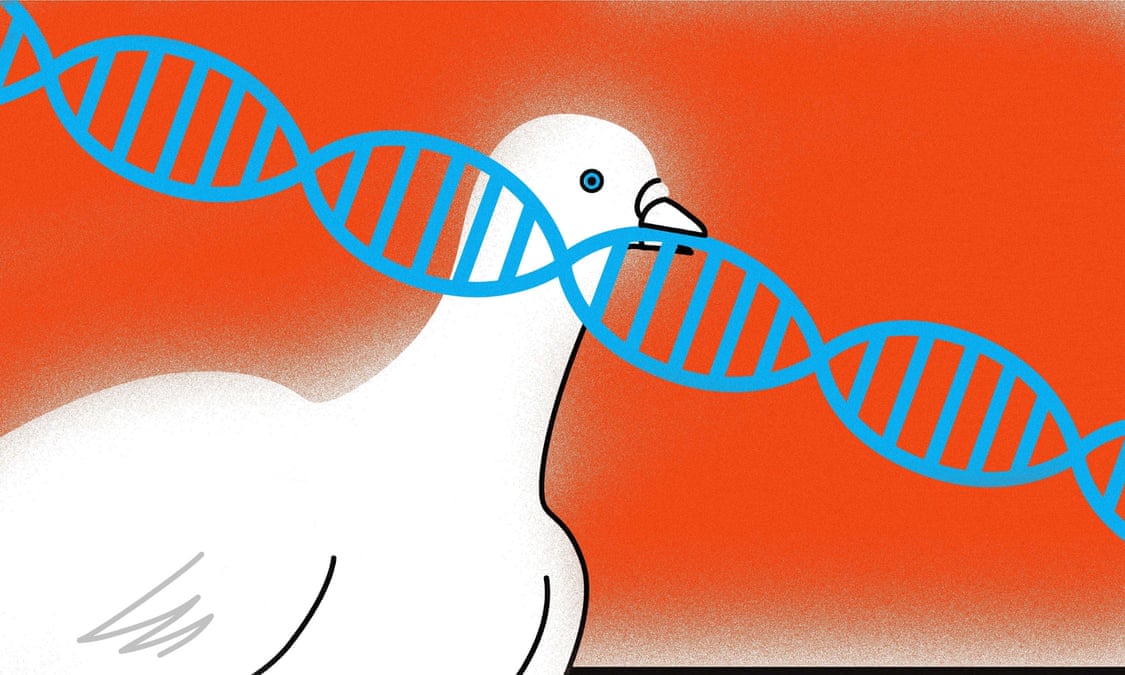
I disagree with Gray on much of this, but his point is a good one. If atheism and evolution is true, then it follows that religion is a survival adaptation. If that is true, why so much angst over gene expression?
So what is really involved each week for an NFL quarterback to learn the game plan and prepare for the big game? A LOT MORE than you probably think. And NFL football is much more complicated than the average person can imagine.
Looking at this is not only fascinating, it is instructive on how dedicated these athletes and coaches are to the mental side of their jobs.
Peter King at the MMQB has this write up walking through a week with Carson Palmer, quarterback for the Arizona Cardinals. It is a fascinating looking into a very high level of focus, effort, and dedication. And it shows how some new technologies are affecting their preparation. Very cool. I have really enjoyed Peter King’s work in covering the NFL. Last year I felt like his series on NFL Referees was one of the most interesting and informative things I read on sports all year.
Madison Holleran posted a photo of Rittenhouse Square in Philadelphia to Instagram (right) an hour before jumping to her death.One of the deepest diseases of human nature is lying. And I am talking about something far more subtle and destructive than bearing false witness to a teacher or police officer in order to get out of trouble. One of the darkest elements of broken humanity is to lie about who we are. To create a false identity and then try to maintain it. The need to hide our pain and sin behind a mask of smiles and virtue.
The word hypocrite comes from the Greek word for a person that wears a mask. It originates with the Greek theater, where actors wore masks to disguise not only their identity but even the sound of their voices. A hypocrite is a kind of actor that pretends to be someone they are not. Traditionally this concept has been reserved for people pretending to be moral, for example religious people, public leaders, or politicians. But the concept is broader than preaching abstinence while practicing indulgence. It includes those of us who stay in character once we have left the stage. The hypocrite is essentially an imposter. We are disgusted to find out that people we respect because of their public persona are actually using their image to cover up a life of corruption and debauchery.
Well, it appears that what was once reserved for politicians and the religious is now a growing temptation for the masses. Perhaps it was there all along. But social media has provided a window into the ubiquity of human deceit. This article in the New York Post discusses growing darkness that lies beneath the surface in social media. The author cites some extreme examples, but anyone with a Facebook account understands this. We are subject to two related temptations: To lie about our own life while believing and comparing ourselves to the lies that our friends are telling. This is no joke.
Maureen Callahan, the author of the article in the NY Post cites an example of Zilla van den Born. “Last year, she uploaded a monthlong series of photos taken on her travels in Southeast Asia — scuba diving, praying in a Buddhist temple, sampling local cuisine — then revealed those images were all the work of Photoshop. She had hidden in her apartment the entire time, duping even friends and family.”
Wow, how bad does life have to be to want to do this? For those of us old enough to remember the ancient world of 10 years ago, all of this is pretty frightening.
Technology is the great magnifier. It has the potential to draw out and magnify the dark side of human nature. And can do this by several magnitudes, all while maintaining the filtered image of a smile.
Here are a few important parts of the article. The whole thing is worth reading and very important.:
‘Mai-Ly Nguyen Steers, a post-doctoral fellow at the University of Houston, has spearheaded a similar study [concerning social media].“The idea came to me when my little sister, who was 16, wasn’t invited to a school dance,” Steers, 38, tells The Post. “She told me about logging on to Facebook the very next day and seeing all these pictures of her friends at the dance, and that actually made her feel worse than not being invited.”
“Seeing Everyone Else’s Highlight Reels: How Facebook Usage is Linked to Depressive Symptoms” was co-authored with two other social psychologists and published in the Journal of Clinical Psychology last year. Steers cited the work of social psychologist Leon Festinger, who, in 1954, came up with “social comparison theory,” the idea that we measure ourselves in relation to others’ failures and successes.’
Again Callahan writes,
‘Then there are those who aggressively seek out admiration and envy. Google “GoPro proposal” and you’ll get 428,000 hits — people who planned and recorded the moment they got engaged, then uploaded it for global consumption. Some couples live-stream it. Others stage-manage the “set,” then hire professional photographers to capture the moment.
“The engagement thing is so creepy,” says Chelsea Fagan, 26, whose website, The Financial Diet, covers the impact of social media on young women. “There’s this weird arms race now where everything has to be a moment, no matter how private. We always get a lot of responses with weddings and engagements — women spend a lot of money to look ‘Pinterest perfect.’ ”
It’s not just weddings or special events, though. Social-media users spend exorbitant amounts to look like their daily, everyday lives are spent eating the finest food, wearing the most on-trend designs, living a stylish, well-appointed life — no problems.’ (emphasis added)
This is an amazing account from Mark Buchanan. It is a strange story that illustrates how we are often prisoners to our own appetites.
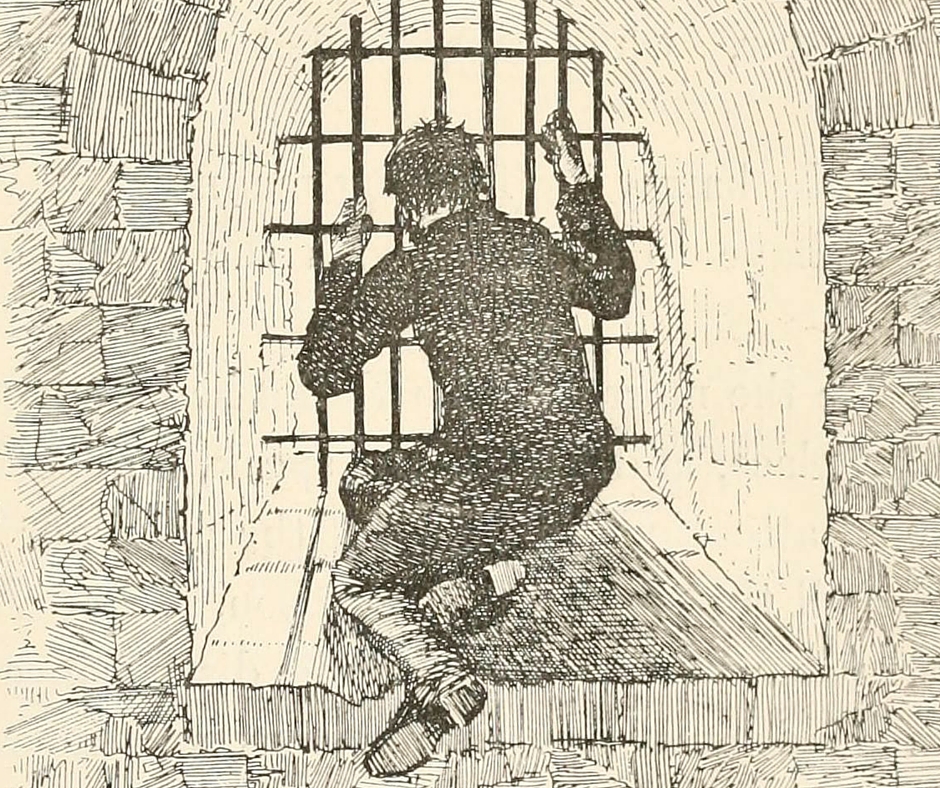
“Thomas Costain, in his book The Three Edwards, relates a historical episode from the fourteenth century. Two brothers, Raynald and Edward, fought bitterly. Edward mounted war against Raynald, captured him alive, and imprisoned him in Nieuwkerk Castle.
“But it was no ordinary prison cell. The room was reasonably comfortable. And there was no lock on the door—not a bolt, not a padlock, not a crossbeam. Raynald was free to come or go at will. In fact, it was better than that: Edward promised Raynald full restoration of all rights and titles on a single condition: that he walk out of that room.
“Only Raynald couldn’t. The door was slightly narrower than a typical door. And Raynald was enormously fat. He was swaddled in it. He could not, with all his squeezing and heaving, get himself outside his cell. He might more easily have passed a camel through a needle.
“So in order to walk free and reclaim all he’d lost, he had only to do one thing: lose weight. That would have come easily to most prisoners, with their rations of bread and water.
“It did not come easy to Raynald. Edward had disguised a great cruelty as an act of generosity. Every day, Edward had Raynald served with the richest, sauciest foods, savory and sweet, and ample ale and wine to boot. Raynald ate and ate and grew larger and larger. He spent ten years trapped in an unlocked cell, freed only after Edward’s death. His health was so ruined, he died soon himself.”
Buchanan’s book “The Rest Of God” is delightful and full of great content and excellent writing. It explores something that is oddly missing from many discussions of the Sabbath, the issue of rest.
Buchanan, Mark (2007-03-11). The Rest of God: Restoring Your Soul by Restoring Sabbath (pp. 165-166). Thomas Nelson. Kindle Edition.
Here is a fascinating article on an unexpected subject: Men crying in public. Sandra Newman writes about the literary and cultural history of masculine weeping. She makes a good case that our current western practice of restraint is not the norm throughout history. The Greeks, the Bible, Christian history, English literature, and even Japanese literature is full of mass, public, unrestrained, and unapologetic weeping by manly men.
Based on research men today cry far less in public than women do. And the author tries to challenge the idea that this is a result of genetic differences. She does this based on her journey through history and literature. But I am not convinced. Even if men in other cultures and eras cried more than they do now, that doesn’t necessarily mean that public crying is biologically a gender neutral affair. She has made a good case that modern men do not cry as often as the men of other cultures. But that is not the same as saying men and women are identical. In fact, if anything is a cultural anomaly it is our attempt to prove biological equality between the sexes.
She suggests that the change in our view of crying can be tied to 2 things: First, we moved from an agrictultural economy into the industrial revolution. Second, we moved from living in small villages with close relationships to big cities where we lived with strangers. In I opinion, these ideas have merit.
Also interesting is the idea that crying serves an important social purpose. When we cry, especially in public, it is good for us as a release and it is a call for help to those around us. If this is true, then failing to cry would not be good for us.
The Bible does say, “Those who sow in tears will reap in joyful shouting.” Psalm 126:5
She writes,
“However, human beings weren’t designed to swallow their emotions, and there’s reason to believe that suppressing tears can be hazardous to your wellbeing. Research in the 1980s by Margaret Crepeau, then Professor of Nursing at Marquette University in Milwaukee, found a relationship between a person’s rate of stress-related illnesses and inadequate crying. Weeping is also, somewhat counter-intuitively, correlated with happiness. Vingerhoets, a professor of psychology at Tilburg University in the Netherlands, has found that in countries where people cry the most, they also report the highest levels of satisfaction. Finally, crying is an important tool for understanding one’s own feelings. A 2012 study of patients with Sjögren’s syndrome – whose sufferers are incapable of producing tears – found they had significantly more difficulty identifying their emotions than a control group.
“You might also suffer if you simply hide your tears from others, as men are now expected to do. As we’ve seen, crying can be social behaviour, designed to elicit care from people around you. While this might be inappropriate in the context of a performance review, it could be an essential way of alerting friends and family – and even colleagues – that you need support. Taboos against male expressiveness mean that men are far less likely than women to get help when they’re suffering from depression. This, in turn, is correlated with higher suicide rates; men are three to four times as likely to commit suicide as women. Male depression is also more likely to express itself in alcoholism and drug addiction, which have their own high death toll. Think of stoical Scandinavia, whose nations rank high for productivity – but also lead the world in rates of alcoholism and suicide.”
Salon recently published an article titled, “I’m a pedophile, but not a monster” by Todd Nickerson. The article is disturbing to me on various levels. It suggests that we are defined by our desires, indeed that we need to surrender and accept an identity formed by our appetites. It ignores the reality that some desires are evil, even if they are built-in. Further, it also avoids discussion of whether our desires can be changed. And it pretends that it is possible (and healthy- the word they used is “virtuous”) to avoid having sexual contact with children yet maintain an active fantasy life regarding them. But, considering that we have busted the dam of almost all sexual restraint in the last 40 years, I am not surprised to read it.
Breitbart ran an article challenging Salon, and suggesting that its soft stance on pedohiles is part of a larger, and growing problem from the political left. I have to wonder, Is this really a trend? Or is this an example of a few loons in a larger group. I am not sure, because I have a number of liberal friends that I know would oppose this. But reading the Salon article and not hearing a torrent of outrage from the left does make me wonder. Here is one article, (that comes from a left leaning author) that not only expresses concern over the article, but suggests that the folks on the left have a double standard on this issue. They are merciless when prominent conservatives are revealed as pedophiles, but supportive or silent when the same thing happens with their own team.
Milo Yiannopoulos writes in Breitbart:
“Pedophilia itself is of course not confined to one side of the political spectrum. But defending it does seem to be. Pro-pedophile activism continues to surface on the Left in a way that it simply doesn’t on the Right. Salonis one of the worst offenders: the left-wing website runs sympathetic features on pedophilia with alarming regularity…” (emphasis added)
And again,
“Horrifyingly, there are signs of a new pedophile acceptance movement forming on the Left. Just as Allen West warned, the gay rights movement is being used as a template. First comes the argument that pedophiles are just “born that way,” absolving them of any moral responsibility for their desires. Then comes the argument that pedophiles are just normal people, like the rest of us, but somehow impoverished or victimised by their own condition.
“Inevitably, our society’s current ostracisation of pedophiles will be portrayed as an injustice: an oppression from which pedophiles must be liberated, or for which they deserve our sympathy. And woe to the oppressors! Quietly, in progressive columns and academies around the world, progressives are losing their footing and sliding down that slippery slope. Publications like Salon are abetting the turpitude.” (see the original article for important links)
Is this assessment true? I am not sure, but the reporting does connect the dots on several hunches for me. Without a doubt this is the trajectory of a society that insists that morality is culturally relative, and views any rules limiting sexual expression as the source of our problems.
This is a really cool article that explains some of the ways that amateur internet detectives (as well as pro’s and, yes, you can use them too) can easily determine if elements of a viral story (such as photos and vidoes) are genuine. These tools can be used for much more than defeating a hoax. And there are some tools here that I will definitely use in the future.
“…News in the digital age spreads faster than ever, and so do lies and hoaxes. Just like retractions and corrections in newspapers, online rebuttals often make rather less of a splash than the original misinformation. As I have argued elsewhere, digital verification skills are essential for today’s journalists, and academic institutions are starting to provide the necessary training.”
Most fascinating to me? The reverse image search, Youtube Data Viewer, and Fotoforensics. Check out the site for links.
Also, note this one:
Jeffrey’s Exif Viewer
“Photos, videos and audio taken with digital cameras and smartphones contain Exchangeable Image File (EXIF) information: this is vital metadata about the make of the camera used, and the date, time and location the media was created. This information can be very useful if you’re suspicious of the creator’s account of the content’s origins. In such situations, EXIF readers such as Jeffrey’s Exif Viewer allow you upload or enter the URL of an image and view its metadata.”
Whenever cars hit pedestrians, it is bad news. In California where I live, there is a problem with people fleeing the scene of an accident to avoid prosecution (sometimes because they have been drinking). That is frustrating.
But in China, a different layer of evil has grown up around this situation. When a driver hits a pedestrian on the road, evidently many of them deliberately hit the person a second time to make sure they do not survive. The thinking seems to be, it is better for the driver if the person is dead than if they are only injured. A handful of these incidents have even been caught on video.
Why does this happen? Drivers do this because of several perverse laws in that country. First, it is considerably cheaper to face a lawsuit for killing someone than for simply injuring them. Simply maiming someone is expensive. Second, it is very unlikely that you will be convicted for murder if you do this. What a tragedy.
Those with cars in China are often the rich, and this is an example of the laws protecting the money of the powerful above the lives of the rest. Whether or not these laws were intended to do this is a separate question. This is the effect. And given China’s track record on protecting the common person, it is not surprising.
This whole story is stranger than fiction and sounds like some kind of B-rated dystopian novel.
“Double-hit cases” have been around for decades. I first heard of the “hit-to-kill” phenomenon in Taiwan in the mid-1990s when I was working there as an English teacher. A fellow teacher would drive us to classes. After one near-miss of a motorcyclist, he said, “If I hit someone, I’ll hit him again and make sure he’s dead.” Enjoying my shock, he explained that in Taiwan, if you cripple a man, you pay for the injured person’s care for a lifetime. But if you kill the person, you “only have to pay once, like a burial fee.” He insisted he was serious—and that this was common.”
Several politicians have said that we should never let a good tragedy go to waste. Sadly it is common for groups on all sides of the political spectrum to try to manipulate tragedies to further their agenda. The problem of honor killings is not immune to this. Dr. Phyllis Chesler studies the role that women play in honor killings in the world today and her findings are heart breaking.
The reality of this kind of violence needs to be faced for the darkness that it is. What is fascinating about Dr. Chesler’s research is that several of her findings do not fit into the standard narrative about honor killings. These events have been used to reinforce the idea that women everywhere are victims of men in general. Sadly while there is some truth to this, it is different than we might think, and it is not in the area of honor killings.
First, women play a significant role in honor killings through gossip, conspiratorial support, and even direct participation in the acts of killing. Additionally when women perpetrate an honor killing it is more commonly the drawn-out-torture variety. In close to 40% of the cases she studied, the act was carried about by a woman, or women.
Secondly, her research indicates that while they tribal roots, honor killings today happen predominantly in Muslim cultures. (87% Muslim, 13% Hindu-Yazidi-Sikh).
Thirdly, when women participate in honor killings, they view it as a kind of social self defense. In their minds they are preserving the reputation of their family in the community. This is obviously twisted, but shows that people can generate plausible motives for the worst kinds of evil. These women actually believe they are killing their child for the good of the rest of the family. Sounds crazy, huh?
None of this is good news. But this information does challenge some elements of the popular narrative. And that is important to understand if honor killings are to be ended. If we only talk about men, or we fail to talk about the versions of Islamic culture that advocate this we will be off the mark.
Some interesting points from the article:
“The study found that “women play a very active role in honor-based femicide, both by spreading the gossip underlying such murders and by acting as conspirator-accomplices and/or hands-on-killers in the honor killing of female relatives.”
“Honor-killer females are known to kill infants, spouses, and strangers, including other women. Dr. Chesler found that honor killings remain a crime conducted by Muslims against other Muslims…”
Again
“Female-on-female aggression is wrongfully viewed as a minor problem but such aggression can have serious, even lethal consequences.Like men, women have also internalized sexist and tribal codes of behavior. Thus, a mother, grandmother, mother-in-law, and sister can instigate, serve as a conspirator-accomplice in, or perpetrate the hands-on honor/horror killing of her young daughter or granddaughter. Female hands-on killers and conspirator-accomplices are, like their male counterparts, often calculating, brutal, and without remorse.
“Tribal culture dictates that if an allegedly deviant daughter is not eliminated, then the family will be shamed and shunned; no one will marry its daughters or sons. It will be condemned to poverty and ostracism. From the honor killing family’s point of view, they have been forced to kill—in self-defense.”
Want to read more on this topic? Here is an article from the Washington Post that discusses how 1,000 women per year are the victims of honor killings in Pakistan







 MattTroupe.net